Iran strikes US-linked airbase in Jordan as regional confrontation widens
Tehran's Revolutionary Guards say they hit US jet hangars at Muwaffaq Salti airbase in Jordan, opening a new front in the long-running shadow war between Washington and its regional adversaries.
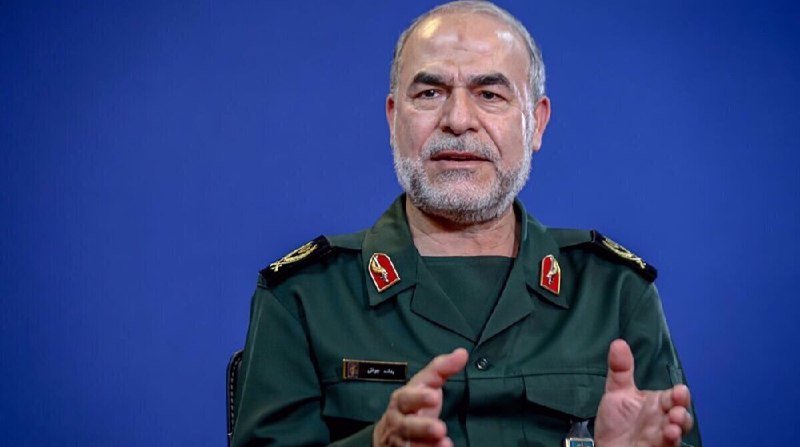
At 09:43 UTC on 10 June 2026, two outlets aligned with the Iranian security establishment reported a direct strike on a US-linked facility in the Kingdom of Jordan, the deepest Iranian missile reach into an Arab monarchy hosting American forces to date. According to The Cradle Media, the Islamic Revolutionary Guard Corps said it had struck jet hangars and other "important targets" at Muwaffaq Salti Air Base, a Royal Jordanian Air Force installation east of Amman that has hosted US Central Command aviation assets for the better part of two decades. A second outlet, Middle East Spectator, circulated footage it attributed to an IRGC operator at the moment of launch, with at least eleven long-range solid-fuel missiles visible on the rail and an on-camera statement declaring that "these iron fists will destroy you and drive you out of the region, with the help of God's power."
The strike, if confirmed at the scale claimed, marks a meaningful escalation. Until now the IRGC's cross-border reach has been demonstrated principally through the long arm of Iraqi, Syrian, and Lebanese auxiliaries, or through short-range fire exchanged across Iran's own periphery. A ballistic-missile attack on a base inside a US-allied Arab state is a different category of message. It also lands hours after a fresh round of US strikes on Iranian-linked assets, framing the exchange as tit-for-tat in a cycle neither capital appears ready to step off.
What was struck, and by whom
The Cradle's reporting names Muwaffaq Salti as the target, with the IRGC explicitly claiming responsibility and characterising the operation as a regional counterattack against "Washington's assets" in response to new US strikes. Middle East Spectator's footage — distributed through Telegram channels that have historically published material sympathetic to Iran's axis of resistance — appears to show the launch crew and a missile salvo. Neither outlet has yet published independent geolocation, satellite imagery, or post-strike damage assessment, and the framing of both sources should be read as Iranian-aligned, not as neutral wire reporting.
The choice of target is significant in itself. Muwaffaq Salti, also known as Azraq, has been a routine staging ground for US fixed-wing operations across the Levant, including counter-Islamic State missions and, more recently, air defence of the Iraqi-Syrian border. The IRGC's emphasis on "jet hangars" suggests an attempt to degrade Washington's forward-based air power, not merely to deliver a symbolic payload. The use of solid-fuel long-range missiles — visible in the distributed footage — implies a system with shorter preparation time and higher survivability than Iran's older liquid-fuelled Shahab-family ballistic missiles, which take hours to fuel and are easier to track.
The cycle behind the strike
The Cradle explicitly frames the operation as retaliation for "new US strikes," a claim consistent with the tit-for-tat logic that has governed Iran's regional posture for more than a year. In that pattern, an American or Israeli strike on an Iranian asset in Syria, Iraq, or Iran itself is followed, sometimes within hours, by a retaliatory strike from Iran or an Iranian proxy on a US or Israeli target. The escalatory quality of this particular exchange lies in the geography: past rounds have been contained inside the Iraqi or Syrian theatre. A strike on a base in Jordan extends the theatre and places a US-trained, US-equipped Arab air force in the line of fire.
This is also the first public claim of an Iranian ballistic-missile strike on Jordanian soil. Iran has long cultivated close intelligence ties with Jordan's Shia minority and has, in the past, been accused by Amman of attempting to import surveillance and drone technology through third countries. But the open use of IRGC regular forces against the kingdom would be new, and would force a domestic reckoning in Amman over the cost of the Jordanian-American basing arrangement.
The structural frame
What is unfolding is the slow erosion of the unspoken geography of the US-Iran shadow war. For decades, that contest has been fought on a periphery: in the Gulf, in the Iraqi-Syrian desert, along the Israeli-Lebanese border, and in the proxy battles of the Houthi-Saudi war. The assumption underwriting that arrangement, on both sides, has been that the homeland of either party — Iranian cities on one side, the Arab monarchies and Israel on the other — would remain outside the line of fire. That assumption has now been tested in Arab territory for the first time since the 2019 attack on Saudi Aramco facilities, an attack Tehran denied and which the United States attributed to Iran.
In a contest between two powers with no functioning diplomatic channel and no third-party arbiter, the rational move for each is to extend the geography of risk to the other while trying to keep its own cities insulated. The Jordan strike sits inside that logic. It is also, deliberately, a strike on Washington's "assets," not on Jordanian sovereignty as such — a framing designed, in classic IRGC style, to keep the kingdom's Hashemite elite on the diplomatic fence.
Stakes and what is not yet known
The immediate stakes are concrete. A confirmed successful hit on US air power at Azraq would, for the first time, give Iran a documented capability to threaten the forward-based American air wings that have underpinned US regional deterrence. It would also place Jordan in an unprecedented position: a target of an Iranian state missile strike while hosting US forces that did not — or could not — defend the base. That combination historically has produced a sharp reaction from Amman, including requests for additional US air defence systems and, at the limit, public pressure on Washington to widen its protective umbrella.
Several elements remain unverified. The Cradle and Middle East Spectator are aligned with the Iranian security establishment, and the scale of damage claimed has not been independently confirmed. The number of missiles launched — at least eleven in the distributed footage — may overstate or understate the actual salvo. The base's current US force posture, including the number of American fixed-wing aircraft present on 10 June, has not been disclosed in the source material reviewed here. The Jordanian government's response has not, as of 09:43 UTC, been published through the channels reviewed. Until wire services verify damage on the ground and until Washington or Amman speaks on the record, the event sits closer to a one-sided claim than to a confirmed military outcome.
What is already clear is that the geography of the US-Iran contest has widened again. Whether the widening is a strategic decision by Tehran to raise the cost of containment, or an improvised response to a specific US strike, is the question that the coming 48 hours will answer — and on which the price of energy, the routing of regional air traffic, and the readiness posture of every US base from the Gulf to the Levant now depend.
Desk note: this article relies on two Iranian-aligned outlets (The Cradle Media, Middle East Spectator) as the primary source for the strike claim, given that no Western wire confirmation had been published by 09:43 UTC. The framing gives full weight to the IRGC's account while flagging the absence of independent verification; readers should treat the operational details as claim, not as confirmed outcome, until a wire report or a US/Jordanian statement can be cross-referenced.
Wire provenance
This editorial synthesis draws on the following public wire/social posts:
- https://t.me/thecradlemedia
- https://t.me/TheCradleMedia
- https://t.me/Middle_East_Spectator
Follow the event.
These dated source records provide context. They do not retrospectively verify this archive article.
Separate what the nuclear watchdog reported from what it could not determine after the June 2025 strikes.