Iran reaches for Turkey and Saudi Arabia after US strikes on the south
Tehran's foreign minister held separate late-night calls with Ankara and Riyadh, signalling a diplomatic scramble to manage fallout from US airstrikes on southern Iran.
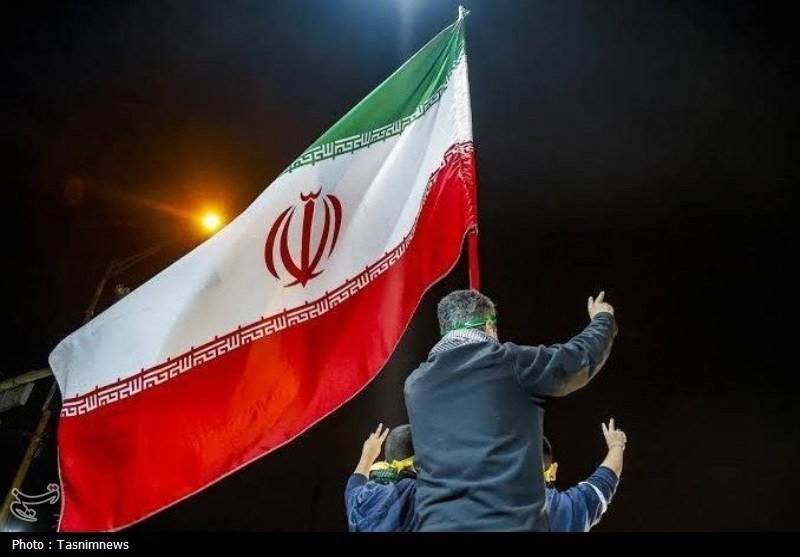
Iran's foreign minister Abbas Araghchi held separate telephone calls in the early hours of 10 June 2026 with his Turkish counterpart Hakan Fidan and his Saudi counterpart Faisal bin Farhan, according to a coordinated set of readouts from Iranian state-linked media. The conversations, which took place late on 9 June 2026, were framed by Tehran as a consultation on "regional developments" following US airstrikes on southern Iran — a deliberate widening of the diplomatic conversation beyond the bilateral Washington–Tehran axis that has dominated the file in recent months.
The phone calls matter less for what they produced than for what they signal: Iran is no longer treating Turkey and Saudi Arabia as back-channel mediators on the periphery, but as direct interlocutors in a moment of open military pressure. Ankara and Riyadh each carry their own equities in the Gulf — Turkish energy exposure, Saudi Red Sea posture, and both governments' parallel courtship of a US administration that has shown little patience for escalation management.
What the readouts actually say
The Iranian readouts, carried within minutes of each other by Press TV, Fars, Mehr, Tasnim, Al-Alam and other state-linked outlets between 04:53 and 05:05 UTC on 10 June, describe "the latest regional developments" as the explicit subject of both calls. The framing is careful: the readouts reference the US strikes as the precipitating event, but stop short of characterising them in language that would foreclose diplomacy. None of the published summaries name a specific demand, ceasefire request, or proposed de-escalation mechanism — a notable absence given the speed at which the calls were convened.
In Tehran's telling, Fidan and bin Farhan each received the same brief. That parallel structure is itself a signal: Iran is presenting a unified diplomatic front to two regional heavyweights whose own relationships with Washington have been strained but functional. The choice to brief Ankara and Riyadh in the same sitting, rather than in sequence over days, is consistent with a government trying to deny Washington the room to play its two regional partners off against each other.
The timing — midnight in Iran, late evening in Turkey and Saudi Arabia — suggests the calls were not pre-scheduled. Late-night foreign minister-to-foreign minister calls are typically reserved for either breaking developments or for messages that need to land before the next news cycle. The latter appears more likely: the readouts are calibrated to be quotable on Wednesday morning television across the region.
The counter-read from Washington and the Gulf
The American side has not, on the available record, commented on the substance of the Araghchi-Fidan or Araghchi-bin Farhan exchanges. That silence is itself informative. A US administration that wished to signal business-as-usual would typically have the State Department or the National Security Council acknowledge allied consultations in routine terms. The absence of such acknowledgement, on the morning after strikes on Iranian soil, leaves open two readings.
The first is that Washington regards the calls as noise — Tehran reaching for cover it does not strictly need, given that direct US-Iran channels remain nominally open. The second, less charitable to the administration, is that the calls reflect a genuine regional anxiety about escalation that Washington has not yet moved to calm. Both readings are plausible; the public record does not yet allow a confident call between them.
From the Gulf, Saudi and Turkish public responses have been measured. Neither Riyadh nor Ankara has, on the basis of the available wire traffic, issued a parallel readout confirming the calls or characterising their own positions. That asymmetry — Iranian media carrying the story, partner governments silent — is consistent with a long-standing practice in which Tehran's official outlets serve as the primary public ledger for its diplomatic movements, leaving counterparts room to calibrate their own follow-up without being tied to Tehran's framing.
What the diplomacy is buying Iran
The structural logic of the calls is straightforward. Iran is a country under direct kinetic pressure from the United States, with a leadership that has spent two decades building precisely this kind of regional diplomatic architecture: relationships with Turkey that survive ideological disagreement, a Saudi-Iranian rapprochement brokered through Beijing in 2023, and araqchi's own track record as a working diplomat rather than a firebrand. The choice to activate all of that infrastructure in a single evening is the foreign policy equivalent of a stress test.
It also gives Tehran optionality. If the US strikes prove to be a one-off, the calls become a footnote — proof that Iran can convene regional foreign ministers on short notice. If the strikes are the opening of a longer campaign, the calls become the basis for an explicit anti-escalation coalition, anchored in two Muslim-majority regional powers with their own reasons to dislike a wider Gulf war. Either way, Araghchi has bought time and diplomatic capital at relatively low cost.
The less flattering read is that the calls reflect weakness rather than strategy. A government that felt confident in its position would not need to convene two regional foreign ministers within hours of being struck. The fact that Tehran chose to publicise the calls in such tightly coordinated fashion — six separate state-linked outlets, almost identical language, all within roughly twelve minutes of each other — suggests an audience-management operation as much as a diplomatic one.
What remains unresolved
The published readouts do not specify what Araghchi asked for, what he offered, or whether either Fidan or bin Farhan committed to any specific action. The sources do not indicate whether Turkey or Saudi Arabia will issue their own statements, convene follow-up calls, or initiate any public contact with Washington on Iran's behalf. There is no information in the available record on whether the diplomatic activity will translate into a UN Security Council motion, an OIC contact-group meeting, or a tripartite foreign ministers' gathering.
What is clear is that Iran has chosen to escalate its diplomatic tempo at the exact moment its military position is most exposed. Whether that is read in Washington as a plea for de-escalation or as a warning of wider regional mobilisation will shape the next 72 hours of policy. For now, the only firm fact on the public record is the timing: six near-identical Iranian readouts, two regional counterparts, and a single night in which the diplomatic choreography of the Middle East was rewritten at speed.
This publication framed the Araghchi-Fidan and Araghchi-bin Farhan calls as a single coordinated diplomatic event rather than two separate bilateral contacts, on the basis of the parallel structure and timing of the Iranian readouts. The wire characterisation of the calls as "separate" is accurate at the technical level — different phone lines, different counterparts — but obscures the deliberate symmetry with which Tehran chose to publicise them.
Wire provenance
This editorial synthesis draws on the following public wire/social posts:
- https://t.me/presstv/125849
- https://t.me/farsna/2987654
- https://t.me/FarsNewsInt/774123
- https://t.me/alalamfa/217654
- https://t.me/tasnimnews_en/512987
- https://t.me/mehrnews/1895432
- https://t.me/JahanTasnim/456321
Follow the event.
These dated source records provide context. They do not retrospectively verify this archive article.
Separate what the nuclear watchdog reported from what it could not determine after the June 2025 strikes.