Tehran's Patience Is Now a Variable, Not a Given
After a night of strikes Iran says it will 'review' whether talks with Washington are still worth having, while Doha publicly pleads for de-escalation. The diplomatic floor is thinner than the official read suggests.
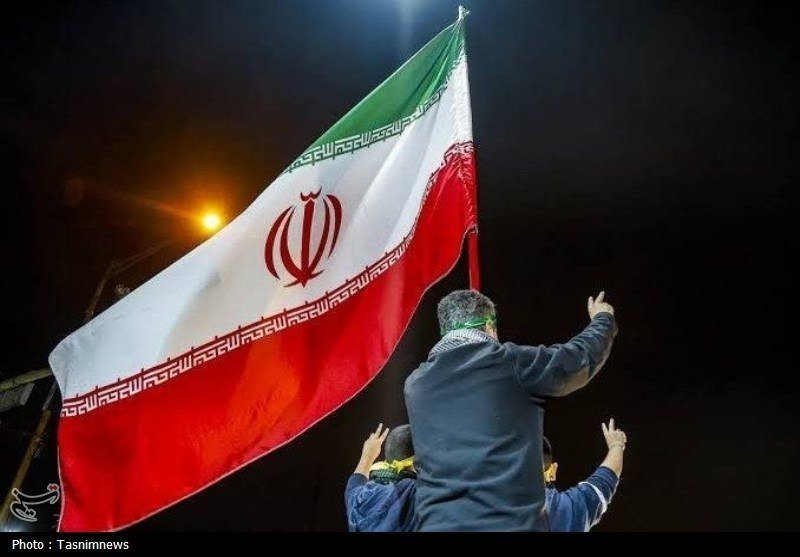
By 10:07 UTC on 10 June 2026 the diplomatic script between Washington and Tehran had been rewritten overnight. Iran's Foreign Ministry, citing "last night's developments," announced it would review whether negotiations with the United States remained appropriate, and insisted that any continuation required at least a "minimum" standard of good faith that, in its reading, had been violated. The language was deliberately calibrated: not a rupture, but a public suspension of trust. The next sentence in the exchange belongs to the bombers, not the diplomats.
The framing matters. Iran is not walking out of the room. It is moving the door. A "review" is a procedural instrument designed to buy time without burning the channel, and Doha — long the quiet back-channel for US-Iran traffic — is already signalling how that time should be used. Qatar's foreign ministry on 10 June reiterated its position that the region must de-escalate, a phrase that, in Gulf diplomatic grammar, is shorthand for "we are willing to host, mediate, and absorb the political cost of the next round of talks." The geometry of the moment is therefore not bilateral but triangular: Washington, Tehran, and the small Gulf state that has institutionalised itself as the only capital trusted by both.
What "last night" actually changed
The ministry's statement is a hostage to an event the wire has not, in these source items, specified. That is itself the story. Tehran is publicly conditioning the future of a negotiation on the character of an act, not its target. In Middle East bargaining, this is rarely forensic. It is performative: a signal to domestic audiences that the Islamic Republic was attacked and that any subsequent climbdown is the result of leverage applied, not weakness discovered. Read in that register, the "minimum standard" formulation is less a legal threshold than a political price tag.
The counter-narrative — visible in English-language commentary circulating on regional Telegram channels within hours of the statement — is blunter. It holds that Iran has absorbed a strike and is being asked, in effect, to absorb another by continuing to talk. The Middle East Spectator channel captured the mood at 09:43 UTC in unvarnished form: the suggestion that Iran should "simply move on" was framed as self-evidently absurd. That posture is not a fringe read. It is the dominant framing inside Iran's information ecosystem, and the foreign ministry's review is, in part, an institutional answer to it.
The Gulf as convenor, not bystander
Doha's re-entry into the frame is the most under-priced element of the morning. Qatar does not de-escalate because it is neutral; it de-escalate because its gas-export economy, its hosting of Al Udeid, and its investments in European LNG terminals all sit downstream of Hormuz stability. A genuine US-Iran collapse moves Qatar from convenor to casualty. Its statement, carried by Iranian outlets including Tasnim-aligned channels, is therefore not altruism but underwriting. The Qatari position is, in plain terms: we will absorb the diplomatic risk of the next meeting if both sides agree to walk into it.
This is the structural shift the Western wire read tends to flatten. Coverage routinely frames Gulf mediation as atmospherics — a benevolent backdrop to a bilateral negotiation whose centre of gravity is Washington. The harder read is that the centre of gravity has migrated. Iran can tolerate a deal that costs it enrichment capacity if the deal is hosted by a state that has spent two decades building economic ties with Tehran and was visibly strained by the strike. A deal hosted by Oman or Switzerland would carry a different price. Doha is offering Iran a discount on the cost of saying yes.
The limits of "review"
None of this means the channel is healthy. A review, by its nature, is a window in which spoilers operate. Hardliners in Tehran have a procedural argument they did not have a week ago: that the United States negotiated in bad faith, that the strike proved it, and that any successor arrangement will be enforced by the same logic. Iranian outlets will be free, in the coming days, to run the argument that the only remaining leverage is the nuclear file itself — that voluntary constraint has been answered with bombs, and the rational response is to remove the constraint. The foreign ministry's language is designed to make that argument legible without endorsing it.
The plausible alternative read is that the review concludes, within days, with a return to the table, with terms slightly worse for Tehran and slightly better for Washington. That has been the rhythm of this track since 2025. The dominant framing holds because the institutional cost of walking away — for a Republican administration that has invested political capital in the deal, and for a Revolutionary Guards establishment that needs sanctions relief — is higher than the cost of absorbing one more humiliation. But the dominant framing is not the only one, and the gap between the two is exactly where the next strike will land.
Stakes
If the review collapses into walkout, the consequences are not symmetric. Iran loses a sanctions-relief track it cannot easily rebuild; the United States loses a non-proliferation track that has already been undermined by the strike itself; Qatar loses the deal that would have validated its mediation brand. Israel, which is not a signatory to this track and is the implicit beneficiary of any collapse, gains the most and pays the least. That asymmetry is, in the end, the most honest summary of where the file sits at 10:07 UTC on 10 June 2026: a negotiation that survives only as long as its least-served participant can be persuaded that the table is not a trap.
The sources on which this piece is built do not specify the target or scale of the strike referenced in Iran's statement. The diplomatic read here is built on the character of Tehran's response, not on details of the act itself. Readers should treat the assessment of intent as the analysis it is, and the operational facts as not yet public.
Wire provenance
This editorial synthesis draws on the following public wire/social posts:
- https://t.me/middle_east_spectator
- https://t.me/middle_east_spectator
- https://t.me/jahantasnim
Follow the event.
These dated source records provide context. They do not retrospectively verify this archive article.
Separate what the nuclear watchdog reported from what it could not determine after the June 2025 strikes.