A missile, a missing jet, and a war of signals: parsing the Iran-US Persian Gulf flare-up
Within minutes of each other on the evening of 10 June 2026, Iranian and US-aligned channels reported a US F-16 over the Gulf, an IRGC surface-to-air launch, and a claim of disrupted strikes — a sequence short on confirmed facts and long on signalling.
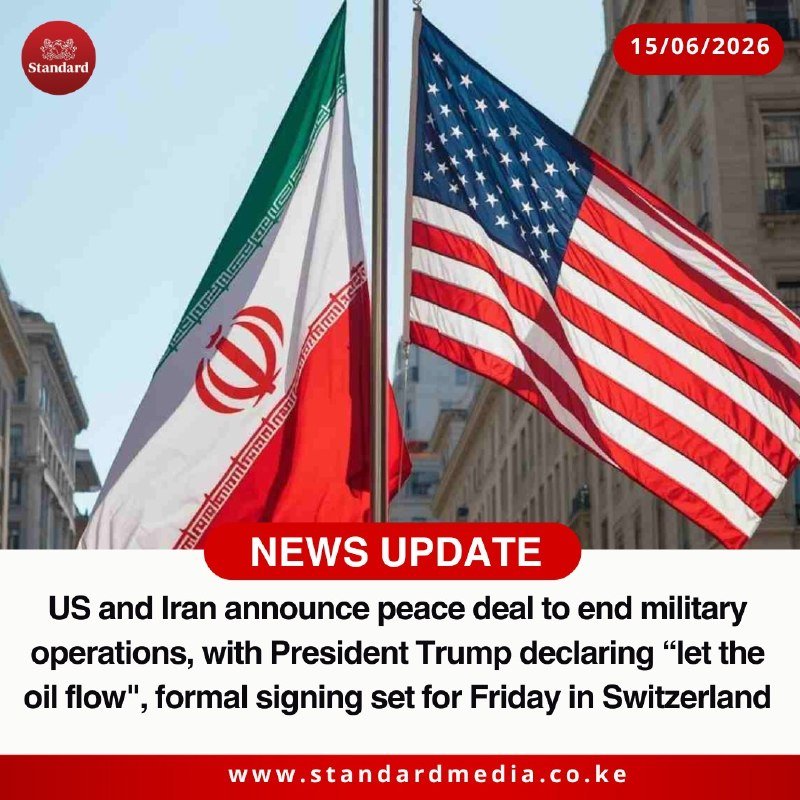
Three near-simultaneous claims landed in the Telegram ecosystem on the evening of 10 June 2026, each from a distinct account, and together they sketched the outline of an incident that has not yet been independently verified. At 22:35 UTC, the OSINT feed GeoPWatch published the IRGC's own statement: that an American F-16 fighter jet had violated Persian Gulf airspace and that an IRGC air-defence unit had fired a surface-to-air missile at it. A minute later, the conflict-tracker ClashReport carried the same IRGC text. At 22:38 UTC, PressTV, the English-language arm of Iranian state broadcasting, amplified a separate claim from a group calling itself Handalah, asserting that "a significant portion" of the first and second waves of US army attacks had been "disrupted" by Handalah's electronic-warfare units. The mapping account AMK Mapping, in its own 22:35 UTC post, added the operational detail that the IRGC missile missed but that the F-16 retreated.
What actually happened, in plain terms, is contested. The four messages describe a US overflight of the Persian Gulf, an Iranian surface-to-air response that did not hit its target, and a claim — sourced to an Iranian-aligned group with no public operational footprint that this publication could verify — that American strike packages are being jammed. None of the four accounts is an independent party to the events. None has been corroborated, as of the time of writing, by US Central Command, the Pentagon, or any wire service in the public record attached to this story.
What the Iranian side is asserting
The IRGC's statement, as carried by both GeoPWatch and ClashReport, follows a familiar template: a violation of Iranian-designated airspace by a hostile aircraft, a defensive launch, and a withdrawal by the intruder. The framing places Tehran in the posture of a defender responding to a US probe. The Handalah claim, carried by PressTV, layers an information-warfare element on top — the suggestion that Iranian-aligned electronic-warfare capacity is degrading the effectiveness of US air operations. PressTV is, by self-description and by Western sanctions listings, the international broadcaster of the Islamic Republic; its amplification of Handalah is best read as an Iranian state media decision to give the group a platform, not as independent verification of Handalah's capabilities.
What the US side has — and has not — said
The conspicuous absence in the source material is any US statement. No CENTCOM briefing, no Pentagon readout, no acknowledgment from a US regional embassy appears in the four items attached to this article. That silence cuts two ways. It is consistent with operational security during an active maritime air campaign, in which commanders typically decline to confirm or deny individual intercepts until the episode is closed. It is also consistent with the possibility that the incident, as described by Tehran, is being shaped for Iranian domestic and regional audiences before any US counter-narrative is offered. The mapping account's detail — that the missile missed and the F-16 "reportedly" withdrew — is the only element in the four-item set that even gestures toward a hedged reading, and it is doing so without sourcing.
The information contest around the event
The episode sits inside a wider pattern that has become routine in coverage of the Iran-US confrontation: claims about strikes, interceptions and electronic warfare are released first by Iranian state media and aligned channels, then sit unverified for hours or days, and are eventually either quietly confirmed, quietly dropped, or quietly revised. The Handalah claim is a particularly sharp example. A group whose existence, leadership and technical capacity are not documented in open sources is being positioned, via PressTV, as having degraded US air operations. That positioning does real political work inside the regional information environment regardless of whether the underlying technical claim is true — and the structural incentive for Iranian-aligned media to publish it now, while a US operation is reportedly underway, is independent of its accuracy.
What remains uncertain
Four claims, four channels, one missing independent witness. The F-16 flight itself is plausible — the US maintains a heavy air presence in the Persian Gulf and has flown similar profiles for decades — but neither the aircraft's tail number, mission type, originating carrier (US Air Force, US Navy, or a Gulf-state partner), nor the exact coordinates of the alleged violation appear in any of the four items. The IRGC's claim of a launch is, on its face, a routine air-defence reaction and does not by itself indicate escalation. The Handalah electronic-warfare claim is the load-bearing assertion, and it is the one most exposed to fabrication. Readers should treat the four messages as Iranian-aligned initial accounts, not as established facts, and watch for a US-side read in the hours ahead.
This publication framed the incident as a four-source Iranian-aligned cluster rather than as a confirmed intercept, on the principle that the absence of any Western-wire or US-military confirmation in the input material is itself the most important fact on the page.
Wire provenance
This editorial synthesis draws on the following public wire/social posts:
- https://t.me/presstv
- https://t.me/ClashReport
- https://t.me/GeoPWatch
- https://t.me/AMK_Mapping
Follow the event.
These dated source records provide context. They do not retrospectively verify this archive article.
Separate what the nuclear watchdog reported from what it could not determine after the June 2025 strikes.