Tehran Says US Strikes Have Buried Diplomacy, Vows to Defend the Homeland
Within hours of reported US strikes on Iranian territory, Tehran's Foreign Ministry declared the path to negotiation had been "undermined" and warned that its forces would not hesitate to defend the homeland.
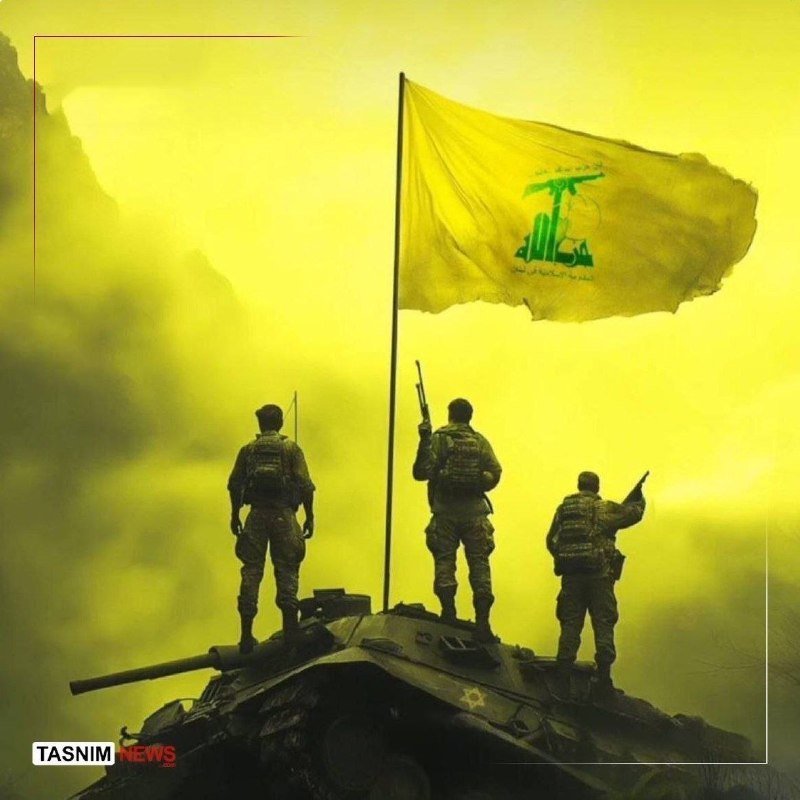
By 10 June 2026, the diplomatic channel between Washington and Tehran that had survived months of proxy friction appeared to be in tatters. Within hours of reported US strikes on Iranian territory overnight, Iranian Foreign Ministry spokesman Esmail Baghaei declared that "the United States, with its contradictory actions, has undermined the path of diplomacy," according to multiple Iranian state-linked outlets carrying the same Foreign Ministry statement in the window between 08:35 and 08:50 UTC.
The language matters. Tehran did not reach for the rhetoric of regional retaliation; it reached for the rhetoric of violated negotiation. That choice — to frame the strikes as a betrayal of an ongoing process rather than as a casus belli — is itself the most informative signal the statement contains.
What Tehran actually said
The Foreign Ministry text, carried almost verbatim by Tasnim, Fars, Al-Alam, the Jahan Tasnim channel and War Footage Witness, ran along a single through-line: last night's events proved that "brave Iranian forces will not hesitate to defend the homeland," and that US conduct was "contradictory" with the diplomatic track. Baghaei, the named spokesman on each version, was the operative voice; the synchronised release across five separate outlets in roughly fifteen minutes suggests a coordinated read-out rather than spontaneous comment.
Notably absent from the text, as carried by these channels, is any mention of a specific Iranian counter-action, any reference to ballistic or drone capabilities, and any naming of regional allies such as Hezbollah or the Houthis. The framing is defensive — "will not hesitate to defend" — rather than escalatory. The addressee, throughout, is Washington, not Tel Aviv or Riyadh.
Why the diplomatic framing, now
Reading the statement as strategy rather than as venting, the diplomatic framing is the more aggressive of the two available postures. By recasting strikes as a broken promise, Tehran positions itself as the party that honoured the talks and reserves the right to a moral, rather than merely military, response. That posture makes any future US request for de-escalation harder to launch without first conceding the breach, and it gives Tehran's partners — and the non-aligned diplomatic middle that has tried to keep the channel open — a clean narrative to repeat.
The trade-off is real. A purely defensive statement without specified retaliation leaves the timing and shape of any Iranian response to a separate decision track, almost certainly military, that is not part of the public readout. The diplomatic register above; the operational register below. The two tracks have, in past US-Iran episodes, run on different clocks.
The structural picture
The episode sits inside a longer pattern of strikes-and-talks: armed action punctuated by negotiation windows, with each cycle shrinking the distance between military contact and the negotiating table. The pattern favours the side that can absorb an incident and still pick the conversation back up — historically, that has not been the United States, whose domestic political costs of renewed talks after visible strikes have grown with each cycle. Tehran, by contrast, has institutionalised the practice of receiving a blow and re-anchoring the discussion in its own terms.
The statement's emphasis on "contradictory actions" is best read as an attempt to install that anchor before the next news cycle. Whether the framing survives contact with whatever the next Iranian operational move turns out to be is a separate question; for the moment, the public Tehran wants the world to read is the Tehran of the offended negotiator, not the Tehran of the cornered regime.
What remains uncertain
The source material is, candidly, thin. All seven wire items in this cluster come from Iranian state-linked or state-adjacent channels; no Western wire confirmation of the strikes, no Pentagon readout, no independent casualty or target detail, and no US State Department response appears in the cluster. The scale of the overnight action — number of sites, weapons used, Iranian or allied losses, third-party damage — is not in the materials available to this publication. So too is the state of the diplomatic channel itself: the statement calls diplomacy "undermined," which is a directional claim, not a binary one. Channels can be downgraded, narrowed to a single issue, or routed through intermediaries without being formally closed.
What can be said with confidence is narrow: a senior Iranian foreign-policy spokesman, on the morning of 10 June 2026, publicly framed US overnight strikes as proof of Iranian resolve to defend the homeland and as a contradiction of the diplomatic track. The next forty-eight hours will determine whether that framing travels — and whether Washington accepts the frame or treats it as positioning before a harder response.
Desk note: Monexus is leading with Iranian state and state-adjacent sources here because that is what the wire cluster on this story currently contains; the framing is the news. We will widen the source base to Western and regional outlets as their readouts land, and we will flag any discrepancy between the Tehran narrative and independent reporting.
Wire provenance
This editorial synthesis draws on the following public wire/social posts:
- https://t.me/tasnimnews_en/
- https://t.me/FarsNewsInt
- https://t.me/wfwitness
- https://t.me/alalamarabic
- https://t.me/JahanTasnim
- https://t.me/ClashReport
Follow the event.
These dated source records provide context. They do not retrospectively verify this archive article.
Separate what the nuclear watchdog reported from what it could not determine after the June 2025 strikes.