IRGC Says U.S. F-16 Fled After Persian Gulf Airspace Breach
Tehran's Revolutionary Guard says it fired on a U.S. F-16 over the Persian Gulf on 10 June 2026; the claim is uncorroborated by U.S. or independent sources.
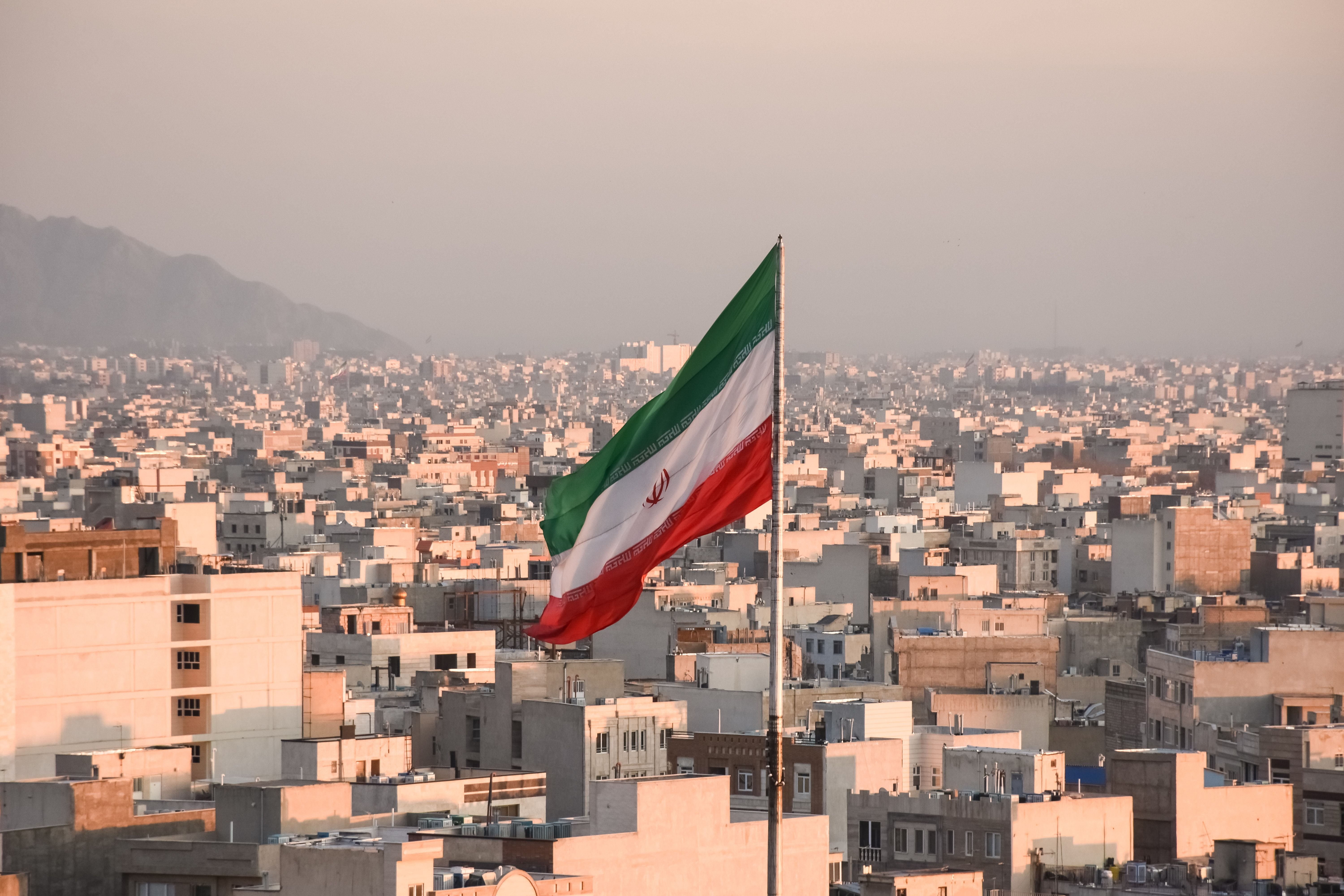
On the evening of 10 June 2026, Iran's Islamic Revolutionary Guard Corps (IRGC) Public Relations office said the force had fired a surface-to-air missile at a U.S. F-16 fighter that it said had violated the country's airspace over the Persian Gulf. The IRGC account, carried verbatim by Iranian state-linked outlets Fars, Tasnim, and Al-Alam Arabic, asserts that the aircraft "fled" after the missile was launched. The U.S. has not, at the time of writing, publicly confirmed or denied the incident.
The episode is significant less for the size of the engagement — only one missile launch is claimed, no impact is admitted — than for what it signals: an asymmetric doctrine that uses the threat of fire, rather than contact itself, to contest presence in Gulf airspace. Monexus treats the Iranian version of events as a primary claim to be reported, while flagging the structural fact that no outside confirmation yet exists.
What the Iranian sources claim
The first alert circulated at 22:38 UTC on 10 June 2026 via Al-Alam Arabic's Telegram channel, citing "Public Relations of the Revolutionary Guard." Fars, a news agency affiliated with the IRGC, posted a parallel version four minutes later at 22:35 UTC, adding a separate claim by the Hanzala hacking group that "electronic warfare units" had disrupted "a large part of the first and second wave of attacks by the U.S. terrorist army." Tasnim's English channel reposted the same IRGC Public Relations wording at 22:34 UTC, three minutes ahead of the Arabic account.
The three Persian-language and English-language channels describe a single event: an F-16 entered Persian Gulf airspace; the IRGC air defence system fired; the "aggressor fled." None of the messages contain coordinates, tail-number identification, weapons type, or impact assessment. Fars's longer post adds the cyber claim, which is not echoed by Al-Alam or Tasnim and which appears to belong to a different operational narrative rather than the same engagement.
This sourcing pattern — one institutional account, three amplifiers, no on-the-ground reporter present — is standard for Iranian military releases on sensitive incidents. The lack of corroborating imagery or radar data is consistent with the IRGC's stated reluctance to release operational details, and is also a reminder that the claim is, at present, exactly that: a claim.
The U.S. silence, and what it does and does not mean
As of 22:38 UTC on 10 June 2026, no U.S. Central Command (CENTCOM) release, Pentagon statement, or State Department briefing has been published in response. The Washington silence is a non-event that the Iranian account has filled. That is itself a story: when one side speaks first, and the other declines to confirm or rebut, the first version travels further and longer. Wire services including Reuters, AP, AFP, BBC, and the Guardian typically do not report single-source Iranian military claims on U.S. aircraft without a U.S. response, which means the initial readership of this incident is largely an audience already inside the Iranian information sphere.
A U.S. non-denial-denial — confirming a routine patrol, for instance, but rejecting the "violation" framing — would be the most consequential next move. A flat denial would suggest the incident either did not occur or was not as Iran described. Silence through morning in Washington would be read in Tehran as acquiescence to the IRGC narrative. None of these three outcomes is in the public record yet.
The structural frame: airspace as a signalling layer
The Persian Gulf is one of the most heavily watched air corridors on the planet, with overlapping U.S., Iranian, Saudi, Emirati, and Omani air-defence systems. U.S. fighter patrols in international airspace off the Iranian coast are routine; the novelty in the IRGC account is the explicit assertion of a fire order. Even an unconfirmed fire order matters, because it shifts the doctrinal signal from "we can shoot" to "we did." That move compresses the decision space for U.S. planners — every subsequent Gulf patrol now operates against the IRGC's own stated precedent, and any future contact can be measured against a baseline the IRGC itself has established.
This is the kind of escalation-by-release that the regional information environment is well equipped to amplify. Al-Alam, Fars, and Tasnim together reach a substantial Arabic- and Persian-speaking audience. Western wires, by contrast, usually wait for an on-the-record response from at least one of the parties before assigning an incident to their running ticker. The asymmetry means the Iranian version gets the first full broadcast, and the corrective, if one ever comes, lands hours later in a smaller window.
What remains uncertain
Three pieces of evidence would move this from claim toward fact. First, a U.S. statement, either confirming a routine presence or denying the encounter. Second, satellite imagery or radar tracks from an independent monitor — the kind of work that outlets like Bellingcat, the Center for Strategic and International Studies, or the Institute for the Study of War publish after the event. Third, on-the-record reporting from a wire correspondent present in either Doha, Manama, or Al Udeid airbase, where U.S. air operations in the Gulf are coordinated. None of that material is in the public domain at the moment of publication.
The cyber claim carried by Fars — that Hanzala disrupted a "first and second wave" of U.S. operations — sits at a different evidentiary level. It names no system, no network, no timestamp, and no target. It is reported here for completeness, not as a corroborated event.
Monexus will update this article as U.S. or independent confirmation becomes available. The dominant framing in the regional information environment is, for now, the IRGC's; the dominant framing in the wire environment is, also for now, the absence of one. Readers tracking the Gulf should hold both in mind.
— Monexus framed this strictly as an unconfirmed claim by an Iranian state-adjacent source, declined to characterise the aircraft as "American" beyond attributing the description to the IRGC, and kept the U.S. silence in the lead rather than the kicker so the asymmetry of attribution is the first thing a reader sees.
Wire provenance
This editorial synthesis draws on the following public wire/social posts:
- https://t.me/alalamarabic
- https://t.me/farsna
- https://t.me/tasnimnews_en
- https://en.wikipedia.org/wiki/Islamic_Revolutionary_Guard_Corps
- https://en.wikipedia.org/wiki/Persian_Gulf
- https://en.wikipedia.org/wiki/General_F-16_Fighting_Falcon