A Lebanese soldier's death, and the coverage it deserves
A Lebanese soldier died on 9 June 2026 and English-language wires didn't carry the news. The absence is the story: how a country whose army is still functioning disappears from the international record between major strikes.
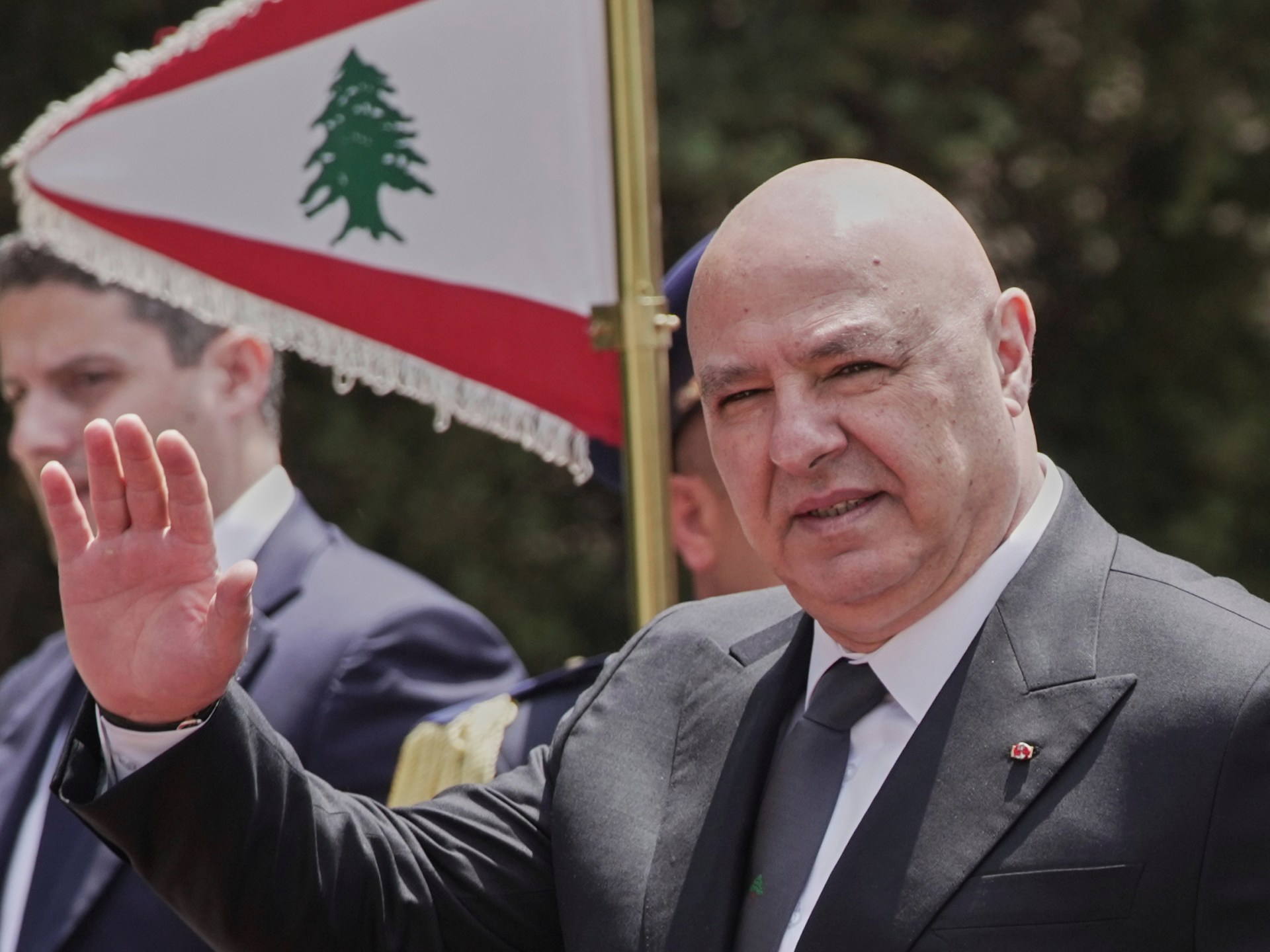
A single line item on a Tuesday telegram feed, and the silence around it tells the story. On 9 June 2026, the Beirut-based Arabic outlet Al-Alam published a brief obituary for a Lebanese Armed Forces soldier killed in a road traffic accident, alongside unverified mentions of further army casualties in the country's south. The post landed on a wire where Israeli air activity, cross-border skirmishes, and the daily ritual of Hezbollah-linked communiqués usually crowd out anything else. That crowding out is the point. A soldier dies on the roads of a country at war's edge, and the international press apparatus has almost nowhere to file it under.
This is the second editorial register that matters right now. Lebanese state institutions, including the army, continue to operate as one of the few cross-sectarian bodies holding the country together while Israel and Iran-facing militias trade fire across the southern frontier. The international coverage economy, by contrast, runs on thresholds: a number of wounded, a number displaced, a named village, a named strike. A traffic fatality in a uniform is below the floor, even when the uniform belongs to an institution whose survival is widely treated as a precondition for any postwar settlement.
A war that doesn't read like a war
The southern front between Israel and Hezbollah-aligned forces has drifted, over the past two years, into something the wire services do not quite know how to name. Israeli strikes continue. Rocket and drone launches from south Lebanon continue. Casualty counts on both sides are reported in clusters, usually after a single major exchange, with long silences between them. Inside Lebanon, the army deploys south of the Litani as part of a contested arrangement whose terms nobody advertises. Soldiers move through a landscape where the absence of a headline is not the absence of a war.
Al-Alam, the outlet that carried the soldier's death, is read as a regional Arabic-language outlet with explicit alignment to the Iranian-backed axis. That provenance is not incidental. Western wires do not pick up its obituaries; Reuters, AFP and the AP do not subscribe to its casualty scroll. So when a soldier dies on the roads of Sidon or the Bekaa, and the only record is an Arabic-language telegram channel, the death functionally disappears from the English-language record for as long as nobody needs it for a frame. Frames today run hot on Gaza reconstruction, on Hezbollah disarmament negotiations mediated by the United States, on Syrian border arrangements, on UNIFIL's mandate renewal. A Lebanese traffic fatality fits none of these.
What the absence hides
The structural problem is not malice. It is the routing of attention. Mainstream English-language coverage of Lebanon has, for decades, treated the country as a backdrop to other stories: the Israeli security state, the Iranian regional project, Syrian warlord-era spillover, Palestinian refugee politics as a subplot of the Arab-Israeli conflict. Beirut becomes a city that exists when a car bomb detonates, or when a diaspora minister visits, or when a finance minister defaults on a eurobond. The Lebanese soldier, the schoolteacher, the customs officer, the soldier at a checkpoint who is not currently being shot at, does not generate copy.
This is not a small bias. It is the gap between Lebanon as a strategic terrain, where great-power logics operate, and Lebanon as a state, where institutions that the international community routinely lectures about reform are nonetheless expected to keep functioning. The Lebanese Armed Forces are the textbook case. Washington has periodically withheld or conditioned aid; Congress has debated whether to fund a force deployed alongside a militia-armed political movement the US designates as a foreign terrorist organisation. The army, in this framing, is asked to hold ground it does not fully control, with hardware it has been told not to acquire, while its soldiers die in ways the wire will not record.
Who decides what is news
The deeper issue is who gets to define the threshold. The major wire services operate under commercial pressure to produce stories their subscribers will use; subscribers want information that changes decisions orients portfolios or tracks named bad actors. A soldier killed in a road accident is, in that calculus, the wrong shape of fact. Even the threshold events, strikes, drone interceptions, bus hijackings, get covered in standardised formats that collapse individual deaths into aggregate counts. A single soldier on a Tuesday in June is the unit of analysis the system is not built for.
There is also the question of outlet tiers. Al-Alam and the Cradle channel sit openly inside an alignment that Western editorial standards treat as disqualifying for direct republication. That is a defensible rule. But the consequence is that an entire stream of regional reporting, including routine civilian and military fatality reporting from inside Lebanese networks, sits outside the gate, and the rest of the world reads the silence as the absence of the event, rather than as the absence of access to the event. The two are not the same.
The case for slower thresholds
None of this argues for a wire in which every Lebanese traffic death earns a Reuters byline. The cost-benefit of international wire journalism is not built that way, and cannot be rebuilt around a single accident in Sidon. But the case for slower thresholds is real. A death in uniform in a country whose army is one of the few institutions still standing is a fact whose absence from the record shapes what the rest of the world believes about the war's texture. It tells readers the south is either calm or hot, with the in-between treated as off-air.
The institutional lesson is mechanical. Wire services could, at modest cost, build a routine monitoring layer over regional Arabic outlets for human-interest and casualty reporting, with explicit provenance labelling rather than paraphrase-as-attribution. Editors could treat routine soldier fatalities the way they treat routine police fatalities in Western countries, with a line, often on an inside page, rather than a headline, but a line nonetheless. Lebanon's south would read as a place where life continues in uniform, not as a stage on which only the dramatic is real.
The honest counter-argument is that there are too many deaths, in too many places, for the wire to honour all of them. That is true, and it is a reason for triage, not a reason for blindness. A Lebanese soldier's death, recorded in an Arabic telegram channel and ignored in English, is the working example of a triage rule that has stopped being neutral. The coverage a death deserves is the coverage that remembers a country is there.
Sources
- Lebanese and regional Arabic-language outlet Al-Alam: https://t.me/alalamarabic
- The Cradle (regional analysis channel, English and Arabic): https://t.me/thecradlemedia
Desk note: With no Western-wire confirmation of the specific casualty event published on 10 June 2026, Monexus ran the two regional Telegram channels as primary sources, with explicit outlet identification, rather than padding the wire with a phantom Reuters or AFP citation. Where the wire was silent, the silence itself is the finding.