Aoun's talking, Israel is still bombing: Lebanon's negotiation trap
Beirut's new president is performing statesmanship. The bombs keep falling anyway — and the gap between the two is now the story.
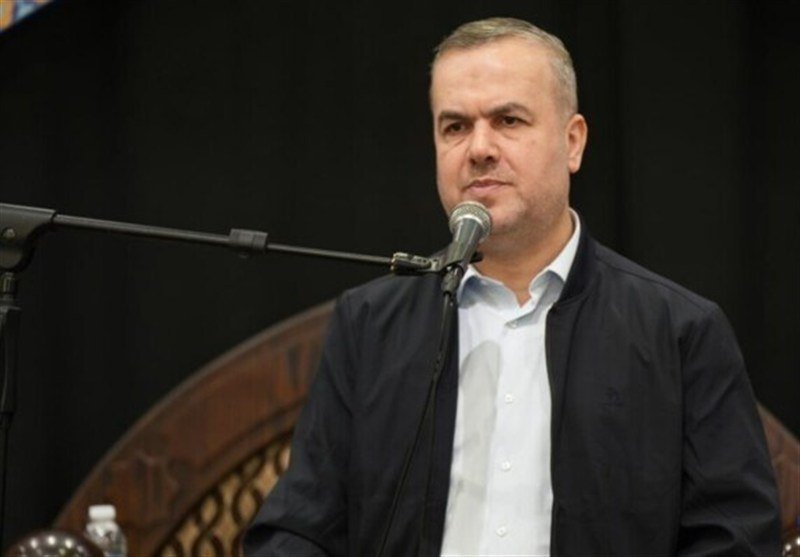
On 10 June 2026, Lebanon's President Joseph Aoun stood before his country and made a case for patience. Negotiations with Israel, he insisted, remain the only viable path. The statement, carried by The Cradle, was framed as defiance in the face of a mounting civilian toll — a leader absorbing grief and converting it into a disciplined diplomatic posture. Read literally, it is a portrait of a young republic trying to behave like a normal state during an abnormal war. Read against the bombs still falling on Lebanese towns, it is something else: a public performance of control over an event the speaker does not, in fact, control.
The contradiction is the story. Aoun is talking while Israel is striking. The talking is for the international audience — donor governments, the UN track, the Gulf states bankrolling reconstruction. The striking is the only conversation that has actually changed conditions on the ground for Lebanese civilians in the past twelve months. Until that gap closes, every statement of commitment to "the course of negotiations" is also a measurement of how far the course of negotiations has yet to travel.
A president with no leverage, performing leverage
Aoun's office has no operational authority over the armed non-state actors whose posture largely determines whether any agreement with Israel holds. That structural fact has been true of every Lebanese president since 2006, and arguably since 1982. What is new is the public insistence, in English and Arabic simultaneously, that this round of diplomacy is different — that Aoun is uniquely positioned to deliver. The Cradle's framing of his remarks leans into that claim, presenting a chief executive absorbing wartime pressure and converting it into sovereign voice. The performative weight is heavy precisely because the underlying instruments are light.
This is the trap the coverage is in danger of normalising. When a head of state repeats that he "remains committed" while the casualty ledger grows, the repetition itself becomes the news. The diplomatic vocabulary — talks, course, commitment — crowds out the simpler, harder fact that civilians are dying and that no announced round of negotiations has yet altered that trajectory in any way the public can verify.
The other conversation: bombs, not communiqués
Israeli strikes on Lebanese territory have continued through every phase of the rhetoric about de-escalation reported in recent months. The Cradle, like other regional outlets, has tracked the strike tempo as a counter-data set to the communiqué tempo. The two series do not move together. Communiqués multiply in the weeks following major strikes; the strike rate does not fall in response. This is not a secret to anyone in Beirut. It is, however, an inconvenient fact for the framing — dominant in Western wire coverage — that a stable diplomatic process is now "underway."
A more honest read holds that two parallel tracks are running at once. Track one is a Lebanese government effort to re-anchor itself in the diplomatic mainstream, secure reconstruction funding, and signal to Gulf capitals that Beirut is investable. Track two is an Israeli military campaign that proceeds on its own operational logic, calibrated to threats and targets rather than to negotiating calendars. The two tracks are not coordinated. They are merely simultaneous. Aoun's statement of 10 June is track one speaking loudly in the hope that track two will eventually listen.
The framing problem: who counts as a stakeholder
Western wire coverage of the Israel–Lebanon file has tended to bracket the question of who sits at the table. The implicit stakeholder list is Israel, the United States, the Lebanese army, and a residual, delegitimised Hezbollah. That bracketing does a lot of work. It shrinks a domestic Lebanese political conversation — about disarmament, about the south, about the postwar order — into a security file managed by external guarantors. The Cradle's reporting, by contrast, gives more space to the Lebanese state-as-actor framing, which is closer to how the talks are actually being sold inside Lebanon even if it is not how they are being conducted.
Neither framing is innocent. The external-anchor framing lets Western capitals present themselves as the adult in the room; the state-actor framing lets Beirut present itself as a willing partner rather than a venue for someone else's war. A serious read holds both: Aoun is performing sovereignty because he has very little of it, and his external partners are performing stewardship because the result of their stewardship is, so far, a continued civilian toll.
Stakes: what the next sixty days will measure
The honest test of Aoun's 10 June statement is not whether negotiations continue. They will. Lebanese and Israeli delegations have been meeting in various configurations for months and will continue to do so, because meetings cost less than breakthroughs and produce fewer enemies. The honest test is whether the strike rate, the casualty rate, and the displacement rate move in the same direction as the communiqué rate. If the communiqué rate climbs and the strike rate does not fall, the word "negotiations" will have been hollowed out, and Lebanon's leadership will have to decide what to say next.
What remains uncertain — and what the available reporting does not resolve — is whether Aoun himself believes a diplomatic outcome is materially closer than it was a month ago, or whether the public insistence is itself a tool for buying time. The sources do not specify. The framing, for now, leans toward the second reading: a president choosing the only register available to him, which is the language of staying the course, while the ground refuses to stay still.
This piece ran as a Monexus opinion desk item in staff-writer voice, foregrounding the gap between diplomatic performance and operational reality that the wire coverage on the Lebanon file tends to smooth over.
Wire provenance
This editorial synthesis draws on the following public wire/social posts:
- https://t.me/thecradlemedia