Strikes on Nabatieh and Hezbollah drone claims frame a southern Lebanon that refuses to settle
Israeli warplanes hit Houmine Al-Fawqa in the Nabatieh district before dawn on 10 June 2026, hours after Hezbollah claimed fresh drone attacks on Israeli armoured units. The exchanges keep a low-intensity front in permanent motion.
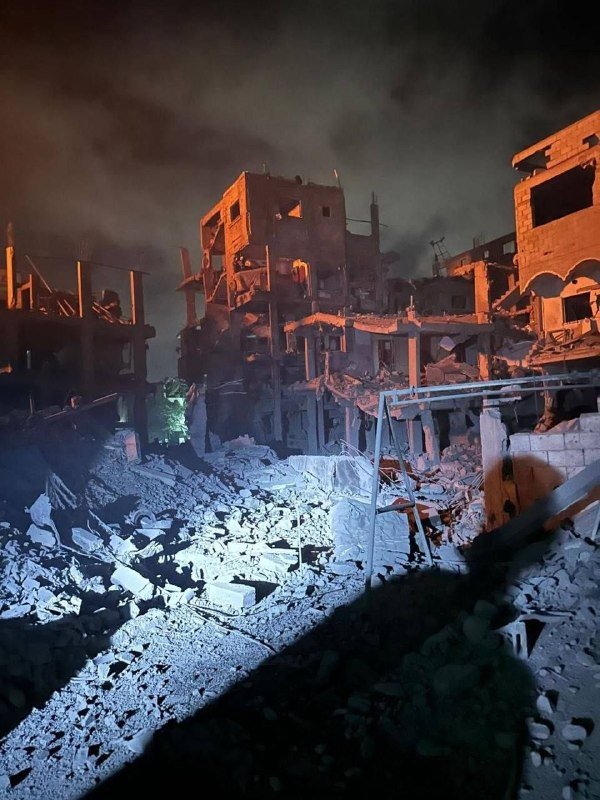
Israeli warplanes struck the town of Houmine Al-Fawqa in the Nabatieh district of southern Lebanon in the early hours of 10 June 2026, according to two Telegram posts filed at 09:40 UTC by The Cradle Media, and corroborated minutes later by Iran's English-language state broadcaster PressTV. The strike landed hours after Hezbollah, the Iran-aligned Shia movement that has held a persistent presence along the Lebanon-Israel frontier since the early 1980s, claimed fresh drone attacks against Israeli armoured units operating inside the border area. Two short bulletins, no Western wire confirmation, and a casualty count that the publicly available sources do not specify — that is the ledger on the table as this article goes out, and it is the ledger the rest of this piece is built on.
What the open record does show, with reasonable confidence, is that the southern front has not gone quiet. The Cradle's 09:40 UTC post identifies Houmine Al-Fawqa by name and locates it inside the Nabatieh district, the same stretch of south Lebanon that has hosted most of the cross-border fire since the November 2023 ceasefire froze the worst of the 2023-2024 war. PressTV's 09:40 UTC post, written in the shorthand of a rolling news desk, repeats the location and the timing without disputing them. A separate PressTV post filed at 08:49 UTC, more than forty minutes before the strike reports, carries Hezbollah's claim that its drones continue to "inflict heavy casualties" on Israeli troops in the same theatre. The two sets of claims — Israeli bombs on a Lebanese town, Hezbollah drones on Israeli armour — are posted minutes apart by outlets that are sympathetic to different sides of the conflict, and the editorial distance between them is the news.
The strike, as currently sourced
The Cradle's two identical posts are explicit on the location but thin on everything else. They do not name the specific weapon used, the time of impact, the precise target inside Houmine Al-Fawqa, the number of civilians displaced, or any casualty figure. PressTV's bulletin, which appears to be reposting or amplifying the same incident, adds no new detail; it confirms the location and the timing, and otherwise passes through The Cradle's framing. The standard disclaimer applies: both outlets sit inside a media ecosystem that is openly hostile to Israel, and both are reporting on an event their own coverage has an interest in amplifying. Their reports are evidence that an incident occurred, and that the parties involved framed it in a particular way. They are not, on their own, a full account of the strike.
What is missing from the available record is the kind of detail that would normally anchor a piece like this: an Israeli military spokesperson statement, a UN Interim Force in Lebanon (UNIFIL) press note, a Lebanese civil defence figure, or an independent wire service confirmation from Reuters, AFP, or the Associated Press. None of that appears in the source material on hand. Monexus's standing practice is to publish with that gap named, not papered over.
Hezbollah's parallel claim
The PressTV post at 08:49 UTC, written from the other side of the firing line, is more rhetorical and less specific. It claims that Hezbollah drones continue to target "the regime's armored units" — the phrase "regime" being PressTV's standard translation of "the Israeli state" — and that those attacks are inflicting "heavy casualties." Hezbollah's media arm has, since the 1980s, used a similar vocabulary for operations in south Lebanon, and the broadcast outlets that carry its statements tend to transmit them verbatim. The claim is being made; the evidence supporting it is not in the public record this article is working from. Israeli sources have historically disputed Hezbollah's casualty figures, and there is no reason on this single morning to treat the PressTV line as a confirmed count. The framing matters because it is the same vocabulary that, on previous occasions, has preceded Hezbollah claims of operationally significant strikes — and on previous occasions, the Israeli military has later denied the scale of the damage described.
A front that does not go quiet
The bigger story sitting underneath the two Telegram posts is structural. The November 2023 ceasefire, brokered under heavy US and French pressure, was supposed to freeze the southern front for good. It did not. Throughout 2024 and 2025, Israeli and Hezbollah-linked forces have continued to exchange fire at a tempo that falls well short of a 2023-2024-style war but is well above the pre-October 2023 baseline. The most common pattern, on the days when wire reporting does pick these incidents up, is an Israeli strike on a village or a piece of Hezbollah-linked infrastructure in south Lebanon, followed hours later by a Hezbollah claim of retaliatory fire across the border. The two events in the source material on 10 June 2026 fit that pattern almost exactly: a strike on Houmine Al-Fawqa in the morning, a Hezbollah drone claim in the same news cycle. The pattern is the story; the individual incidents are markers of how far the pattern has drifted from the ceasefire's intended baseline.
What remains uncertain
Three things are not knowable from the open record on hand. First, the human cost of the strike on Houmine Al-Fawqa — the source posts do not give a casualty count, and there is no Lebanese civil defence or health ministry line in the material. Second, the operational substance behind Hezbollah's drone claim at 08:49 UTC: where the drones were said to have struck, what was hit, and how the Israeli military responded. Third, whether the strike and the drone claim are causally linked — that is, whether one is being framed as a response to the other, or whether both are simply the day's instalment of a running exchange. Western wire confirmation, when it lands, will likely tighten the timeline and put numbers on the damage. Until then, this article is published with the available ledger and the gap named.
Desk note: Monexus's editorial compass treats Israeli security operations and Palestinian and Lebanese civilian harm as first-order facts, weighted in their own register. The two Telegram sources in the thread — The Cradle Media and PressTV — are openly aligned with one side of the conflict, and the wire this article runs on is short by design. We have published with the gap named rather than wait; a fuller piece will run once Western-wire sourcing confirms the strike and the Hezbollah claim.
Wire provenance
This editorial synthesis draws on the following public wire/social posts:
- https://t.me/thecradlemedia
- https://t.me/presstv
- https://t.me/thecradlemedia
- https://t.me/presstv
Follow the event.
These dated source records provide context. They do not retrospectively verify this archive article.
Separate what the nuclear watchdog reported from what it could not determine after the June 2025 strikes.