Netanyahu strikes back at Erdogan as Israel–Turkey rhetoric reaches a new low
A personal attack on Israel’s prime minister, a Turkish warning on Syria and Lebanon, and a renewed spat between two NATO-border states — all within hours. The substance is thinner than the noise suggests.
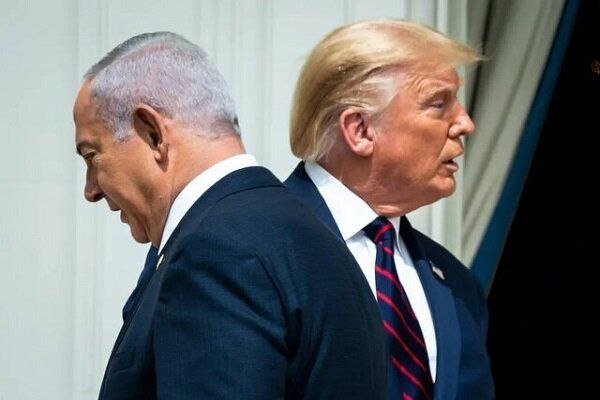
A diplomatic fight that was supposed to be about regional security was, by Wednesday afternoon, about a single word. Within hours, Turkish President Recep Tayyip Erdogan had accused Israeli Prime Minister Benjamin Netanyahu of genocidal methods, Netanyahu had returned fire, and the two governments had spent a calendar day trading insults that, in a calmer moment, would have required a third-party back-channel to repair. The exchange, on 10 June 2026, has done what such exchanges usually do: pushed any working communication between NATO’s second-largest army and Israel further out of reach, while telling observers almost nothing new about the underlying disputes that the rhetoric is, in truth, obscuring.
What is actually new is less the temperature than the venue. Erdogan’s remarks were framed by a Turkish presidential statement that the country “will not tolerate” Israeli attacks on Syria and Lebanon — a warning, not a threat, but one tied to a specific geopolitical context: a year of escalation along the Israeli-Lebanese border, a fragile ceasefire in Syria whose quiet has been the result of sustained Turkish diplomatic effort, and a wider regional architecture in which Ankara has positioned itself as both mediator and patron. The Netanyahu counter-punch is then less a deviation from a working relationship than a confirmation that, at the leadership level, there is no working relationship to deviate from.
What Erdogan actually said, and to whom
The first shot came from the Turkish presidency, transmitted on 10 June 2026 at 12:28 UTC via Iranian state-linked outlet Tasnim News, which carried the official Turkish text. Erdogan accused Israel of “crimes of the Israeli regime” in the region and warned that Turkey “will not tolerate Israel’s attack on Syria and Lebanon.” The phrase matters: it is the public-facing version of a position Ankara has held privately for at least a year, that Israeli operations on the Syrian and Lebanese fronts are destabilising precisely the spaces where Turkey is trying to lock in ceasefire and refugee-return arrangements.
The second shot came later in the day. According to the open-source monitor OSINTdefender, Erdogan stated that “Netanyahu has reached a level that would make Hitler jealous with his genocidal methods.” The line was relayed on the OSINTlive Telegram channel at 12:20 UTC. Even by the standard of the Turkish-Israeli file — which has not seen a functioning ambassador in either capital for the better part of a decade — the comparison was unusually direct. Israel recalled its diplomats from Ankara in 2018; Turkey reciprocated in 2018; the relationship has been held together since by interest rather than affinity.
Netanyahu’s reply, and the political economy of escalation
The response from the prime minister’s office came the same day, carried by the Beirut-based outlet The Cradle at 13:21 UTC. Netanyahu “launched a fresh attack on” Erdogan, in the outlet’s phrase, after the Turkish president’s latest comments. The Cradle, which covers the regional axis that includes Iran, Syria and Turkey, framed the exchange as the latest in a series of public collisions rather than a rupture. The detail to note is what the Israeli statement did not say: it did not address the substantive Turkish concerns about Israeli operations in Syrian and Lebanese airspace, nor did it engage Erdogan’s reference to “crimes of the Israeli regime.” It stayed on the personal register.
That is consistent with a pattern in Netanyahu’s public diplomacy of the last two years: respond to regional criticism with attacks on the critic, not with substantive policy rebuttal. The tactical rationale is clear. A response to the Turkish warning on Syria and Lebanon would require an Israeli position on the limits of operations in the north, on the ceasefire architecture in southern Syria, and on the deconfliction arrangements with Russia and Turkey that have so far kept escalation contained. A response to the Turkish president, by contrast, is a free swing in front of an Israeli audience already conditioned to read regional criticism through the lens of personal hostility.
The structure underneath the insult
What both leaders are doing, in plain terms, is signalling to different constituencies about who they are. Erdogan is signalling to the Turkish and wider Sunni-Arab public that the Palestine file remains the moral anchor of his regional posture, and that Turkish interests in Syria and Lebanon are non-negotiable. He is also signalling to the Syrian transitional government and to Lebanese factions that Ankara will not quietly acquiesce to an Israeli doctrine of free movement in the two theatres. The substance of the “will not tolerate” formulation is that Turkish reaction is calibrated to the diplomatic cost Israel is willing to bear, not to a red line that would produce direct confrontation.
Netanyahu, on the other side, is signalling to a domestic coalition for whom normalisation with Turkey is, at best, an abstraction and, at worst, a betrayal of the Israeli public’s reading of October 7 and its aftermath. A personal attack on Erdogan performs solidarity with the Israeli right’s reading of regional politics: that Turkey’s mediating role in Gaza, in the Syrian north and in Lebanon is, at root, an effort to constrain Israeli autonomy rather than a legitimate regional foreign policy. The exchange is therefore less about the Turkish-Israeli relationship than about two separate audiences being addressed simultaneously.
What we verified and what we could not
The verified core is narrow. On 10 June 2026, Erdogan made public remarks criticising Israeli policy toward Syria and Lebanon, including a reference to “crimes of the Israeli regime.” On the same day, Netanyahu’s office issued a public attack on Erdogan in response. These two facts are corroborated by the Telegram channels of Tasnim News, the OSINTlive monitor, and The Cradle.
What we could not verify from the available sourcing: the precise full text of Erdogan’s “Hitler” comparison, which the OSINTdefender relay paraphrases rather than publishes in original; the formal content of the Netanyahu statement, beyond the characterisation in The Cradle; and whether any of the public exchanges were accompanied by back-channel contact or third-party mediation. The sourcing is also weighted toward outlets that read the region through a non-Western or Iran-sympathetic lens, which is itself a fact about the public-information environment: Western-wire confirmation of the Erdogan-Netanyahu exchange, if it exists, has not surfaced in the thread material available to this publication on 10 June 2026. Readers should treat the rhetorical core as confirmed and the diplomatic implications as inferential.
The stakes, and what to watch next
The immediate risk is the one that has been latent in the file for two years: that an exchange at the leadership level becomes a pretext for material decisions below it. Israel retains a defence relationship with Azerbaijan that Turkey regards as a strategic problem; Turkey retains a presence in northern Syria and a working relationship with the Syrian transitional government that Israel regards as a strategic problem; and the two are on opposite sides of the question of Iranian airspace and the future of Hezbollah’s residual armed presence in Lebanon. None of these frictions is new, and none has been resolved by the rhetoric. What the rhetoric does, on days like this one, is lower the cost of any future step either side might take.
The two indicators to watch over the coming week are narrow and concrete. First, whether the Turkish foreign ministry escalates from presidential remarks to a formal démarche, and whether the Israeli foreign ministry reciprocates. Second, whether the United States, which has held the deconfliction channel with both Ankara and Jerusalem, issues a public or private line on the exchange. Silence from Washington would, in this case, be more telling than comment: it would indicate that the administration has judged the spat to be below the threshold of its attention. A statement, by contrast, would indicate that the spat is being read as a leading indicator of something more structural.
For now, the public record is a single afternoon of name-calling between two leaders who have not had a working phone call in years. That, in itself, is a fact about the regional order. The question the rest of the week will answer is whether the rest of the regional order is willing to leave it at that.
— How Monexus framed this: the wire cycle on 10 June 2026 carried the exchange as personal animus between two leaders. The structural story is the audience problem on each side: Erdogan speaking to a Turkish and Arab public, Netanyahu speaking to a domestic coalition for whom normalisation with Ankara is not on offer. Substance — Syria, Lebanon, the Turkish mediating role — is being carried in the same news cycle but is not, on the evidence available, the main thing being argued about.
Wire provenance
This editorial synthesis draws on the following public wire/social posts:
- https://t.me/thecradlemedia
- https://t.me/JahanTasnim
- https://t.me/osintlive
- https://t.me/TheCradleMedia