OPEC's May output slump: a US naval blockade and a market reckoning
A Reuters survey of producers shows OPEC crude output fell in May to its lowest in more than two decades, with a US naval blockade of Iranian exports doing the bulk of the damage.
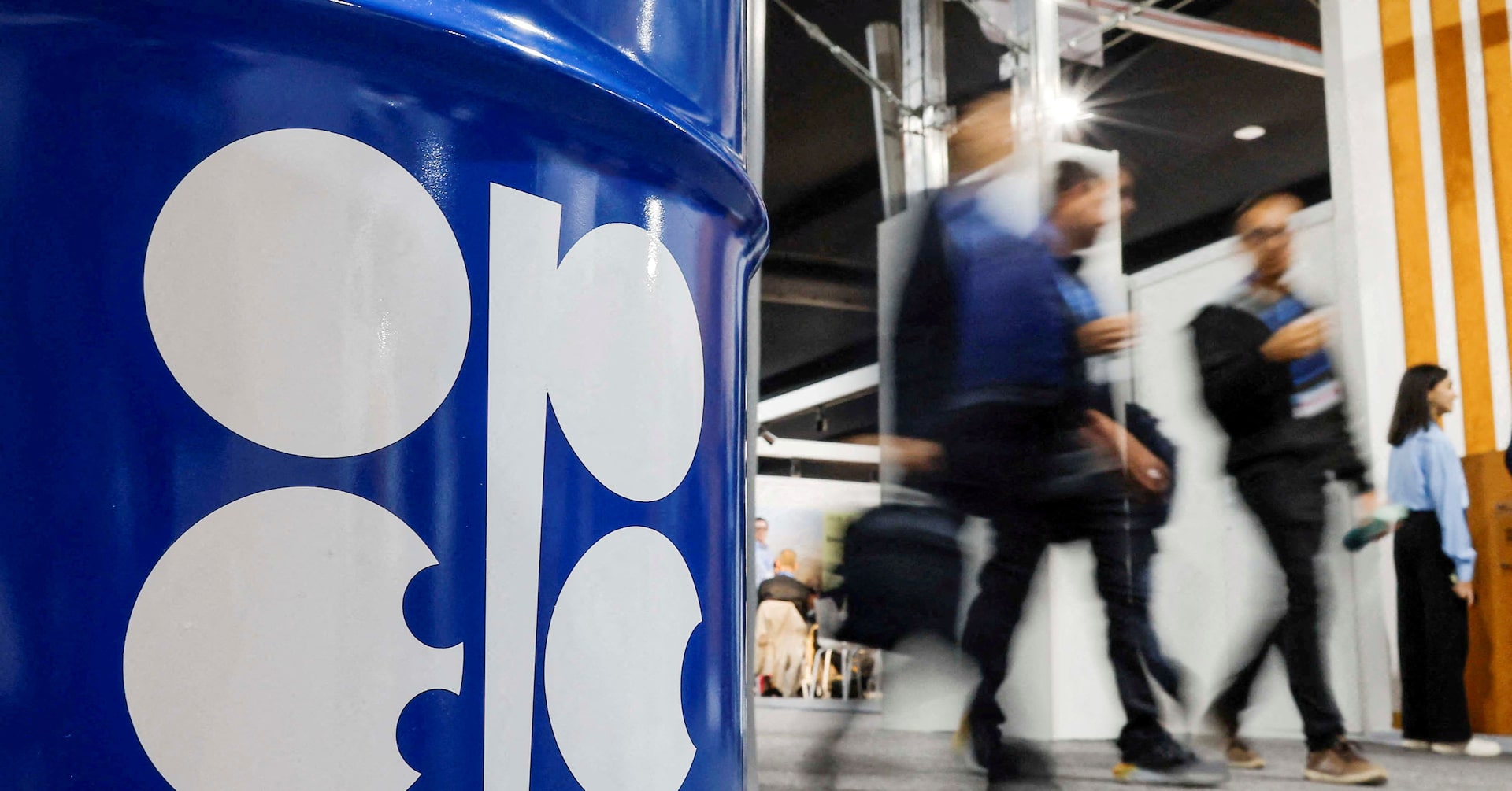
OPEC's crude production fell in May to its lowest monthly level in more than two decades, according to a Reuters survey reported by The Cradle on 10 June 2026, with the loss of Iranian barrels under an active US naval blockade doing the bulk of the damage. The headline number matters less for what it says about OPEC discipline than for what it says about the new geography of enforcement in the Gulf: supply is no longer shaped primarily by cartel arithmetic, and the marginal barrel leaving the market is being removed by a foreign navy, not by a producer quorum in Vienna.
The survey is the clearest data point yet that Washington's maximum-pressure campaign against Tehran has crossed from financial sanctions into physical interdiction of cargoes. For two decades, the US toolkit against Iran has rested on secondary sanctions, SWIFT disconnection, and a shadow-fleet enforcement regime run out of the Treasury's Office of Foreign Assets Control. The May reading suggests a different instrument: hulls, helicopters, and boarding teams operating in the Strait of Hormuz and the broader Gulf of Oman approach lanes.
What the survey actually measures
The Reuters poll aggregates production estimates from analysts tracking OPEC's thirteen members, weighted by each country's quota and historical output share. A reading described as the lowest since at least 2000 implies a sustained, multi-month contraction — not a one-off outage from a single field or terminal shutdown. The two-decade reference frame is itself revealing: the period since 2000 includes the US shale surge, the 2014–2016 oil price collapse, the 2020 demand destruction from the pandemic, and the 2022–2023 sanctions reset on Russian flows. For OPEC's collective barrel count to fall below every one of those troughs is a structural rather than a cyclical event.
Iran, OPEC's third- or fourth-largest producer depending on the month, has historically been the swing barrel the cartel could not fully control. Sanctions-busting exports to Chinese teapot refiners, Venezuelan intermediaries, and a sprawling dark-fleet network kept roughly 1.3 to 1.6 million barrels a day moving even under stringent US measures. A naval blockade converts that grey-market infrastructure from an asset into a liability: storage tanks at sea become identifiable targets, ship-to-ship transfers become observable, and insurance premiums for any hull with Iranian history spike beyond commercial viability.
The counter-narrative: how much is blockade, how much is demand
The dominant read is straightforward — US coercion is biting. The counter-narrative is that OPEC was already losing barrels to demand softness and disciplined quota compliance from Saudi Arabia and the UAE, both of which have held back production in defence of a price band that several members consider too low. Riyadh and Abu Dhabi cut deeper than required in early 2026 to defend roughly $75-a-barrel Brent; Kuwait and Iraq have, by their own admission, struggled to maintain their assigned levels.
The blockade reading and the quota reading are not mutually exclusive. They reinforce each other in the short term. Over a longer horizon they pull in opposite directions: a sustained naval campaign compresses Iranian supply but raises the political cost of operating in the Gulf for every other exporter, including the Saudis and Emiratis whose own cargoes transit the same contested water. A blockade that lasts long enough to remove Iran's exports can also remove the implicit US security guarantee that has, for seventy years, underwritten Gulf shipping.
What this does to the global barrel market
The immediate effect is upward pressure on freight and on the time-spread structure of the futures curve. Backwardation — the condition in which near-month contracts trade above those further out — typically deepens when physical supply is tight relative to immediate demand. Refiners in Asia, the marginal buyers of Iranian crude, are already pivoting to discounted Russian Urals and to West African grades that were previously priced for Atlantic Basin discharge. The reshuffle is not free: longer voyages add to insurance, to bunker fuel costs, and to working capital tied up in transit.
The second-order effect is on OPEC's internal cohesion. A bloc whose discipline is enforced by an outside navy is no longer the same bloc the world has grown accustomed to modelling. The cartel's leverage over prices depends on the credibility of its supply additions when markets tighten. If a foreign power can subtract barrels at will, the marginal value of an OPEC spare-capacity statement — historically a market-moving event — diminishes. Watch the September 2026 OPEC+ ministerial meeting for early signs of how Riyadh frames its own position: as the swing producer disciplining a market, or as a producer whose neighbourhood is being policed by Washington.
Stakes and what remains unverified
For Brent and WTI, the reading is bullish on a six-to-twelve-month horizon if the blockade holds and Iranian exports remain compressed. For Tehran, the cost of the campaign is severe and visible: state revenue, the regime's ability to fund regional proxy networks, and the political capital of the clerical establishment are all directly exposed. For Gulf monarchies, the arrangement delivers higher prices in the short term but introduces a new dependency — on US naval risk tolerance and on a Congress that has grown less willing to write blank operational cheques abroad. For Beijing, the largest single buyer of Iranian crude, the math is simpler and more uncomfortable: an enforced reroute of its seaborne supply chain, with the added friction of having to coordinate with Indian and Turkish refiners who have so far been the principal off-takers of sanctioned barrels rerouted through intermediaries.
The survey carries the usual caveats. Production figures for sanctioned producers are estimates derived from tanker tracking, satellite observation of storage, and refinery receipts; they are subject to wide error bands. The Cradle's framing reflects its editorial positioning as a Beirut-based outlet sympathetic to the Iranian-led axis of resistance — useful for surfacing counter-narratives that the Western wires under-weight, but not a stand-alone factual basis. The Reuters survey itself, which Monexus has not been able to verify against the underlying analyst-by-analyst table from this thread, is the load-bearing claim. What is not in dispute is the direction of travel: OPEC's May barrel count shrank, the Iranian contribution did most of the shrinking, and the mechanism doing the shrinking is no longer sanctions paperwork but a fleet of warships.
The question that follows is whether the blockade is intended as a permanent feature of the sanctions architecture or as a coercive instrument with an off-ramp. Tehran's negotiating posture in any back-channel talks over the coming months will answer that. Until then, the marginal barrel is being decided in the Gulf, not in Vienna — and the market is repricing accordingly.
This article is part of Monexus's energy and geopolitics coverage. The wire framing of the May OPEC reading centred on cartel dynamics and Saudi quota discipline; Monexus foregrounds the blockade as the dominant variable, drawing on The Cradle's coverage to surface the enforcement dimension that mainstream wires have so far under-weighted.
Wire provenance
This editorial synthesis draws on the following public wire/social posts:
- https://t.me/TheCradleMedia
- https://t.me/thecradlemedia