Pakistan's twin pressures: a widening trade deficit and a fresh round of strikes in Afghanistan
A 34.76 billion dollar eleven-month trade gap and renewed air strikes across the Durand Line land on the same morning, exposing the squeeze on Islamabad's economic and security posture.
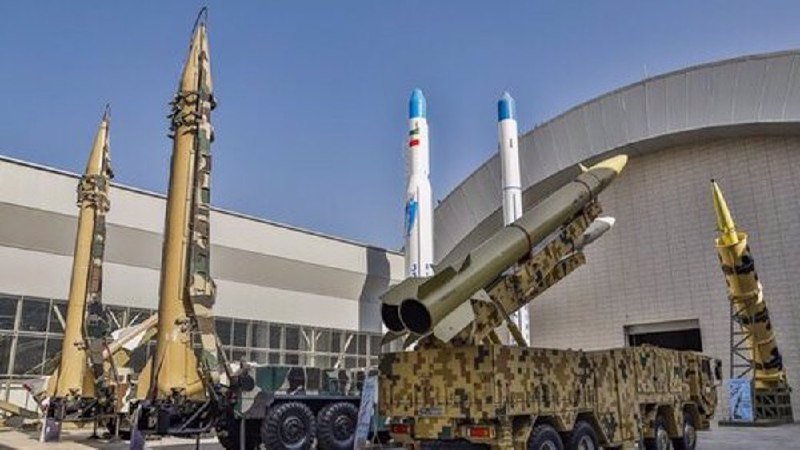
On 10 June 2026, two news items from Pakistan landed within an hour of each other, and together they sketch a country pulled in opposite directions. State-aligned outlets in Iran reported that Pakistan's trade deficit had climbed to 34.76 billion dollars in the first eleven months of the current fiscal year. Within minutes, BBC News and France 24 carried word that Pakistan had launched fresh air strikes inside Afghanistan, killing several people and reopening a frontier that had been quiet for weeks after months of earlier fighting.
Read in isolation, each story belongs to a familiar file. Together, they describe the structural bind on a state that must finance imports on a widening external shortfall while still projecting hard power along a contested border. The deficits and the bombs are not the same problem, but they share a balance of payments: a government that cannot generate enough export revenue to cover its import bill has less margin to absorb a security shock, and a security shock that disrupts trade and transit makes the deficit worse.
The trade ledger
The 34.76 billion dollar figure, carried by the Tasnim news agency, refers to the eleven months of Pakistan's fiscal year that closed ahead of the June release window. Tasnim framed the number as a worsening of the country's external position: imports continue to outrun exports by a wide margin, and the gap is being financed through a familiar mix of remittances, external borrowing, and periodic IMF programmes that come with their own fiscal conditions.
The trade deficit is not a surprise. Pakistan has run persistent current-account shortfalls for years, and the underlying composition of its trade — energy and capital goods on the import side, textiles and a narrow basket of agricultural products on the export side — has not changed dramatically. What the latest figure registers is the cumulative weight of that composition, and the pressure it places on the rupee and on foreign exchange reserves at a moment when global financing conditions are tighter than they were in the early part of the decade. The structural point is plain: a country cannot indefinitely import more than it exports without either devaluing, borrowing, or drawing down buffers, and all three options carry political costs inside Pakistan.
The strikes across the Durand Line
The security story, as reported by BBC News and France 24 on the same morning, is more kinetic. Pakistan launched air strikes on Afghan territory, killing several people and wounding others, after a period of relative calm following months of fighting at the start of 2026. BBC's framing emphasised that the strikes had "reignited tensions" along the restive border region; France 24 used the same chronology — calm after months of earlier fighting, now broken — and the same language of renewed operations.
The border in question is the Durand Line, the 2,600-kilometre frontier drawn in 1893 that Pakistan administers as an international boundary and Afghanistan has never formally recognised. The Tehrik-e-Taliban Pakistan (TTP) and other armed groups have long used sanctuaries on the Afghan side of the line to stage attacks inside Pakistani territory, and Islamabad has periodically responded with cross-border shelling, air strikes, and ground operations, most recently in the early months of 2026. The pattern is well established: a high-profile attack inside Pakistan, an accusation that Kabul is not doing enough, a calibration of force, and a diplomatic cycle that runs from protest notes to quiet back-channel contacts. The 10 June strikes sit inside that pattern.
The structural squeeze
What the two stories share is the question of state capacity. A country running a 34.76 billion dollar trade gap in eleven months has limited room to subsidise military operations abroad, even short, sharp ones; a country that has launched multiple rounds of air strikes in 2026 cannot, on the other hand, allow its western border to drift into uncontrolled insurgent use without paying a security price at home. The two pressures are linked through the budget: defence spending competes with debt service and subsidy bills, and both compete with the development spending that the IMF periodically asks Pakistan to protect.
A second structural factor is external dependency. Pakistan's defence acquisitions — aircraft, munitions, surveillance platforms — run largely through a small number of suppliers, with China as the dominant partner in recent years and the United States and Gulf states playing significant but smaller roles. That supplier base gives Islamabad diplomatic flexibility but also exposes it to the same export-control and financing environment that shapes its civilian import bill. A trade deficit financed partly by external borrowing, and a security posture dependent on imported equipment, are two sides of the same external account.
A third factor is the question of transit. The trade numbers that underlie the deficit include energy imports that arrive by sea and overland, and the routes that move those imports into the Pakistani interior run close to, or through, the same border regions where the air strikes are taking place. Even a short disruption to a transit corridor — a temporary closure of a border crossing, a security scare on a highway, an insurance surcharge on a convoy route — feeds back into the import bill, through higher logistics costs and, in some cases, higher premia on the sovereign risk that determines Pakistan's borrowing terms.
Stakes and the road into late 2026
The stakes, on a six-to-twelve-month horizon, are concrete. If the trade gap continues to widen at the rate implied by the eleven-month figure, Pakistan will enter the next IMF review with a smaller reserve cushion and a narrower set of policy options. If the strikes along the Afghan border produce a retaliatory cycle — whether from TTP, from the Islamic State Khorasan Province, or from Afghan state forces — the security bill rises, transit routes come under pressure, and the political space for economic adjustment contracts. The country's external partners, from Beijing to the Gulf monarchies to Washington, will be watching the same two ledgers: the balance of payments and the security ledger, and the question of whether the government can hold both at once.
The plausible counter-reading is that the two stories do not in fact reinforce each other. Pakistan has run trade deficits for most of its independent history while still maintaining a functioning military; the 10 June strikes are a single day's operation in a longer campaign, not a strategic escalation; and the diplomatic and economic cost of a short, sharp round of air strikes is usually manageable. The dominant framing holds, however, on the cumulative point: a 34.76 billion dollar eleven-month shortfall is large by historical standards, and a security posture that requires periodic kinetic operations along a 2,600-kilometre frontier is expensive in both foreign exchange and political capital. The two ledgers are denominated in different currencies, but they draw on the same account.
What remains uncertain, and what the available reporting does not yet resolve, is the operational scope of the 10 June strikes — the targets, the casualty count, and the specific incidents that triggered them — and the official Pakistani and Afghan government responses beyond the initial wire accounts. The trade figure, by contrast, is a single release with clear parameters: 34.76 billion dollars, eleven months, current fiscal year, reported by Tasnim on 10 June 2026. The pattern that connects them is structural, and it will be visible in the next round of data whichever direction it moves.
Desk note: Monexus treats the trade release and the cross-border strikes as one story because they share an external account, not because the reporting ties them together causally. The wire ledgers do not connect the two; the structure does.
Wire provenance
This editorial synthesis draws on the following public wire/social posts:
- https://t.me/JahanTasnim/1234
- https://t.me/france24_en/5678
Follow the event.
These dated source records provide context. They do not retrospectively verify this archive article.
Separate what the nuclear watchdog reported from what it could not determine after the June 2025 strikes.