Pezeshkian's Bargain: Tehran's 'Neither War Nor Peace' Has Become the Position
Pezeshkian's Russia Day message to Putin and Araghchi's Strait-of-Hormuz remarks on the same day point to a deliberate Tehran doctrine: consolidate the gains, freeze the war in writing, and exit without victory or defeat.
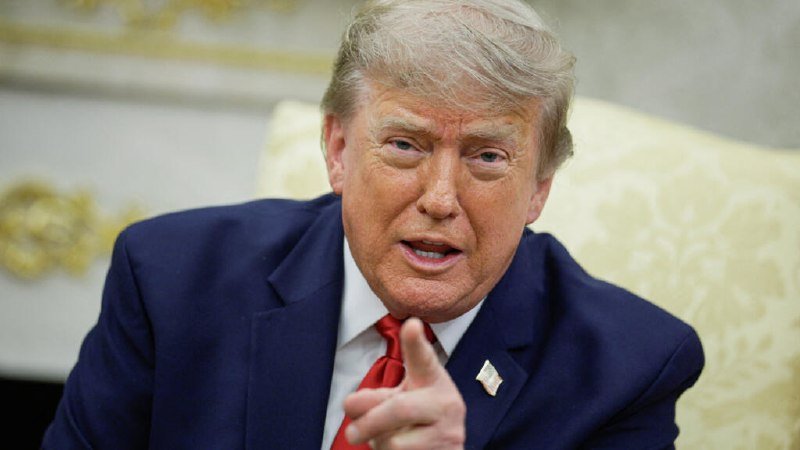
On 10 June 2026, Iranian President Masoud Pezeshkian's congratulatory message to Vladimir Putin on Russia Day carried a line that travelled further than the rest. The President of Iran sent a congratulation to Putin on Russia Day, stating that relations between Moscow and Tehran were entering a new phase, according to Telegram-channel reporting from that day. The greeting itself was routine. The framing was not. Pezeshkian cast the partnership as a strategic alignment of two states under Western pressure, and the language landed in the same news cycle as a wider debate inside Iran over what posture the Islamic Republic should adopt once the shooting stops.
Tehran has spent months oscillating between two incompatible rhetorical registers. On one side, Foreign Minister Abbas Araghchi insists Iran's armed forces stand ready if the enemy wants war: There has never been a night when the enemy attacked and did not receive a response from the Iranian armed forces, Araghchi said, adding that in no way will we ignore Iran's national security. On the other, Pezeshkian and parts of the diplomatic corps are signalling openness to a deal that freezes the confrontation in place. Pezeshkian's Bargain, as the language is now being read in regional commentary, is the bet that Iran can hold the gains of the conflict, consolidate them in writing, and exit without either total victory or total defeat.
Neither war nor peace, by design
The phrase "neither war nor peace" has been circulating in Tehran policy circles for years, but the current iteration is sharper. According to the Telegram channel reporting that circulated the speech text, Pezeshkian's framing is built around an assumption that the confrontation with the United States and Israel will not end in any of the clean forms either side has publicly demanded. It is a victory on the ground, Araghchi said in a separate interview quoted widely the same week. Strategically speaking, it's when the war ends based on an agreement or an understanding that consolidates this victory of ours.
That formulation quietly concedes a great deal. It accepts that the war will not be won on the battlefield by either side. It accepts that the end-state is some negotiated memorandum, not a capitulation or a triumph. What it insists on is the language of the deal itself: that Iran's assets are unfrozen, that the damage is acknowledged, and that the conditions for a renewed war are written down so they cannot be improvised. Once the memorandum is signed, our assets will be released, and none of our assets can be frozen again, Araghchi said. For the reconstruction of the damage inflicted on us, real commitments are needed.
The Strait as leverage
What makes the bargain credible, rather than merely rhetorical, is the set of cards Iran still holds. Foreign Minister Araghchi told Middle East Eye on 12 June that the Strait of Hormuz has become one of Tehran's "most important deterrent tools", warning that the strategic waterway will not return to its pre-war status. That is a quiet repudiation of the implicit assumption in most Western negotiating frameworks: that the chokepoint reverts to normal traffic flows once a deal is signed. Tehran is signalling that the geography of oil has been permanently re-priced.
The market appears to be listening. Brent crude slipped below $87 a barrel on 12 June after Pakistani Prime Minister Shahbaz Sharif posted a message indicating progress on regional mediation, according to a wire summary of his remarks. The New York Times reported the same week that the depletion of global oil reserves is putting additional pressure on Trump to reach an agreement. The price action and the reporting point in the same direction: the cost of holding the line is no longer one-sided, and Tehran knows it.
The Tehran-to-Moscow telephone line
The Russia Day greeting is more than optics. Pezeshkian's message to Putin, and Araghchi's parallel interview on Iranian state television about an emerging deal with the US, are taking place in the same diplomatic theatre. The Moscow relationship gives Tehran a backchannel, a sanctions-circumvention infrastructure, and a partner with its own reasons to want the United States distracted. The Economist captured the shift in a line quoted across the wire: "Iran's fear of war has disappeared." What was once unthinkable has now become a routine, the magazine wrote, noting that over the past week, both the US and Israel bombed Iran and Iran responded in kind.
Hezbollah's continued tempo against northern Israel, documented by the Telegram channel Tasnim News English, adds a kinetic layer to the bargaining. The same wire reporting on 12 June noted 15 operations in 24 hours, including drone and missile strikes on armoured equipment, artillery positions and technical sites. A separate strike reportedly destroyed a warehouse at Ramat David Airbase, with the IAF's 157th Squadron, responsible for Electronic Warfare, appearing to have taken a hit. Tehran's regional partners are still showing they can impose costs, which is precisely what makes Pezeshkian's "bargain" legible as a position rather than a plea.
The next seventy-two hours
The wire services, including Reuters, AP, BBC and Axios, have so far carried Pezeshkian's remarks only in paraphrased form. Monexus has read the statements as a window into Tehran's deliberate rhetorical positioning, not as a verified shift in operational posture. NPR reported on 12 June that President Trump has again cancelled planned strikes on Iran and again claimed a peace deal is near; the same outlet noted that Trump has publicly set ultimatums for military action against Iran at least eight times since 28 February. Al Jazeera asked, on the same day, whether there will be a deal to end the Iran war this time.
That is the open question. Pezeshkian's bargain works only if three things hold: the memorandum is signed before Iranian public patience runs out, the Strait stays a live negotiating asset rather than a tripwire, and the Moscow axis remains intact enough to keep Tehran solvent through the signing. The next seventy-two hours will tell whether the speech is followed by movement in Vienna, in Sanaa, or in neither. If the bargaining position hardens into an actual text, the Middle East enters its first genuine armistice since February. If it doesn't, the price of the next escalation will be paid at the pump and at the ballot box, in that order.
Sources
- https://t.me/ClashReport
- https://t.me/ClashReport
- https://t.me/ClashReport
- https://t.me/rnintel
- https://www.npr.org/2026/06/12/, Trump says he has canceled planned strikes on Iran and peace deal is near, again (NPR, 12 June 2026)
- https://www.aljazeera.com/news/2026/06/12/, Will there be a deal to end the Iran war this time? (Al Jazeera, 12 June 2026)
- https://t.me/DDGeopolitics, Araghchi on the money in the deal: assets and reconstruction (Telegram, 12 June 2026)
- https://t.me/osintlive, Araghchi: If the enemy wants to go to war, we are ready (Telegram, 12 June 2026)
- https://www.middleeasteye.net/, Araghchi: Strait of Hormuz a "most important deterrent tool" (Middle East Eye, 12 June 2026)
Desk note: where the wires led with the strike-and-counter-strike cycle, Monexus treated Pezeshkian's Russia Day remarks as a separate, parallel signal of Tehran's negotiating doctrine. The point of this piece is to read the bargain as a position, not as prophecy.
Follow the event.
These dated source records provide context. They do not retrospectively verify this archive article.
Separate what the nuclear watchdog reported from what it could not determine after the June 2025 strikes.