Doha's quiet runway: why Qatari mediation is now the most underestimated asset in the US-Iran file
A Qatari delegation landed in Tehran on 10 June to push a US-Iran channel nobody else is willing to operate. The mainstream read treats Doha as a back-channel. The structural read says something closer.
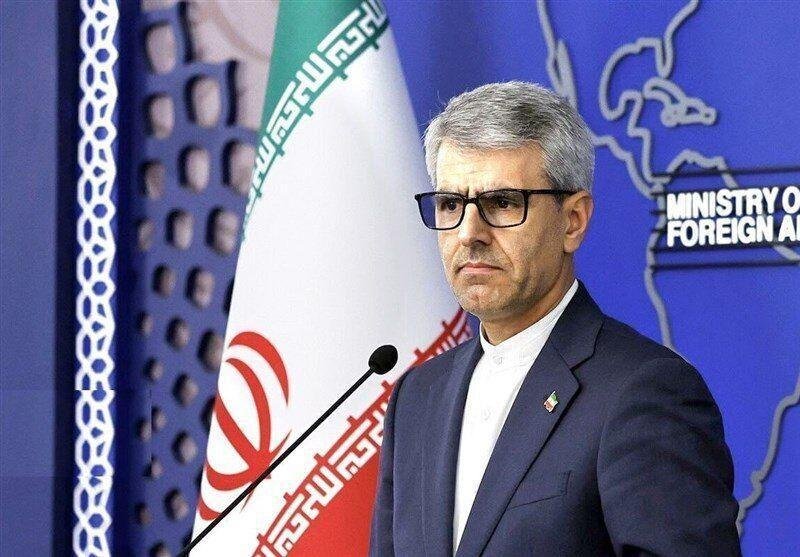
A Qatari delegation touched down in Tehran on 10 June for what the AFP wire, citing a diplomat, described as consultations on both bilateral relations and the long-stalled US-Iran channel, according to a Telegram post by The Cradle at 14:04 UTC. PressTV's own reporting at 13:25 UTC confirmed the arrival and added that the Qatari side framed the trip as a mediation effort aimed at ending the sanctions regime that Iran's critics describe as a "maximum pressure" posture and Tehran frames as an economic war.
The headline tells one story — shuttles, smoke, no breakthrough. The structural story is more interesting, and it explains why the Western press consistently under-weights Doha's role in this file. Qatar is the only Gulf capital simultaneously hosting the region's largest US forward operating base, Al Udeid, and maintaining a working diplomatic channel with the Islamic Republic at a moment when several of its neighbours will not pick up the phone. That combination is rare, and it is not accidental.
What Doha is actually selling
Qatari mediation is not a neutral humanitarian gesture. It is a service Doha sells to both sides of the table, and the price has gone up. For Washington, the value proposition is operational: a venue, a translator of Iranian red lines, and a non-Omani, non-Kuwaiti back-channel that does not have to clear every sentence through Riyadh. For Tehran, the value proposition is something the Saudi-brokered track does not currently offer — directness without a sectarian pre-condition.
The cost for Doha is reputational on both ends. Inside the Gulf, Qatar absorbs the inevitable suspicion that any mediator is implicitly legitimising the other side. Inside the wider US foreign-policy debate, it absorbs the suspicion, never stated on the record, that a small state is extracting rents from a great-power standoff. Both suspicions are partly correct. That is, in a sense, the point of an honest broker.
The counter-narrative the wires are not running
The dominant Western wire line on US-Iran negotiations is that they move when Washington and Tehran both want them to move, and that regional actors are scenery. The counter-narrative — visible in regional press coverage of the 10 June delegation — is that for the past three years the actual momentum in the file has come from Gulf intermediaries, not from capitals on the Potomac or the Caspian. The 2023 and 2024 back-channel rounds that produced the prisoner exchange and the release of frozen Iranian funds were stitched together in Muscat and Doha, with Omani and Qatari officials doing the drafting.
This does not flatter either Washington or Tehran. The US side has structural reasons to understate the Qatari role: a successful deal that visibly required Gulf mediation reads, in domestic political terms, as a deal Washington could not close on its own. The Iranian side has mirror-image reasons: acknowledging Qatari indispensability makes Tehran look more isolated, and harder, than the official line in state media would like to project.
The structural frame, in plain prose
The US-Iran file is now a multidollar negotiation running through intermediaries. That is not a moral judgement; it is a description of how the political economy of sanctions works in 2026. A primary sanctions regime is enforceable only as long as the banks, shipping insurers, and refiners in third-country jurisdictions cooperate. That cooperation is renegotiated continuously, and the renegotiation does not happen in the State Department briefing room. It happens in finance ministries, central-bank governor's offices, and — when all else fails — the foreign minister's office of a Gulf state that has decided it is cheaper to mediate than to absorb the secondary cost of a broken channel.
Doha is collecting rents for sitting at the precise intersection of that machinery. The West reads this as a service; the regional press reads it as leverage. Both readings are correct at once, which is why the framing is usually left vague.
What it costs if the channel closes
If the Qatari mediation track is allowed to wither, the next round of US-Iran disagreement resolves itself in the only forum that remains when the phone is not picked up: the proxy battlefield, the tanker sea lane, and the sanctions enforcer's desk. Each of those forums is more expensive, in lives and in dollars, than the alternative Qatar is currently offering.
The Western interest in keeping this channel open is therefore not sentimental. It is the same interest that produced, in a different decade, the quiet Swiss role in US-Cuba talks and the Norwegian role in the 1993 Oslo process. Small-state mediation is an underrated piece of great-power diplomacy precisely because neither great power has to own the output while it is being negotiated.
What remains genuinely uncertain
The 10 June visit does not, on the public record, contain a breakthrough. Neither the AFP report circulated by The Cradle nor the PressTV readout specifies a deliverable, a date for the next round, or a named American interlocutor. The framing of the trip as a "mediation effort" aimed at "ending the imposed war" — the language in Iranian state media — is itself a tell: Tehran wants the file to read as a sanctions dispute, not a nuclear one, and the Qatari hosting allows that reframing to circulate without either side having to put it on a piece of paper.
A reader should treat the 10 June delegation as a necessary, not sufficient, condition for movement. Doha can carry messages. It cannot, by itself, manufacture political will in Washington or Tehran to act on them.
— Monexus framed this as a structural story about intermediary diplomacy and the political economy of sanctions, not a wire recap of a single landing. The Telegram-sourced wire lines give the facts; the analysis is this publication's.
Wire provenance
This editorial synthesis draws on the following public wire/social posts:
- https://t.me/thecradlemedia
- https://t.me/presstv