Strikes on Qeshm and the New Vocabulary of Restraint
Explosions on Iran's Qeshm Island and Tehran's warning of 'devastating' retaliation mark a phase in which both Washington and the Islamic Republic are speaking loudly and acting carefully — for now.
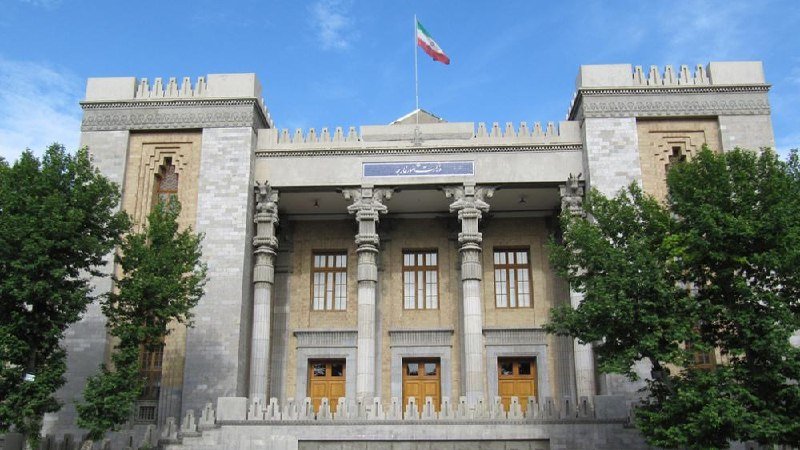
Explosions were audible on and around Iran's Qeshm Island in the early hours of 10 June 2026, according to multiple Telegram channels monitoring regional wires. The first reports, timestamped 07:58 UTC by the BRICS-focused aggregator BRICS News, were quickly echoed at 07:49 UTC by the War and Witness feed citing Iran's Mehr News Agency. The strikes, whose origin has not been confirmed in the items available to Monexus, land on the largest island in the Persian Gulf — directly opposite the Strait of Hormuz and within line-of-sight of Bandar Abbas, the base of the Islamic Republic of Iran Navy's southern fleet. Hours earlier, at 06:58 UTC, BRICS News had carried Iran's public warning that any renewed US attack would be met with "more devastating" strikes, language calibrated for a domestic and regional audience already attuned to the rhythm of escalation between Tehran and Washington.
Taken together, the day's two signals describe a phase in which both sides prefer to talk of restraint while preparing for the opposite. The Iranian warning is the rhetorical move; the Qeshm incident is the operational one. Neither cancels the other out, and that is the point of the present arrangement.
What is actually known
The most that can be said with confidence on the morning of 10 June 2026 is narrow. Mehr News, via the War and Witness Telegram relay, reported explosions "near Qeshm Island." BRICS News, a feed that aggregates from a mix of regional and Iranian-aligned sources, reported the same phenomenon as happening "on" the island. The granularity of language matters: reports of detonations close to an island this size do not, on their own, place ordnance on Iranian sovereign territory. Qeshm hosts both civilian settlements — including the town of Qeshm City and the planned Hengam and Kandal free-zone infrastructure — and sensitive military and IRGC-Navy logistics nodes used to monitor and, in a contingency, threaten shipping through Hormuz.
The framing caveat is essential. Neither Mehr News nor BRICS News is a Western wire; both should be read as primary channels for the Iranian state's preferred narrative, useful for what Iranian officials are willing to put on the record and far less useful for establishing what physically happened. Monexus has no corroborating footage, no US or Iranian official confirmation of origin, and no independent satellite-based verification in the source material reviewed for this piece.
The Iranian counter-frame
The second item in the cluster — Tehran's vow to respond with "more devastating" strikes — is the more analytically interesting document. It is not a denial; it is a threat schedule. By publishing it through Mehr-aligned channels before the Qeshm strikes, Iranian messaging effectively pre-positioned any subsequent incident as the fulfilment of an announced policy, rather than as an unprovoked escalation. That is a recognised technique in crisis signalling: the party that names its threshold first sets the interpretive frame for any later event.
A second reading is also available, and the Western wire tradition tends to favour it: the language is for a domestic audience preparing for a sustained confrontation, and the operational record will lag the rhetoric. Iran has, in recent memory, oscillated between public maximalism and private de-escalation, particularly when energy infrastructure or shipping lanes are at risk of reciprocal targeting. Both readings are consistent with the day's material; the sources do not allow Monexus to choose between them.
The structural setting
The location is the argument. Roughly 20% of global seaborne oil passes through the Strait of Hormuz, and Qeshm Island sits in the chokepoint's northern approach. Any incident within range of the island's monitoring stations is read instantly by Brent and Dubai crude markets, by Gulf shipping insurers, and by the operational planning cells of the US Fifth Fleet in Bahrain. The island is therefore a target of choice for adversaries who want to signal reach without striking the mainland, and a target of last resort for an outside power that wants to degrade Iran's anti-access posture without crossing the line into full-scale war. The geography explains why the report cycle moved so quickly even when the underlying facts were thin.
A second structural fact shapes the moment. Both Washington and Tehran have, for more than a year, been engaged in an indirect conversation conducted through attacks, denials, deconfliction messages, and carefully timed media leaks. The vocabulary of "devastating" retaliation and "more" strikes is a vocabulary of calibrated threat, not of strategic decision. It assumes the audience understands that the speaker is naming a price rather than writing a declaration of war. The risk of this language is that, designed to deter, it can also commit: a public threshold becomes a domestic political floor.
What remains uncertain, and what to watch
The sources Monexus has reviewed for this piece do not establish the origin of the explosions, the type of munition involved, the number of impacts, or whether any party has claimed responsibility. They do not name a casualty count, do not specify damage to energy or military infrastructure on or near Qeshm, and do not record a US or Israeli official statement. "Reportedly" and "according to initial accounts" are the only honest qualifiers available until at least one of those data points is filled in by an independent wire or an on-the-ground correspondent.
Three things to watch in the next 24 to 72 hours. First, whether Iranian state media confirms the incident on the record and with operational detail — silence is itself a signal. Second, whether US Central Command or the State Department reads out any acknowledgement, denial, or non-denial; the language of "we have seen the reports and have nothing to add" has, in past cycles, functioned as quiet confirmation. Third, the price tape: a Brent move of more than three or four percent on a Qeshm-related headline would tell the market — and the two governments — that the chokepoint premium is live again.
For now, both sides are speaking loudly in a register that is designed to be heard without being acted upon. That is the only kind of restraint the current sources will support.
Desk note: Monexus leads with the Iranian-aligned reporting on Qeshm because it is the only first-pass material available in the source feed, and flags it accordingly; the editorial frame is deliberately not aligned with any single wire's escalation line, and treats Tehran's rhetorical threshold-setting with the same analytical seriousness it would accord a State Department briefing.
Wire provenance
This editorial synthesis draws on the following public wire/social posts:
- https://t.me/bricsnews
- https://t.me/wfwitness
- https://t.me/bricsnews
Follow the event.
These dated source records provide context. They do not retrospectively verify this archive article.
Separate what the nuclear watchdog reported from what it could not determine after the June 2025 strikes.