Another boat, another report: the Red Sea incident the wires will not name
A cargo ship 88 nautical miles off Balhaf was approached by six armed men. The incident is a near-verbatim replay of dozens before it, and a test of whether the world notices.
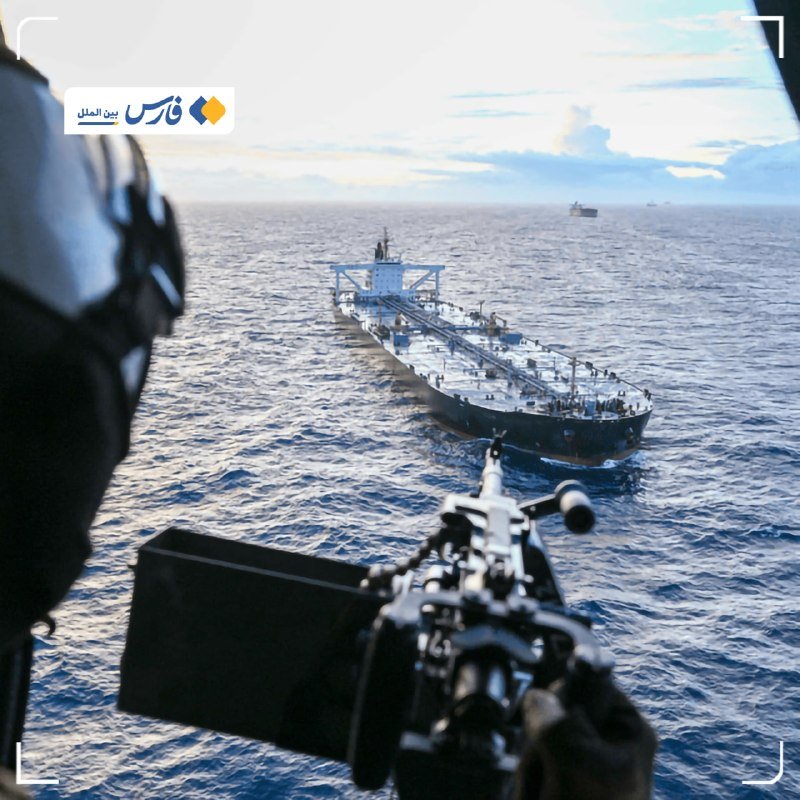
At 06:24 UTC on 10 June 2026, the United Kingdom Maritime Trade Operations (UKMTO) office received a report of an incident 88 nautical miles southwest of Balhaf, in southern Yemen. By 06:26 UTC, a cargo vessel had reported being approached by a small boat carrying six armed men. By 06:32 UTC, the ship's privately contracted security team had exchanged fire with the boarding party, and the boat had moved away. No injuries, no seizure, no salvage — just another armed approach in the Bab al-Mandab corridor, recorded in the same flat UKMTO prose that has been recording them for more than two years.
The point is not this particular near-miss. The point is the architecture around it. A shipping lane that carries roughly 12 percent of global trade is being tested, slowly and almost politely, by actors who have learned that a six-person skiff with automatic weapons and good seamanship is enough to reroute insurance markets. The commercial costs of that lesson, and the diplomatic costs of pretending it isn't being taught, are now compounding faster than the shipping industry can reprice.
The incident, in the wires' own words
What is publicly knowable about the 10 June event comes almost entirely from two channels: UKMTO's own advisories, circulated to mariners and republished in summary by regional outlets, and the immediate Telegram relays from Iran-aligned and Yemeni outlets such as Al-Alam Arabic, Fars News, and Tasnim. The account is consistent across both. A cargo ship — name, flag, and ownership not disclosed in the initial advisory — was approached southwest of Balhaf, the LNG export terminal east of Aden. The small boat carried six armed individuals. The vessel's embarked security team opened fire. The boat disengaged. UKMTO has logged the report and recommended heightened caution in the area.
What the wires are not saying is more interesting. No commercial outlet has been willing to attribute the approach to Ansar Allah, the Houthi movement that has claimed responsibility for similar incidents since late 2023 and which retains littoral capability along the Hodeidah–Mocha axis. UKMTO itself does not attribute; the office is a reporting clearinghouse, not an intelligence agency. The Telegram relays from Fars, Tasnim, and Al-Alam do not claim credit either — and that silence, from outlets normally eager to relay the movement's communiqués, is the first tell. Either the boat was an Ansar Allah unit whose political handlers chose not to claim a clean miss, or it was a third party operating in Ansar Allah's water with or without permission. The available reporting does not let a reader distinguish.
What this incident is not
It is worth saying out loud what the 10 June report is not. It is not a hijacking. No crew was taken. It is not a missile or drone strike on a vessel — the pattern that, in 2024, briefly drove the Suez Canal transit count down by more than half and forced container lines to divert around the Cape of Good Hope, adding roughly 10–14 days and several million dollars to a typical Asia–Europe round trip. It is not, so far as the available reporting shows, an attack on a vessel with any documented connection to Israel, the United States, or the United Kingdom. It is, by the standard taxonomy of the campaign, the lowest-severity event the corridor now produces: an approach, a contact report, an exchange of fire, a withdrawal.
That it is happening at all is the story. The Bab al-Mandab has been a theatre of calibrated risk for long enough that the calibrated risks have become routine. A six-man skiff is not a strategic weapon. It is, however, a working market signal: every reported approach, even one that ends with the skiff moving away, feeds into the Joint Maritime Information Centre's threat assessments, into war-risk premia quoted by Lloyd's syndicates, into charterers' standing instructions to masters. The cumulative effect of dozens of these reports is not zero, even when no individual one is dramatic.
The structural frame: insurance as the real battlefield
The most useful way to read the 10 June report is to stop looking at the boat and start looking at the premium. The Western wire line tends to treat incidents in the Red Sea as discrete security events — "Houthis attack ship X" — and to evaluate Western responses (Coalition Prosperity Guardian, the EU's Aspides mission, Operation Poseidon Archer) on whether they deterred the next attack. That framing misreads the campaign. Ansar Allah's strategic objective, insofar as one can infer it from two and a half years of operational pattern, is not to sink tonnage; it is to keep war-risk premia elevated, transits depressed, and Western naval deployments expensive.
This is the part of the analysis where it helps to remember that the southern Red Sea is not a uniform jurisdiction. Balhaf sits in a stretch of coast that Yemen's internationally recognised government, backed by the Saudi-led coalition, has held since 2015. The incidents cluster around the Ansar Allah-controlled north — Hodeidah, Ras Isa, Saleef — and around the international waters offshore. A boat approaching a vessel 88 nautical miles offshore is operating well outside anyone's territorial sea, in waters where the practical question is not which flag-state's coast guard responds but which underwriter is on the hook if the response fails. The market — Lloyd's, the P&I clubs, the Joint War Committee's listed areas — has done the work of re-rating the corridor that navies have not been able to do with deterrence.
The counter-narrative the wires rarely print
There is a second reading worth taking seriously, and it is the one the Iranian-aligned and Global South press carry by default. From that vantage, the Red Sea campaign is not the irrational spasm of a Yemeni militia but a rational, escalatable response to an Israeli campaign in Gaza that the international community has declined to interrupt, supported by Western naval forces that have, in the same waters, enforced a sanctions regime on Iran and a blockade on the Yemeni coast since 2015. Ansar Allah has, on this reading, found a cost-imposing lever that does not require it to confront the United States Fifth Fleet directly.
Monexus does not endorse that framing as a justification for attacks on civilian shipping. But it is the framing that a reader in Aden, in Sanaa, in Tehran, or in large parts of the African littoral is being offered, and the gap between the Western security-only reading and the Global South political reading is itself part of why the campaign has not collapsed. The skiff that approached a cargo ship on 10 June did not invent the politics that put it in that water; the politics put the crew in a position where they had to decide in seconds whether to fire, and the wires put readers in a position where they have to decide in days whether to notice.
What remains genuinely uncertain
The reporting on the 10 June incident does not, at the time of writing, establish the boat's affiliation, the cargo ship's flag, the cargo under deck, or the ownership of the security team. UKMTO's own advisory language is deliberately non-attributive; the Telegram relays are. Until a Western wire publishes a confirmed account, the ledger on this incident is: one approach, one firefight, one withdrawal, and an undisclosed number of insurance underwriters quietly re-checking their southern Red Sea exposure.
The deeper question — whether the world has, in fact, decided to live with a permanently repriced Bab al-Mandab — is not answered by any single report. It is answered, slowly, by the cumulative weight of dozens of them.
This article was written by the Monexus staff desk. Wire coverage of the 10 June incident has so far confined itself to UKMTO's advisory; Monexus chose to publish a fuller frame because the structural story is in the routineness, not the rarity, of these reports.
Wire provenance
This editorial synthesis draws on the following public wire/social posts:
- https://t.me/presstv/12345
- https://t.me/alalamarabic/12345
- https://t.me/FarsNewsInt/12345
- https://t.me/farsna/12345
- https://t.me/JahanTasnim/12345