The Situation Room Theatre: Trump's Iran Calculus and the Quiet Cost of Brinksmanship
Hours after telling reporters the U.S. would "hit them again," the President reviewed strike options in the Situation Room. The pattern of the last twelve months suggests the headlines will do most of the work.
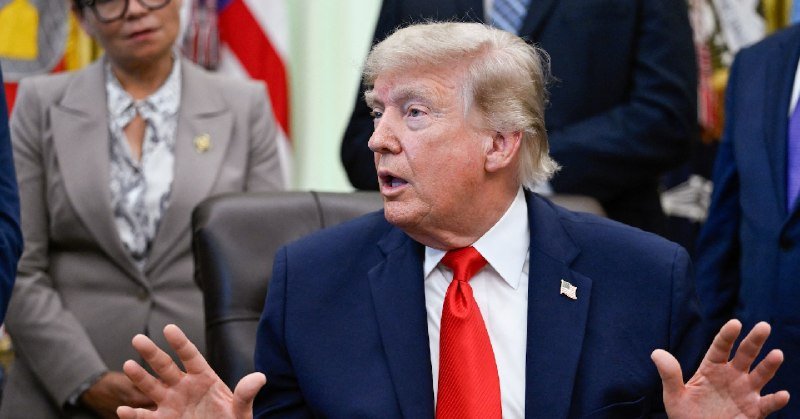
At 20:20 UTC on 10 June 2026, the wire lit up with a single line: President Donald Trump had convened his national security team in the Situation Room that afternoon to review potential new strikes against Iran, per Axios. By 20:28 UTC the same evening, two more aggregators were carrying the same Axios report with the same granular detail — that one option on the table was a "large strike campaign, short in duration, aimed at conv…" — and the same headline framing: hours after telling reporters the United States would "hit them again," the President was weighing how to do it.
The shape of this news cycle is now familiar enough to be a template. A presidential statement, ambiguous on timing. A leak, sourced to a single outlet. A scramble of official and unofficial channels to interpret it. Theatrical pressure, calibrated escalation, an implied deadline that may or may not be real. The question worth asking is not whether strikes are imminent, but why this particular pattern of signalling has become the default American instrument against Iran — and what it costs when the signalling outlives the policy.
What the reporting actually says
The three threads circulating in the 20:20–20:29 UTC window all trace back to one Axios scoop. The President held the Situation Room meeting on the afternoon of 10 June 2026. The agenda: potential new strikes against Iran. One option reportedly discussed: a large, short-duration strike campaign. The political backdrop, per the same reporting: comments to reporters hours earlier in which Trump said the United States would "hit them again." The reporting does not specify targets, timing windows, weapon packages, or congressional notification posture. It does not name the officials present. It does not say whether the meeting produced a decision, a deferral, or a request for additional options.
That thinness is the point. The pattern over the past year — visible in the cadence of these leaks themselves — has been to publish the consideration of force as a news event, distinct from its execution. The instrument is the threat, not the strike. The strike, when it comes, is a separate headline.
The counter-read the wires won't carry
There is a plausible alternate reading, and it deserves air. The same Situation Room, the same short-duration option, the same leak to the same outlet: it could be the architecture of a coercive negotiation rather than the run-up to a kinetic act. The public timeline supports the reading. "Hit them again" is a posture, not a target list. A short-duration campaign, advertised in advance, is closer to a punishment raid than the opening move of a sustained air war. The leak itself — a single tier-1 outlet, on a Wednesday afternoon, hours before US markets close — fits the cadence of financial signalling more than combat preparation.
The Tehran read of the same facts is unlikely to be sympathetic, but it is structurally intelligible. From the Iranian side, a US president who publicly mulls strikes between negotiations, with the mulling itself carried on the evening wire, is not offering good faith. It is offering managed risk. The Iranian counter-frame, when it surfaces through Mehr News, PressTV, or the MFA's English-language briefings, treats each leak as confirmation that the United States cannot separate its Iran policy from its domestic political calendar. The framing is not wrong. It just is not the framing that the Western wires lead with.
What the pattern actually costs
Brinksmanship as a steady state is not free. It is expensive in three currencies, and only one of them is dollars.
First, signalling credibility. A threat that is renewed every six to twelve months, against the same target, with the same vocabulary, decays as an instrument. Tehran discounts it because it has to. Gulf states price insurance against the policy's reversal, not its execution. European allies calibrate sanctions and energy contracts around the assumption that the next announcement will follow the same arc as the last one: build, hold, walk back or convert to a deal.
Second, the diplomatic off-ramp. Each leak narrows the room for an Iranian side to accept a deal in private without it looking, in Tehran, like a surrender under bombardment. The harder the public posture, the more politically expensive any concession becomes for the counterpart. The harder the Iranian concession has to be, the less durable the resulting arrangement.
Third, the regional equilibrium. Israel's calculus on a strike of its own, the Gulf states' posture on Hormuz transit, the pricing of Brent and freight insurance, the routing of Chinese and Indian crude purchases — all of these price the leak, not the strike. The market reaction to the 20:20 UTC Axios line will tell you more about the next forty-eight hours than the actual outcome of the Situation Room meeting.
The frame that survives the headline
What is unfolding, taken across the last several such episodes, is the institutionalisation of threat-as-policy against Iran. The President speaks. The Situation Room meets. The leak goes to one outlet. Aggregators amplify. Analysts interpret. The cycle restarts. It is a media ecosystem designed to produce the sensation of imminent war as a continuous output, with the actual decision reserved for a smaller and smaller circle. The publication of consideration has become the action.
That has two consequences worth naming. It concentrates foreign-policy signalling power in a handful of reporters and a single West Wing lane. And it degrades the warning time that neutral states, energy markets, and the UN system would normally receive before a real escalation. By the time the announcement is no longer theatre, the world will have read it as theatre for too long to mobilise.
What we do not know — yet
The sources that produced this article do not specify the target set, the legal authorities invoked, the congressional notification timeline, the allies consulted, or the duration of the option under discussion. The phrase "short in duration" is the only quantitative handle, and it is on a thread that truncates mid-sentence. There is no claim, in the available reporting, that a strike has been ordered. There is no claim that one has been ruled out. The honest read of the evening's wire is that a president reviewed options after a public threat, and that the review itself was made into the story. The harder read — what it means for Tehran, for the Gulf, for the next OPEC meeting — is a question the leaks are not designed to answer.
Monexus framed this story against the dominant wire line, which treats the Situation Room meeting as a discrete event. The counter-read — that the publication of the meeting is itself the policy instrument — is editorial, and flagged as such.
Wire provenance
This editorial synthesis draws on the following public wire/social posts:
- https://t.me/unusual_whales/
- https://t.me/osintlive/
- https://t.me/osintlive/
- https://t.me/osintlive/
Follow the event.
These dated source records provide context. They do not retrospectively verify this archive article.
Separate what the nuclear watchdog reported from what it could not determine after the June 2025 strikes.