Engine-room fire on tanker off Sohar renews questions about Strait of Hormuz shipping risk
A second reported marine incident in two days off Oman's Sohar port puts the spotlight back on shipping through the Strait of Hormuz, where roughly a fifth of the world's oil passes.
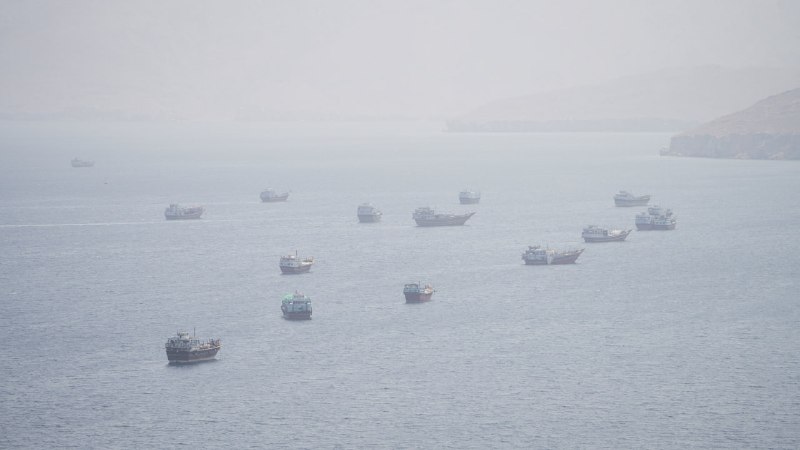
The British Maritime Trade Operations centre (UKMTO) said on 10 June 2026 that it had received a report of an incident approximately 20 nautical miles northeast of Sohar, Oman, in which the engine room of an oil tanker was on fire, according to Iranian and Iranian-aligned news wires carrying the UKMTO advisory. It was the second marine incident reported in the same waters within 48 hours, and it landed in a stretch of water that insurance underwriters, oil traders, and the world's navies watch more closely than almost any other: the southern approach to the Strait of Hormuz, the narrow chokepoint through which roughly a fifth of globally traded crude oil ordinarily transits. Early reports did not name the vessel, its flag state, or the cause of the fire; the UKMTO notice is a precaution notice, not an attribution.
The pattern, not the single blaze, is the story. Two reported incidents in two days in the same corridor off Oman's Batinah coast are a reminder that the Hormuz transit is a system under quiet, compounding stress — from collisions and engine failures, from Huthi missile and drone strikes further west in the Red Sea, from Iranian seizures of commercial tankers, and from the rerouting of oil flows that has been underway for the better part of two years. The commercial cost of that stress shows up first in war-risk insurance premiums, then in charter rates, and finally, when the disruptions last, in the price consumers pay at the pump.
What we know, and what we don't
The 10 June advisory, distributed by UKMTO and carried by Iranian outlets Tasnim News and Fars News, identifies the location — 20 nautical miles northeast of Sohar, outside the port's breakwater — and the nature of the reported casualty: an engine-room fire aboard an oil tanker. The Iranian-aligned wires amplified the notice within minutes of each other; the wires that most commercial ship operators rely on, including Lloyd's List and shipping industry trade press, did not immediately publish independent confirmations in the windows this article is being filed in.
The core facts on the public record are limited. The vessel's name, flag, deadweight, and cargo manifest are not in the advisory. The cause of the fire is not in the advisory. Whether the vessel is fully laden, in ballast, or part-laden — material to spill response — is not in the advisory. Whether the crew has been evacuated, is fighting the fire with onboard systems, or has called for tug assistance is not in the advisory. UKMTO advisories are deliberately terse; the centre's job is to broadcast a navigation warning to other traffic in the area, not to investigate root cause. That investigation, if one occurs, is typically led by the vessel's flag state in cooperation with the coastguard of the nearest coastal state.
The 9 June incident that preceded this one has not been independently detailed in the materials available to this publication. The framing of a "second incident this week" therefore rests on the sequence of UKMTO notices rather than on a confirmed mechanical or causal link between the two events.
The corridor, the cargoes, and the insurance ledger
Sohar sits on Oman's Batinah coast, facing the Arabian Sea, and is the southern anchor of the Omani shipping cluster that includes Salalah and the new container terminals at the port complex itself. Sohar handles refined-product exports, petrochemical shipments, and crude movements from Oman's interior fields, but its strategic significance is the position it occupies relative to Hormuz. A vessel putting out from Sohar and heading west through the Strait of Hormuz to the Atlantic basin, or east into the Indian Ocean and onward to Asian refiners, transits one of the most-watched waterways on the planet.
The Strait of Hormuz is narrow — at its tightest, about 21 nautical miles wide — but the shipping lanes that thread it handle, on a typical day, more than 20 million barrels of oil and petroleum products, alongside a substantial fraction of global liquefied natural gas flows from Qatar. The energy transition is changing the mix of cargoes, not the volume: LNG carriers, clean-product tankers, and crude haulers continue to thread the same corridor. Any event that raises the perceived risk of that transit shows up, with a lag of days, in the war-risk underwriters' pricing for hull and cargo cover in the Gulf, the Persian Gulf, and the broader Indian Ocean. When the underwriters move, the charterers move, and when the charterers move, the consumer eventually moves.
That is the structural reason two consecutive advisories off Sohar draw attention disproportionate to the size of either incident. The system is finely balanced. A single engine-room fire is a vessel casualty; two fires in two days in the same approach lane invite the question of whether something other than bad luck is at work — and in a region where asymmetric attacks, drone sightings, and Huthi-style missile demonstrations have become routine, that question is asked quickly and publicly.
What the framing looks like from each side
Western shipping-security reporting, when it has covered this stretch of water, has tended to frame incidents as a function of Iranian intent and Iranian capability, with Iranian-aligned attacks on shipping since 2019 treated as the baseline risk and any mechanical failure read through that lens. That framing has its uses — the seizures and the limpet-mine attacks on tankers in 2019 and the strikes on M/T Mercer Street in 2021 are not theoretical, and the Huthi campaign further west has shown what a determined actor can do to global shipping from a small boat.
The Iranian framing of the same waters reads the picture differently. Iranian outlets, including Tasnim and Fars, have argued consistently that the security architecture in the Gulf is dominated by the United States and its allies, that incidents in or near Iranian waters are a function of foreign naval presence, and that European-led maritime surveillance initiatives are a thinly veiled containment effort. The counter-narrative is not symmetrical to the Western one — Iran has a much larger inventory of asymmetric options in the Gulf — but it is coherent, and it is held by officials in Tehran and by a large domestic audience.
Neither framing explains two engine-room fires by itself. Mechanical failure is the most common cause of marine fires globally, regardless of geography, and the Batinah coast is a busy commercial sea with a high frequency of routine tanker traffic. The honest reading is that the probability a given fire is sabotage in this part of the world is higher than the global average, but the probability that a given fire is mechanical failure is still higher than the probability it is sabotage. The work of distinguishing between the two belongs to investigators, not to newsroom priors.
What the next 72 hours will tell us
Three signals will clarify what this incident is and is not. First, the vessel's identity and flag state. UKMTO and Equasis typically surface flag-state casualty notices within days; until then, the public record will be thin. Second, a statement from the operator or from the coastguard of a coastal state, which will usually describe the cause in broad terms — engine failure, collision, external damage — within a week. Third, the war-risk underwriters' response. JWC, Lloyd's, and the smaller specialist markets issue periodic bulletins; a sustained move in hull premium for the Gulf would tell the market that it is treating these advisories as a pattern rather than as isolated events.
The structural stakes are larger than any single tanker. A durable rise in the perceived risk of Hormuz transit pushes more cargo around the cape — longer routes, more fuel, more carbon, more working capital tied up in inventory. It also reopens a policy question that has been quietly shelved since the early 2010s: whether the major Asian consumers — China, India, Japan, South Korea — are willing to underwrite the security of the transit through joint naval arrangements, or whether they will continue to free-ride on the United States Navy's de facto guarantee while building up alternative pipeline routes through the Arabian Peninsula and Central Asia. The 10 June advisory is a small data point. The pattern it sits inside is not small.
Desk note: Monexus is reporting this as an unfolding commercial and security event, not as an attribution. The sources available at filing time are the UKMTO notice as carried by Iranian-aligned wires, and we have flagged the limits of the public record rather than infer a cause the materials do not support.
Wire provenance
This editorial synthesis draws on the following public wire/social posts:
- https://t.me/JahanTasnim
- https://t.me/tasnimnews_en
- https://t.me/farsna