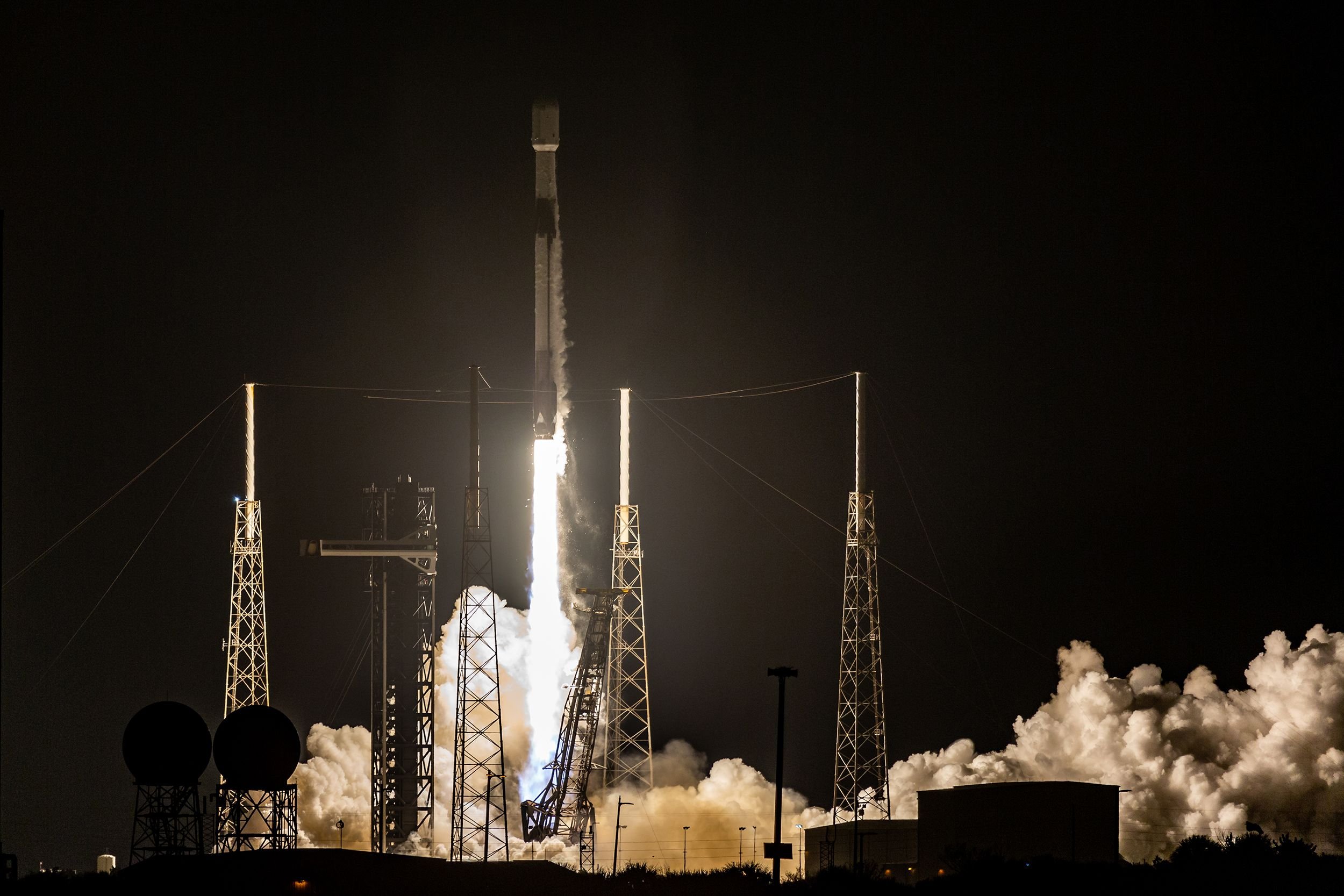
SpaceX IPO bid meets Mississippi nuisance suit: Musk's empire faces a local-friction test

On 9 June 2026, Reuters reported that Elon Musk's SpaceX had drawn more than $250 billion of investor demand for what stands to be the largest-ever initial public offering. Twenty-four hours later, a class-action complaint filed in Mississippi accused two of Musk's other companies, xAI and SpaceX, of running a data-center site in a way residents describe as a public nuisance — and the two stories now sit on the same desk, pointed at each other.
The juxtaposition is the story. SpaceX's blockbuster IPO is being sold, in part, on the thesis that the company is more than a launch provider: it is the keystone of a vertically integrated Musk empire spanning rockets, satellites, artificial intelligence and the compute infrastructure that ties them together. The Mississippi suit lands precisely at the seam where that empire meets the physical world — the gas turbines, the water use, the low-frequency hum of a supercomputer that never powers down. Capital markets are voting with their order books; the people who live next door are voting with a complaint.
The deal and the demand
According to the 9 June 2026 Reuters report cited by Unusual Whales on X, investor orders for the SpaceX offering had crossed the $250 billion mark, a figure that would, if the deal prices near the high end of its range, eclipse the nominal fundraising totals of every previous IPO on record. The size of the book matters less than its composition: it signals that institutional investors are willing to underwrite the full Musk stack — Starship, Starlink, the Starshield defence line, and the increasingly explicit tie-in to xAI's model-training capacity — at sovereign-wealth scale.
For Musk, the IPO is the moment that thesis becomes a balance sheet. The proceeds, if reports of the target raise hold, would give SpaceX a war chest large enough to absorb xAI's compute build-out directly, internalising a cost that until now has been a quarterly drag on the AI venture. The strategic logic is straightforward: whoever controls the launch cadence, the orbital network and the silicon farm that trains the next generation of models controls the integrated stack. The market is being asked to price that integration at a premium.
The Mississippi complaint
The other side of the same thesis arrived in chancery court on 10 June 2026, the same morning Al Jazeera English picked up the filing. Residents near the site of an xAI and SpaceX data centre in Mississippi are suing the two companies, alleging that the operation constitutes a nuisance — a legal term of art that, in US tort law, covers unreasonable and substantial interference with the use and enjoyment of land.
The substance of the grievance is the kind of thing that does not show up in an investor deck. Gas-fired turbines powering the compute hall run around the clock. They generate low-frequency noise that travels further than higher-frequency hum, vibrates windows, and rarely pauses. Cooling infrastructure raises local dust; the heat island alters microclimate. Diesel trucks servicing the site run pre-dawn routes. For a household that bought a property on the assumption it was rural, the arrival of a hyperscale compute node is not an abstraction.
The Reuters write-up of the suit, distributed at 06:00 UTC on 10 June, frames it as a class action on behalf of affected residents, which is the procedural mechanism by which nuisance claims with many similarly situated plaintiffs are typically pursued. Al Jazeera English's morning bulletin carried the same core facts. Both reports stop short of prejudging the merits.
Why the suit is not just local news
The conventional reading would file this under "community relations" and move on. That reading would be wrong, for three reasons.
First, the compute site is the strategic asset. xAI's competitive position against OpenAI, Anthropic and Google DeepMind is, in practice, a function of how many H100 and Blackwell-class chips it can keep fed with power and cooling. A site that goes offline for a court-ordered abatement, or that has to be retrofitted to comply with an injunction, is a training cluster that does not train. The Mississippi site is not a satellite office; by several accounts it is one of the largest single-site AI compute deployments in the country. Reliability of that asset is material to the SpaceX investment case being marketed this month.
Second, the nuisance frame is portable. If a Mississippi chancery court allows the claim to proceed and finds the operation unreasonable, the precedent travels. Every state legislature currently negotiating data-centre siting rules — Virginia, Texas, Arizona, Georgia, Louisiana — is watching. The suit effectively asks a court to do what regulators have not yet done: draw a line on what a hyperscale site owes its neighbours.
Third, the optics complicate the IPO roadshow. Sovereign-wealth and pension-fund allocators underwriting the SpaceX deal are answerable to their own stakeholders on environmental, social and governance questions. A live class action, even one in its earliest procedural posture, is a disclosure item. It is also a narrative item. The same week that SpaceX is being sold as a national-champion infrastructure company, a US county is asking a court to make it stop humming at night.
Counter-narrative: what Musk's camp will say
The companies have not, in the materials reviewed, denied operating the site. The predictable counter-narrative runs along three lines and deserves to be set out on its own terms before any conclusion is drawn.
First, on the merits: nuisance law in Mississippi, as elsewhere, requires a balancing of utility against harm. A facility that supports frontier AI research and US compute capacity is, by the standard the companies will invoke, of substantial public utility. The technology, the jobs and the tax base are part of the same fact pattern the court will weigh. The residents' discomfort, on this telling, is the ordinary externality of any industrial facility and is properly addressed through zoning, setbacks and compensation — not through an injunction that would effectively shutter a strategic asset.
Second, on process: the site was developed under permits issued by state and county authorities. If those permits were defective, the remedy is an administrative challenge, not a tort suit against the operator. The companies will argue the plaintiffs are reaching past the regulatory forum because the regulatory forum is unlikely to give them the relief they want. Third, on the broader context: the United States is in a compute race with the People's Republic of China, where state-directed investment has built out training clusters at a pace Western markets have struggled to match. The complaint, on this view, asks a Mississippi court to slow a US strategic asset at exactly the moment strategic patience is in short supply. Each of these arguments is a real argument. Whether any of them defeats the plaintiffs' claim will depend on facts the public filings do not yet disclose — noise measurements, setback distances, permit conditions, prior complaints to local authorities, and the duration of the alleged interference.
Structural frame: the local-friction test for the integrated stack
A useful way to read the moment is as the first serious local-friction test of the vertically integrated AI-rocket-satellite business model that SpaceX's IPO is asking public markets to underwrite. The model presumes that the marginal cost of adding a new compute site is low, the political cost is lower, and the public accepts the trade. Mississippi is the test case for that presumption. If the suit is dismissed early and the site continues to operate, the model holds and the next sites are easier. If the suit produces a settlement that includes operational concessions, the cost of doing business goes up at exactly the moment the order book is being filled. If it produces an injunction, the strategic asset is impaired and the roadshow narrative has to be rewritten.
None of that is to prejudge the case. It is to note that the question Mississippi residents are putting to a court is the same question public-market investors should be asking of the prospectus: at what point does the cost of integrating the stack — in noise, in emissions, in political capital, in legal exposure — begin to discount the value of the integration itself.
Stakes and the road ahead
For SpaceX shareholders, the next sixty days will bring the pricing of the IPO and, almost certainly, the first substantive filings in the Mississippi case. The two tracks will move on different clocks but the same underlying asset. Disclosure documents filed in connection with the offering will be required to describe material litigation; the class-action complaint is a textbook candidate. If the prospectus underplays the nuisance exposure and the case develops adversely, the securities-law implications are non-trivial. If the prospectus treats it candidly, the valuation discussion gets harder.
For US industrial policy, the case is a quiet referendum on the political theory that has governed data-centre siting for the last five years: that compute is so obviously strategic that local objections can be routed around with tax incentives and a small set of county-level permits. Mississippi will test whether that theory still works when the opposition is organised, lawyered-up and asking for damages, not a meeting. For the global compute race, the test matters less for what it says about US capability and more for what it says about US tolerance: how much friction a democratic system can absorb at the local level before the strategic asset starts to move abroad.
The suit is at its earliest procedural stage. The sources do not yet specify the dollar amount of damages sought, the precise noise and emissions data on which the claim rests, or whether state regulators have opened a parallel file. What the sources do establish is that a complaint exists, that it names two of Musk's most strategically important companies, and that it was filed in the same week those companies' parent thesis is being priced for public sale. The rest — the merits, the precedent, the discount — is what the next quarter is for.
Desk note: Monexus framed this as a local-friction stress test on an integrated-stack investment thesis, not as an environmental advocacy piece. The Mississippi plaintiffs' claims and the companies' likely defences are both set out; the structural read is offered in plain editorial prose without theoretical scaffolding. Hero image sourced from an Unusual Whales X post covering the Reuters IPO demand report.
Wire provenance
This editorial synthesis draws on the following public wire/social posts:
- https://x.com/unusual_whales/status/2064478957169168384
- http://reut.rs/3Sc8qrN
- https://t.me/aljazeeraglobal