SpaceX's IPO opens to four-times oversubscribed demand — and a market that's no longer sure what it's pricing
Demand for the SpaceX listing is running at more than four times the float, yet institutional investors are split on what most of the paper actually represents: a call option on orbital compute.
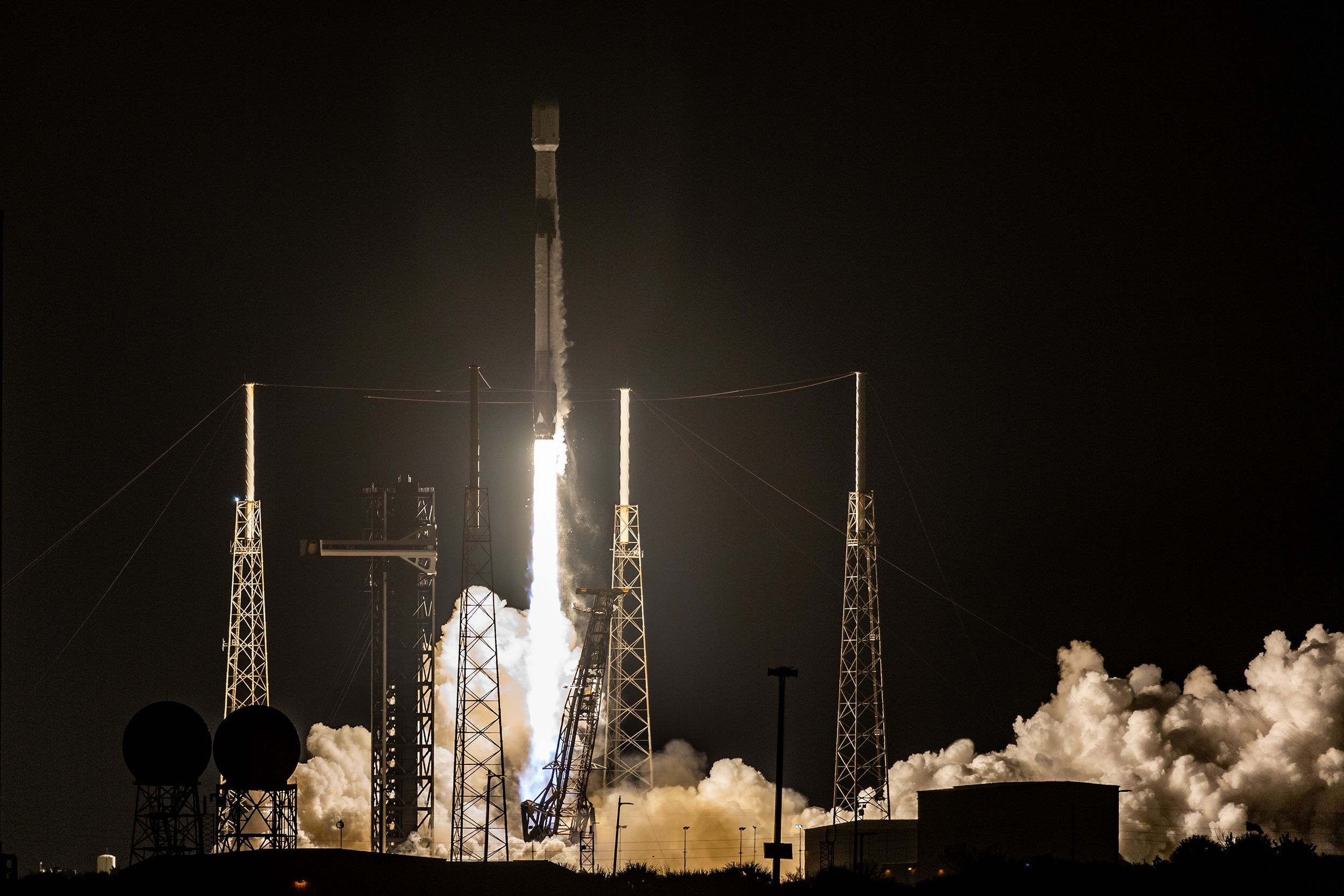
Public-market investors have a working theory of SpaceX: it is a launch company with a satellite-internet side hustle, run by a chief executive whose reputation for execution is at least as durable as his reputation for distraction. The book of demand building behind this week's listing does not fit that theory. By Tuesday afternoon UTC, the order book was running at more than four times the shares on offer, according to an X post by the prediction-market account @Polymarket, citing preliminary indications of interest.
The oversubscription figure matters less for what it says about launch cadence — SpaceX is already the dominant Western orbital provider — and more for what it implies about the asset the market is being asked to price. Most of the paper, the company has signalled in private placements and in the language of its public filings, is not a claim on rockets. It is a claim on Starlink, and beyond that, on a far more speculative bet: space-based data centres, in-orbit compute, and a future in which the cheapest place to run a large model is not a warehouse in Virginia but a constellation in low Earth orbit. The three hard-tech bets now doing the work in the prospectus — reusable launch, satellite broadband, and orbital compute — are the same three that most of the public conversation has treated, until this week, as separate businesses.
What the demand actually tells us
Oversubscription in a marquee offering is the kind of number that gets reported as a verdict. It is not. Demand at four times the float says the marginal price-setter is being asked to put in four times the money the issuer wants — a sign of confidence at the margin, not a fundamental valuation. A book can be four-times covered and still leave a stock trading below its issue price on day three, as the public markets have been reminded repeatedly since 2021. CNBC's explainer, published 9 June 2026 and circulated in syndication on 10 June, made the same point in plainer language: the institutional price is set, but the retail buyer has not yet been given a clean answer about whether the listing is a trade or a hold.
The CNBC piece walked through the mechanics deliberately — bookbuilding, allocation, the gap between the price institutional bidders will accept and the price retail investors will tolerate once a public quote appears. The structural feature worth flagging is that SpaceX is debuting into a market that has, over the last eighteen months, become notably more selective about growth-at-any-price equity stories. Rivian's path, the long arc of WeWork, and the post-SPAC hangover have all reset the price of admission for a private company's public debut. That context makes the four-times figure more interesting, not less: it says that a meaningful slice of the buyer base is willing to underwrite a story that the broader tape has been punishing for two years.
The hard-tech triangle
The investing case, as the company has framed it, rests on three legs. First, launch: SpaceX's Falcon 9 and the still-developing Starship programme have effectively priced Western competitors out of the commercial market for anything below a few tonnes. Second, Starlink: a low-Earth-orbit broadband constellation that has, by most counts, signed up the largest subscriber base of any satellite-internet network ever built. Third, the speculative leg — the one TechCrunch's coverage on 10 June put at the centre of the valuation — orbital data centres. The thesis is straightforward: compute is constrained by terrestrial electricity and cooling, and the most abundant source of both is the sun, unmediated by atmosphere. A constellation designed to do machine-learning inference in orbit, beaming results back to ground stations, would, in theory, dodge the bottlenecks shaping the AI build-out on earth.
This publication treats that thesis with the seriousness it deserves and the scepticism it has earned. The launch business is real and is being executed at a pace no peer has matched. The Starlink business is real and is generating cash. The orbital-compute business is, at the moment, a PowerPoint slide with a launch contract attached. The most important question the prospectus has to answer — and the one the four-times oversubscription figure does not answer — is how much of the multiple being bid is a price for the first two businesses and how much is a long-dated option on the third.
What the market is not yet saying
Two readings of the book deserve air. The first is bullish and conventional: the demand validates the company's posture, the launch and Starlink franchises anchor a real earnings stream, and the orbital-compute option is cheap at the implied price. The second is less comfortable. It treats the oversubscription as a function of supply scarcity, not conviction. A company that has been privately valued at ever-rising marks, with insiders and pre-IPO holders looking for an exit, has every incentive to keep the float tight. A tight float is what produces four-times books, and four-times books are what produce first-day pops. The retail investor arriving after the pop pays the pop, and the pre-IPO holders monetise. This is the standard late-cycle IPO pattern, and the fact that SpaceX is the issuer does not, by itself, exempt it from the pattern.
The honest answer is that both readings are partly right. The institutional money is, by the structure of the offering, the price-setter. The retail money is the swing factor, and CNBC's reporting suggests that swing factor has not yet been resolved. Until the first weeks of trading produce a settled price, the four-times figure is a marketing input as much as it is a market verdict.
What it sits inside
The IPO lands in a market context that is not benign. The Federal Reserve's policy path into the second half of 2026 is, by the most recent statements of the FOMC participants, still data-dependent in the direction that growth-and-inflation prints will determine. The dollar's trajectory into the back half of the year is being shaped by the same set of competing forces that have shaped it since the autumn of 2024. The Chinese equity market, having spent the first quarter in a consolidation pattern, has begun a selective rotation into industrial and energy names that mirrors — and is partly a response to — the policy direction in Washington. None of this is exogenous to the SpaceX listing. The price the company prints is the price the marginal dollar will pay, and the marginal dollar's opportunity cost is set by everything from the ten-year yield to the renminbi.
The structural pattern is familiar from earlier moments in the public-market cycle: a marquee growth offering lands, the tape is friendly, the float is small, the demand is large, and the narrative writers take the oversubscription number as a verdict on the whole economy. The 2026 reading of that pattern is that the verdict is more local than the headline. It is about SpaceX's specific mix of businesses, the specific shape of the orbital-compute thesis, and the specific decisions the underwriters are making about who gets how much. The four-times figure tells us that institutional investors want exposure. It does not tell us at what price that exposure becomes a trade rather than a position.
The next ten days
Three dates matter. The pricing, which is in the institutional book. The first trade, which sets the public-market reference price. And the end of the first thirty days, which is when the lockups begin to expire for early investors and the first real test of the aftermarket begins. Each of those is a separate information event, and the four-times figure is the input to only the first of them. The CNBC explainer is right to flag the retail question as unresolved: until the public quote exists, the public cannot answer.
What the company has not yet done — and what no source reviewed for this piece confirms it has done — is break out the contribution to revenue, gross margin, or capital intensity of each of the three legs. That is the disclosure the buyer needs to make a serious allocation. Until it arrives, the four-times figure is a measure of appetite, not a measure of value.
Monexus framed this around the gap between the order book and the prospectus — the four-times figure treated as an input to a pricing question, not as the answer to one. Where the wires led with the oversubscription, the editorial frame is the mix of businesses the demand is actually underwriting.
Wire provenance
This editorial synthesis draws on the following public wire/social posts:
- https://x.com/polymarket/status/
- https://t.me/cnbcnews/
- https://en.wikipedia.org/wiki/SpaceX
- https://en.wikipedia.org/wiki/Starlink