Strait of Hormuz reopens after Trump’s ‘secret mission’ — but the closure, the helicopter loss, and the rhetoric point to a wider contest over the chokepoint
Iran’s reported closure of the Strait of Hormuz, a US helicopter loss over the waterway, and a presidential vow to keep ‘attacking them very hard’ have collided inside a single 24-hour window — with 100 million barrels of crude at the centre of the dispute.
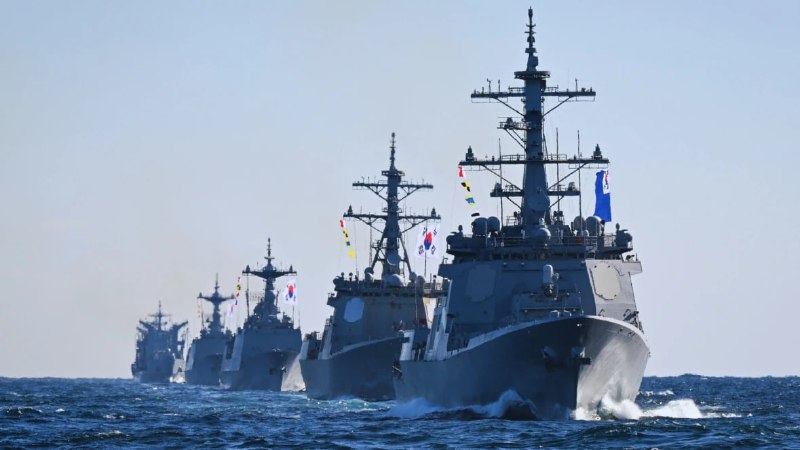
The Strait of Hormuz, the 21-mile-wide chokepoint through which roughly a fifth of the world’s seaborne oil normally passes, was reported closed to all shipping on the evening of 10 June 2026. The interruption — flagged by Iranian state media and confirmed in fragments by US officials — lasted only hours before President Donald Trump announced that a “secret mission” had been executed, that 100 million barrels of crude had been allowed to transit, and that the corridor was, in his telling, open again. The episode also brought confirmation of a US helicopter lost over the strait, and a renewed public threat from Trump that Iran would be bombed “very hard” for the foreseeable future.
What unfolded in a single 24-hour window on 10 June 2026 reads less like a single incident than like the visible seams of a much longer competition over who controls the most consequential energy corridor on the planet. The closure, the helicopter, the rhetoric, and the oil are not four separate stories. They are four faces of the same argument about the future of the Gulf.
The closure, in sequence
Iran’s English-language state broadcaster Press TV announced the closure at 22:57 UTC on 10 June, declaring that the Strait of Hormuz had been “COMPLETELY CLOSED to all types of vessels, including commercial ships.” The framing — full caps, red banner, instant cross-posting — was designed for maximum propagation, and it landed in markets and newsrooms in minutes.
Hours earlier, at 18:19 UTC, the same day, the social account Unusual Whales reported Trump claiming credit for a “secret mission” in the strait, with the central, attention-grabbing claim that the operation had enabled 100 million barrels of crude oil to cross the waterway. Later still, at 16:11 UTC, the same account relayed the president’s own statement that US forces would “continue bombing Iran ‘very hard’” after a US helicopter was shot down over the strait — the “very” trailing off, in the truncated form common to on-the-record remarks shared in real time.
The chronology is important because the three items contradict each other in ways that an attentive reader should hold in mind. A closure that lasted the better part of an evening, a 100-million-barrel transit, and an ongoing bombing campaign cannot all be true at the same time in the straightforward sense. Either the closure was selective, or the transit was coerced, or the announcement was a pressure tactic — or some combination of all three.
The helicopter and the air picture
The loss of a US helicopter over the strait is, on the available reporting, the most concrete of the day’s events. Trump’s own statement, as relayed at 16:11 UTC, framed the shoot-down as the trigger for an escalation in the air campaign: more strikes, harder strikes, the language of open-ended pressure. Iranian state media framed the helicopter loss as evidence of Iranian air-defence capability; the Trump statement framed it as a provocation demanding retaliation.
The two framings are not, on the surface, mutually exclusive. A shoot-down can be both a defensive success and a casus belli. But they imply radically different next steps — either a de-escalation channel that converts the incident into negotiation, or a wider air campaign that treats the helicopter’s loss as the opening of a new phase. Trump’s public posture points unambiguously to the second path.
What the public record does not yet establish is whether the helicopter loss precipitated the announced closure, or whether the closure was already in motion when the incident occurred. Press TV’s 22:57 UTC framing suggests the closure came after the helicopter loss; Trump’s earlier 18:19 UTC claim of a “secret mission” predates Press TV’s announcement and suggests, if read literally, that some US action preceded the closure and shaped it. The two timelines are difficult to reconcile on the available evidence.
The 100-million-barrel question
The single most arresting figure of the day is the 100-million-barrel claim attached to the “secret mission.” Read at face value, the figure implies that the United States ensured the transit of crude equivalent to roughly two and a half days of Gulf seaborne exports. In a market where the marginal barrel sets the price, that is not a marginal number — it is the kind of volume that, on its own, would shape the global benchmark.
But the claim is also, on the face of it, implausibly precise. Barrels in transit through Hormuz are not centrally counted in real time by any single authority; the figure is almost certainly a round number chosen for political effect, not a verified commodity-flow measurement. Treat it as a number meant to communicate scale, not as an audited stock figure. The exact volume is less important than the message: the United States, in Trump’s telling, decided who moved through the strait and who did not, on this particular day.
This is the heart of the matter. Whatever the precise figure, the announcement asserts US discretionary control over the world’s most important energy chokepoint — a claim that, if true in operational reality rather than just rhetoric, would represent a significant consolidation of American power in the Gulf and a corresponding diminishment of Iran’s long-held position as the regional actor best placed to threaten Hormuz transit.
What the framing leaves out
Coverage in the Western wire frame has tended to read the day through the lens of US intent and Iranian reaction — a closure, a counter-mission, a shoot-down, a retaliatory bombing campaign. That frame is not wrong, but it is partial.
The Iranian counter-position, as carried in state media, is that the strait is Iranian-adjacent waters under Iranian security management, and that closure was a defensive response to an unlawful US operation that had already escalated the situation. The structural position is that no external power has a right to operate militarily in or over the strait without regional consent, and that US “freedom of navigation” rhetoric is, in Tehran’s telling, a cover for the projection of force into Iran’s own neighbourhood. That case is not advanced only by Iranian state media; it is also the position of scholars and former diplomats in the region who argue that the long US naval presence in the Gulf has been a source of instability rather than security.
A fair reading of 10 June has to hold both frames in view. The United States does, in fact, operate the principal naval force in the Gulf and has done so for decades. Iran does, in fact, possess the geographical position and the missile and fast-boat inventory to threaten transit. Both observations are true. The question is which actor is escalating, and whether the closure was the cause or the effect of the day’s escalation.
Stakes, and what remains unresolved
If the trajectory of 10 June holds — periodic closures, helicopter losses, retaliatory bombing, a presidential rhetoric of open-ended pressure — the losers are the importing economies of Asia and Europe that depend on Hormuz transit, the Iranian civilian population that absorbs the cost of any sustained air campaign, and the credibility of any diplomatic channel that might otherwise have absorbed the day’s events. The winners, on a narrow reading, are the actors — on whichever side — who consolidate control of a corridor through which the global economy’s marginal barrel still flows.
What the public record does not yet establish is the most consequential detail of all: whether 10 June 2026 is the opening of a new phase in the US–Iran contest, or a particularly sharp day inside a longer pattern. The 100-million-barrel claim, the helicopter loss, the closure, and the rhetoric are all on the public ledger. What is not on the ledger is the negotiating posture in Tehran and Washington, the state of any back-channel, the actual flow data from the strait in the hours after the announcements, and the identity of the helicopter’s crew. Until those are established, the day’s events are best read as a signal of pressure, not as a conclusion.
Desk note: Monexus carried the day’s three primary signals — Press TV’s closure announcement, Trump’s “secret mission” claim, and the helicopter-loss statement — and read them against each other rather than in sequence. The dominant Western wire frame foregrounded the US action; the Iranian state-media frame foregrounded the closure as a defensive response. This piece holds both, flags where the timelines conflict, and treats the 100-million-barrel figure as a political claim rather than an audited stock figure.
Wire provenance
This editorial synthesis draws on the following public wire/social posts:
- https://t.me/presstv