The Strait of Hormuz, by presidential tweet: Washington asserts control as confrontation with Tehran escalates
A 10 June escalation cycle — a downed US helicopter, sustained strikes on Iran, and a White House declaration of 'control' over Hormuz — has reframed the world's most consequential oil chokepoint as a stage for direct US-Iran confrontation.
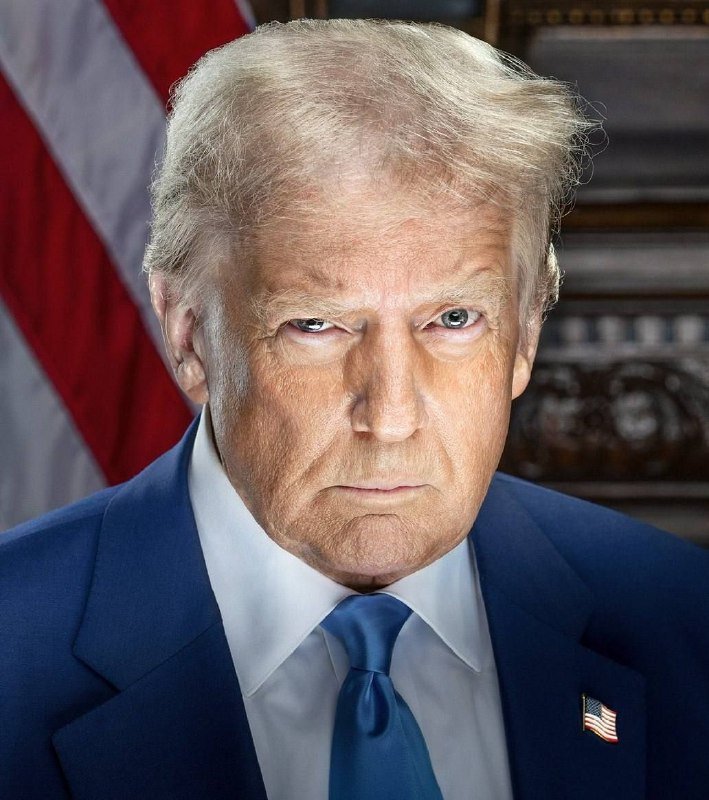
By the close of trading on 10 June 2026, the United States and Iran had moved from a war of statements to a war of operations in the Strait of Hormuz, the narrow waterway off the Omani and Iranian coast through which roughly a fifth of the world's seaborne oil normally transits. The day's signal events were three. At 16:11 UTC, President Donald Trump told reporters the United States would continue bombing Iran "very hard" after Tehran's forces shot down a US helicopter over the strait, saying: "We're going to be attacking them and attacking them very hard" — language first reported by the markets account @unusual_whales. At 19:50 UTC, a Telegram channel aligned with the regional axis, The Cradle, carried an account in which Trump claimed a "secret" US military mission had enabled more than 100 million barrels of oil and over 200 commercial ships to pass through the strait — a figure that, if accurate, would describe the largest convoy-protection operation in the waterway's modern history. At 20:43 UTC, the same X account relayed a White House line: "The UNITED STATES of AMERICA CONTROLS the Strait of Hormuz, NOT Iran."
The point of this article is not the rhetoric. The point is the gap between what is being declared, what is being operationally demonstrated, and what the oil market, the shipping industry, and the governments downstream of Hormuz can credibly plan around in the days ahead.
What the United States is actually asserting
The 20:43 UTC statement — "The UNITED STATES of AMERICA CONTROLS the Strait of Hormuz, NOT Iran" — is a maximalist claim. The strait is, in international law, a transit passage whose regime of navigation is set by UNCLOS; the bordering states are Iran and Oman, with the United States a frequent but not formally sovereign naval presence. To declare "control" of the waterway in wartime language is to claim a prerogative the US has historically exercised in episodic deployments (Operation Earnest Will in the 1980s, the Tanker War of the late 1980s, and the Fifth Fleet's Bahrain-based posture since 1995) but never in the absolute terms the 10 June statement implies.
The claim pairs with a stated intent to keep striking Iran. The 16:11 UTC report describes the trigger as a US helicopter shot down over the strait. The Cradle's 19:50 UTC account, in turn, frames a parallel mission: an oil-and-shipping escort operation that allegedly put 100 million barrels of crude and more than 200 commercial vessels through the waterway under US protection. The number, if accurate, would be extraordinary — on the order of a week's worth of seaborne crude at current Middle East flow rates. The framing suggests the operation is being cast simultaneously as punishment and as a guarantee.
What the regional counter-narrative looks like
Reading the same day through Tehran-aligned and regional non-Western sources, the picture inverts. Iranian state media has historically framed any US naval escalation in Hormuz as an aggression against Iranian sovereignty, and the IRGC's prior rhetoric — including threats to close the strait in 2012 and again in 2018-19 — treats the waterway as a card Tehran holds, not a theatre Washington owns. The downing of a US helicopter, on that reading, is evidence that Iranian air-defence reach extends over the strait itself, and that the US naval and air posture around the chokepoint is contestable rather than dominant.
The Cradle's framing of the "secret mission" tellingly elides what an escort operation would actually mean for Iranian decision-makers: a permanent, in-theatre US presence policing commercial shipping, with the implicit threat that vessels deemed non-compliant could be intercepted. From Tehran's standpoint, an operation that puts 200+ ships through Hormuz under US protection is less a guarantee to the world and more a US move to make Iranian control of its own littoral impossible in practice. Both readings — Washington's "we control it" and Tehran's "you are operating inside our waters at our sufferance" — are present in the day's news flow, and the operations of 10 June have not resolved which one prevails.
The structural picture, in plain language
The pattern is the same one that has shaped every modern US-Iran crisis at sea: control of Hormuz is asserted rather than owned, contested through presence rather than through treaty, and re-priced daily by the tanker market. When the US Navy deploys carrier strike groups to the Gulf, when Iran fields fast-boat swarms and shore-based anti-ship missiles, when insurance underwriters in London reissue their Hormuz risk premia, all of them are answering the same question — who is enforcing the right of passage, and at what cost.
Three structural points are worth making. First, US control of Hormuz has historically been contingent on the willingness of regional Gulf states, particularly Saudi Arabia, the UAE, and Oman, to align with Washington diplomatically and to host the logistics that make the Fifth Fleet's posture possible. Bahrain hosts Naval Forces Central Command; the UAE hosts part of the regional air infrastructure; Oman controls the southern flank of the strait and the deep-water approach from the Arabian Sea. A statement of US "control" that has not been visibly coordinated with those governments is a statement, not a posture. Second, Iran's actual capacity to harass or temporarily close the strait is asymmetric — a small number of mines, anti-ship missile batteries, and fast-attack craft can deter commercial transit at a fraction of the cost of US containment. Third, the oil market, on the day of this writing, is being asked to price a scenario in which the strait functions as a contested, not a guaranteed, transit corridor. The 100-million-barrel escort figure, if true, is the kind of number that suggests the market is already receiving an unpriced insurance transfer.
Stakes and what remains contested
The forward view, on the evidence now in the public record, runs three ways. In the optimistic case, the helicopter loss and the bombing campaign are part of a coercive diplomacy that ends at the negotiating table within weeks, the escort operation becomes a routine flag-of-convenience guarantee, and tanker rates revert. In the central case, the operations of 10 June harden into a longer posture — periodic strikes, persistent escort task groups, retaliatory action by Iran against Gulf infrastructure — and the world's oil logistics start to price a permanent Hormuz risk premium that did not exist a week ago. In the tail case, Iranian forces make a credible attempt to close the strait, insurance withdrawals cascade, and a global supply shock follows. The day's reporting is consistent with movement from the optimistic case toward the central case, not yet toward the tail.
What remains genuinely contested is the size and the visibility of the operation The Cradle describes. The 100-million-barrel and 200-ship figures, carried on a single Telegram channel, do not yet have a parallel confirmation in a wire-service dispatch in the thread context of this article. The White House "control" statement, as relayed by an X markets account, is one declaration, not a posture document. The downing of a US helicopter is the day's most operationally significant fact, and it is also the fact on which all the other claims depend. Monexus treats the operation as real and the framing as inflated. Until a wire-service dispatch lands in the public record with casualty figures, escort composition, and the names of the units involved, the escort number should be read as a ceiling, not a confirmed tally.
For the moment, the world's most consequential oil chokepoint has become, by tweet and by Telegram, a stage for direct US-Iran confrontation. The shipping, the refining margins, and the diplomatic cables of the next seventy-two hours will say whether the 10 June declarations harden into a new maritime order or dissolve under the weight of their own maximalism.
Desk note: Monexus framed this as a contest of declarations rather than as a fait accompli. The wire- and X-sourced claims are treated as the operating record for the day; the 100-million-barrel escort figure, sourced only to a single Telegram channel, is explicitly flagged as not yet wire-corroborated rather than presented as confirmed throughput.
Wire provenance
This editorial synthesis draws on the following public wire/social posts:
- https://t.me/thecradlemedia
Follow the event.
These dated source records provide context. They do not retrospectively verify this archive article.
Separate what the nuclear watchdog reported from what it could not determine after the June 2025 strikes.