The Strait of Hormuz, 100 Million Barrels, and the Price of a 'Secret Mission': What Trump's Confession Actually Says
On 10 June 2026 the US president publicly described a classified naval operation that moved 100 million barrels of crude through the world's most sensitive chokepoint. The leak is the story.
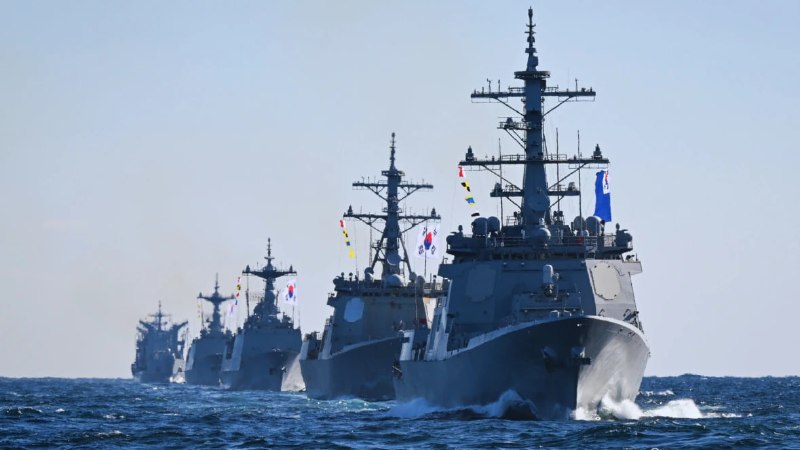
The phrase "secret mission" is not one the United States government normally volunteers. On the afternoon of 10 June 2026 — at roughly 18:19 UTC, according to a post by the market-data account Unusual Whales citing the president's own remarks — Donald Trump disclosed that US forces had run a classified operation in the Strait of Hormuz that allowed more than 100 million barrels of crude and over 200 commercial vessels to transit the chokepoint. The disclosure was echoed minutes later by Cointelegraph's markets desk on Telegram. By 19:14 UTC, Ukraine's TSN news wire had picked up the story, framing it as a unilateral US success in Iranian waters. The president went further, telling reporters the US would continue striking Iran "very hard" after an Iranian air-defence engagement shot down a US helicopter over the strait earlier in the day.
The disclosure is the news. A commander-in-chief does not normally narrate a classified naval campaign in real time, and the numbers he volunteered — 100 million barrels, 200-plus ships — are large enough to be either a boast or a market-moving claim. The fact that they are being reported first by a financial-data account and a crypto-markets news desk, rather than by the Pentagon or the Department of Energy, is itself a tell. It tells you the audience the White House is trying to reach is not the Senate Armed Services Committee. It is the Brent crude tape and the political constituencies that read it.
What is actually being claimed
Strip the rhetoric and the operational claim is narrow. The US military, on the president's account, has been running what he called a "secret mission" inside the 21-mile-wide Strait of Hormuz — the corridor through which roughly a fifth of globally traded crude ordinarily flows — and that mission has, in his telling, escorted or enabled the passage of 100 million barrels of oil and more than 200 commercial ships. Cointelegraph's Telegram wire repeated the same numbers in identical form within minutes, suggesting they originated from a single White House readout rather than two independent pools. The earlier incident of the day — an Iranian surface-to-air engagement that brought down a US helicopter over the strait, which Trump described in combative terms on the same day — supplies the casus belli for the threat of continued strikes.
The White House has not, in the materials available, named the units involved, the dates of the operation, the rules of engagement, the flag-state of the 200 vessels, or the loading ports of the crude. "Secret mission" is doing a great deal of work. In naval parlance, a passage operation on the scale described would normally be disclosed at the command level — US Central Command, Fifth Fleet, the Joint Maritime Information Centre in Manama — and would appear in commercial routing advisories sent to tanker operators and oil traders in Fujairah, Singapore, and London. The fact that traders learned of it from a presidential remark, rather than from a NAVWAR warning or a Lloyd's List advisory, suggests the operation is either genuinely compartmented or — more likely — a continuous US naval presence that is being repackaged, after the helicopter loss, as a discrete covert campaign.
The 100-million-barrel figure is, on its face, plausible as a running total: at a steady state of around 15–17 million barrels per day moving through the strait, 100 million barrels represents roughly a week of regional throughput. It is not the volume of a single convoy. The 200-ship figure points in the same direction — a multi-week escort tally rather than a one-off armada. Read this way, the claim is not that the US moved a specific parcel of crude; it is that, over a recent period, US forces have been underwriting the normal commercial traffic of the strait and want credit for doing so.
The market read
Markets heard the claim in real time. Oil futures, gold, and shipping insurance premia all react, in the first ninety seconds after a Hormuz headline, to the implied probability of supply disruption. A presidential assertion that the US has just completed a covert operation that "resulted" in 100 million barrels crossing the strait does two things to that probability. It lowers the perceived tail risk in the very short term — if the mission worked, the flow is safe for now. And it raises the perceived risk in the medium term — if the operation is ongoing, the helicopter shoot-down is not an isolated event but part of a serial pattern that can recur.
This is the structural reason a crypto-markets news desk and a market-data account were the wire services that broke the story on Telegram. Their readers are not foreign-policy specialists. They are Brent traders, freight-rate hedgers, bunker-fuel buyers, and the people who price Strait of Hormuz war-risk premia at Lloyd's. The framing the president chose — barrels, ships, mission accomplished — is the framing that moves their screens. A more careful Pentagon readout, naming the task force and citing the IMSC routing guidance, would move them less.
The political economy of the disclosure is straightforward. The US is the residual security provider for the seaborne oil trade out of the Gulf, and the premium attached to that role has been a quiet subsidy to the dollar's role in energy settlement for half a century. When the provider of that security publicly markets the product, the implicit message to OPEC+, to Beijing, and to Tehran is: this protection is being delivered, the bill is being paid, and the arrangement is durable. It is, in other words, a pricing event dressed as a military disclosure.
The counter-narrative — Tehran's read, and the Iranian counter-claim
From Tehran, the same set of facts is read very differently. An Iranian surface-to-air unit engaging and downing a US helicopter over the strait, on the same day that the US president is describing a covert mission in those same waters, is not a provocation. It is, in the Iranian frame, a legitimate act of territorial defence against an unannounced foreign military operation inside waters that Iran considers its own. Iranian state outlets have, in past Hormuz confrontations, framed the strait as an Iranian zone of control, and the IRGC Navy has, on multiple occasions since 2019, seized commercial tankers and boarded foreign-flagged vessels. The shoot-down is the next rung on that escalation ladder.
There is also a structural counter-read on the numbers. If the US is escorting 200 ships through the strait in a matter of weeks, what is happening to the Iranian-flagged and Iranian-affiliated tanker traffic that normally uses the route? The figure of 100 million barrels is a US tally of US-protected transit; it says nothing about barrels that did not move because the Iranian side of the corridor was effectively closed by the same operation. The 200-ship escort number may be real and the supply story it tells may still be incomplete.
A third reading, more skeptical than either, is that the "secret mission" is partly rhetorical — a way of converting a routine naval presence into a political asset at home, where the president's base reads a confident Hormuz narrative as proof of strength, and abroad, where Gulf partners and oil buyers are reminded that the US security umbrella is still the default. Read this way, the disclosure is less about a single operation and more about the ongoing business of underwriting the dollar-oil order.
What the disclosure actually changes
Three things have shifted with the 10 June 2026 disclosure, regardless of which of the readings above is correct.
First, the precedent. A sitting US president has publicly described a classified operation inside the world's most economically sensitive waterway in a form designed for market consumption, in the same news cycle as a US helicopter loss. That is a deliberate choice about the audience for future such operations. The default template for Hormuz incidents has been a quiet Pentagon readout, a State Department demarche to Tehran, and a back-channel through Oman or Qatar. The template that 10 June 2026 inaugurates is a presidential-volume disclosure, an immediate market reaction, and an embedded threat of further strikes. Future Iranian actions in the strait will now be priced against a known US communication strategy, not against a fog of silence.
Second, the cost of miscalculation. If the helicopter loss is treated as the start of a sustained US air campaign against Iranian targets — which is what the president's "we are going to be attacking them and attacking them very hard" language implies — the insurance and freight-rate consequences will be immediate. Strait of Hormuz war-risk premia, which under normal conditions run in the low single digits of hull value, can move to high single or double digits in days. The political cost of those moves falls on the Gulf monarchies, on Asian importers (China, India, Japan, South Korea), and on the US consumer at the pump. The benefit, in the administration's framing, is the continued demonstration that the US, and not Iran, sets the price of transit through the corridor.
Third, the information environment. The story broke on a market-data account and a crypto-news Telegram channel, was carried into Ukraine by TSN, and has not, in the materials available at the time of writing, been elaborated by a major Western wire with on-the-ground reporting. The fact that the most economically significant US naval disclosure of the year is being carried forward by non-traditional wires is itself a fact about the present state of the international information order. The reporters who cover the Pentagon and the Gulf did not break this story. The people who cover Brent crude and Bitcoin did.
What remains uncertain
The sources available do not specify several things that matter. They do not name the unit or task force involved in the operation, the dates over which the 100-million-barrel and 200-ship tallies accumulated, the flag distribution of the escorted vessels, or whether the operation has been briefed to Congress. They do not include an Iranian government readout of the helicopter engagement beyond the president's own characterisation, and they do not include a CENTCOM, Fifth Fleet, or Pentagon release corroborating the figures. The 100-million-barrel number, in particular, has the form of a political metric — a number chosen to land on a cable — rather than a verifiable operational tally, and it has not, in the materials available, been independently confirmed.
What can be said with confidence is narrower. On 10 June 2026, a US helicopter was shot down over the Strait of Hormuz. On the same day, the US president described a classified operation in the same waters and claimed credit for the safe transit of 100 million barrels of oil and more than 200 commercial ships. The disclosure reached markets and the wider public first through non-traditional financial wires, and it was carried forward by a Ukrainian outlet that framed it as a US success. The pattern — incident, presidential disclosure, market reaction, threat of escalation — is the story. The numbers are the part the White House wants you to remember.
This publication reads the 10 June disclosure as a deliberate market-facing communication rather than an operational accident, on the grounds that the audience that received it first — Brent traders and crypto desks — is the audience the phrasing was built for. The alternative read, that the president misspoke about a routine CENTCOM presence, is structurally less plausible but cannot be ruled out from the materials available.
Wire provenance
This editorial synthesis draws on the following public wire/social posts:
- https://t.me/TSN_ua
- https://t.me/cointelegraph
- https://en.wikipedia.org/wiki/Strait_of_Hormuz
- https://en.wikipedia.org/wiki/United_States_Fifth_Fleet
- https://en.wikipedia.org/wiki/Islamic_Revolutionary_Guard_Corps_Navy
- https://en.wikipedia.org/wiki/Energy_in_Iran