The Strait of Hormuz, 22:22 UTC, and the cost of waiting for confirmation
An explosion was heard near Iran's Sirik Port on Friday evening, amplified across Telegram within minutes, and unconfirmed by any Western military source. The more honest story at 22:22 UTC is what the record actually contains, and the cost of publishing what it doesn't.
At 20:44 UTC on 12 June, residents along the coast of Qeshm Island and parts of Sirik County in southern Iran reported hearing an explosion near Sirik Port. Within eight minutes, the same report was on at least four Telegram channels, attributed variously to "maritime confrontation," "warning shots to violating vessels," and the IRGC Navy "enforcing the blockade." By 20:57, Iran's state broadcaster IRIB had entered the loop, confirming the sound and floating the IRGC-enforcement explanation as official colour. Reuters had pushed a live broadcast of vessel traffic in the Strait. No party had claimed a strike on a warship. No navies had reported a casualty. The question that mattered, and that nobody on the wire had answered, was whether anything had actually happened at all.
The temptation in a cycle like this is to amplify the line that moves the tape. A warship strike in Hormuz is the kind of headline that monetises on every platform it touches. Being early on it feels like being right. The more honest position, the one worth publishing on the staff-writer voice at this hour, is that being early on an uncorroborated warship strike is a particularly expensive way to be wrong. A confirmed incident would reshape oil flows, insurance rates and the Iran-US negotiation that is, by all public indications, in its first delicate stage. A rumour, repeated as fact, does its own damage on the way to being either confirmed or buried.
What the record actually contains
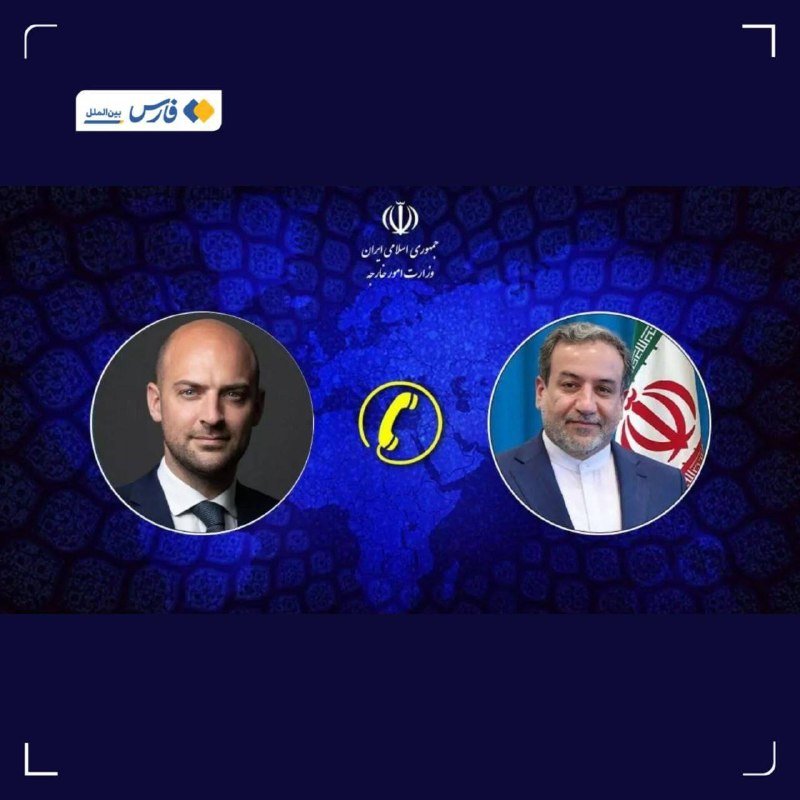
The factual residue of the past three hours is narrower than the volume suggests. Iranian Foreign Minister Abbas Araghchi told state television on Friday evening that "the future of the Strait of Hormuz will never be like its past," that "the services provided in the future will no longer be free of charge," and that the waterway "lies within the territorial waters of Iran and Oman" with "no international waters between them." He framed the strait as one of Tehran's "most important deterrent tools." He said, according to Open Source Intel, that "according to international laws, it is not possible to collect tolls from the Strait of Hormuz, but the service fee will be charged and this will be fixed in the negotiations." He characterised the interim arrangement with the United States as a victory and said the end of the war would be announced "on all fronts, including in Lebanon," with the US stepping back from the confrontation.
The incident itself is thinner. Mehr News reported the sound. Initial investigations, again per Mehr, "suggest no explosion occurred in Sirik." IRIB framed it as IRGC enforcement. None of the major Western wires had picked up a military claim by 21:00 UTC. The Telegram traffic around it is heavy, rapid, mutually-referencing and Iranian-domestic. That is the evidentiary floor of the story at this hour.
The Iran frame, in plain words
What Araghchi is actually saying, stripped of diplomatic packaging, is that Iran intends to convert a shared and free-transit waterway into a priced service. The legal claim that the strait sits entirely inside Iranian and Omani territorial waters is contested; the navigational regime under UNCLOS is not. The political claim, that the wartime settlement buys Tehran a permanent lever on roughly a fifth of global oil flows, is the real product on offer. Araghchi's own caveat is candid: the other side, he said, "is inherently prone to bad faith and will exploit any opportunity to create problems in implementation." Iran is negotiating as the party that believes it has just won.
The deal under negotiation
The NYT line circulating on X via @sprinterpress, that "the depletion of global oil reserves is putting additional pressure on Trump to reach an agreement," is the structural backdrop. Araghchi's own architecture, as relayed by DDGeopolitics, is staged: "If the agreements of the first stage are not honored, we will not proceed to the second stage. That in itself creates a guarantee." The Strait of Hormuz service fee, framed as a future "negotiation" item, is the second-stage lever. The first stage buys quiet. The second stage buys pricing power. Both depend on a US administration that, by the New York Times' reading, is short on reserves and shorter on alternatives.
What this hour's reporting gap costs
If the Sirik sound turns out to be an IRGC warning shot at a violating tanker, the news is real but limited: enforcement of a declared posture. If it turns out to be a strike on a US or allied warship, the news is continental. If it turns out to have been nothing, a sensor artefact or a fishing-boat incident inflated by domestic outlets and amplified by Telegram, then every English-language account that ran it as a strike has done reputational damage that compounds across the next cycle. The honest service to a reader at 22:22 UTC is to publish the Araghchi line, the Mehr line, the IRIB line, and the absence of a Western-wire military claim, in that order, and to name the gap. The desks will update in the morning wire if the report firms up. Tonight, naming what we don't know is the story.
Sources: ClashReport; GeoPWatch; @Middle_East_Spectator; Mehr News via @wfwitness and @GeoPWatch; IRIB via @DDGeopolitics; @IntelSlava; Open Source Intel via @osintlive; @middleeasteye; @sprinterpress; Euronews; Reuters vessel-traffic broadcast. Times are UTC as published.
Desk note: Monexus is publishing this piece on staff-writer voice precisely because the underlying strike claim is unconfirmed. The wire record supports Araghchi's statements and the Sirik acoustic reports; it does not yet support a strike narrative. Where English-language outlets have led with a strike, we have led with the gap.