Trump's blockade boasts and Iran strikes collide with on-the-ground reality
Two Telegram wires on 10 June 2026 frame a US naval blockade as historic and a new round of strikes on Iran as retaliation for an Apache downing. The record on both claims is thinner than the rhetoric suggests.
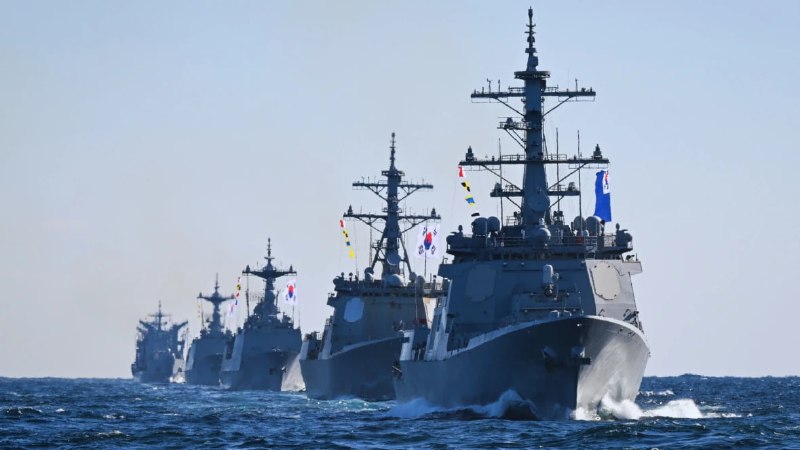
At 11:54 UTC on 10 June 2026, the Telegram channel BRICS News posted a short wire item carrying an unusually direct quote attributed to President Donald Trump — "Praise be to Allah!" — without further context. The post was clipped from the wire, with no venue, no transcript link, and no indication of whether the remark was delivered in a campaign-style rally, a meeting with Gulf officials, or a televised address. Less than twenty minutes earlier, at 11:35 UTC, a separate Telegram channel — ourwarstoday — relayed a more substantive report: the US military had launched new strikes on Iran after an Apache helicopter was downed, with Trump vowing a response. A third post, at 11:37 UTC from abualiexpress, captured Trump describing a US naval blockade as "the most successful blockade in the history of naval warfare." The three items, taken together, sketch a White House escalatory posture in the Persian Gulf that the underlying record does not clearly substantiate.
The operative thesis is straightforward. The President's public claims are running ahead of what can be independently verified about the scope of US operations against Iran, the legal status of any maritime interdiction campaign, and the chain of events that produced a US Apache loss. Reporting of this kind — where a presidential quote and a strike announcement travel on parallel Telegram rails within minutes of each other — is precisely the moment when the gap between rhetoric and the battlefield needs to be measured rather than amplified.
What the wires actually say
The blockade claim, as carried by abualiexpress at 11:37 UTC on 10 June 2026, is framed as a self-assessment from Trump. The line — that "nothing goes through" and "nothing happens unless we want it to" — is an assertion of near-total maritime control, of the kind that historically required months of formal naval task-force deployment, exclusion-zone declarations, and a published list of boarded or turned-back vessels. The Telegram post contains none of that architecture: no task-force designation, no operational commander, no count of interdictions, and no link to a US Central Command (CENTCOM) release. By Trump's own standards in the same post — "the most successful blockade in the history of naval warfare" — the supporting evidence is conspicuously absent from the wire item itself.
The strike announcement, per ourwarstoday at 11:35 UTC, is more specific in form. The US military is reported to have launched "new strikes against Iran on Tuesday after President Donald Trump vowed to respond to the downing of" an Apache. The phrase "new strikes" implies a continuation of an existing campaign rather than a one-off retaliation, which would place the operation inside a longer arc of US-Iran military exchanges in 2026. The downing of an Apache, if corroborated, is a meaningful battlefield event: a US attack helicopter is a crewed, high-value platform, and a confirmed shoot-down would mark a level of Iranian air-defensive capability that has rarely been demonstrated publicly against US rotary-wing assets in this period.
The third item — Trump's "Praise be to Allah!" line at 11:54 UTC — sits in a more ambiguous category. The phrase is a familiar one in US political coverage of outreach to Muslim-majority audiences; it is also, in this context, odd given the simultaneous strike reporting. Without a venue, a transcript, or a video clip, the wire offers no way to judge tone, audience, or whether the remark is sarcastic, sincere, or rhetorical. Telegram channels that aggregate presidential quotes regularly omit this context. Readers should treat the line as a data point about how the remark is being circulated, not as a confirmed characterisation of the President's posture.
The blockade question: rhetoric, doctrine, and the absence of a paper trail
A "successful blockade" in international law is a high bar. The San Remo Manual on Armed Conflict at Sea — the customary reference used by Western and allied navies — requires a declared blockade, effective notification to neutral shipping, impartial enforcement, and a level of control sufficient to prevent breach. The post on abualiexpress contains no reference to any of these elements. There is no notice to mariners, no allied naval confirmation, no tonnage figure of stopped or diverted shipping, and no statement from Iran's port authority or from major oil-trading houses about disruption to flows.
The structural counter-narrative is that the United States has been escalating its maritime posture toward Iran in stages through 2026, with individual vessel interdictions, sanctions enforcement actions, and Gulf-of-Oman patrols that have periodically disrupted Iranian-linked tankers. Those operations are real, documented, and have been reported as discrete events rather than as a single integrated blockade. To reclassify them, retroactively, as a historic blockade is a rhetorical move: it consolidates a series of enforcement actions into a single, larger-sounding claim. The Telegram wires that carry the President's quote do not address that distinction.
There is also a market dimension the rhetoric flattens. Brent and Dubai crude benchmarks, where they are discussed in open Telegram coverage of the same window, do not show the price dislocation that a genuinely near-total Gulf interdiction would produce. A blockade that prevents "nothing" from getting through would, on the evidence of oil futures behaviour in comparable past episodes, generate a double-digit price spike within hours. The wires carried here do not show that dislocation, which is at least suggestive that the operational reality is narrower than the rhetoric.
The strike chain: escalation, and the asymmetry of an Apache loss
The Apache shoot-down is the most consequential claim in the cluster. US attack helicopters operating in or near Iran — whether inside Iranian airspace, over the Gulf, or in support of strikes from regional basing — are vulnerable to Iranian-supplied air-defence systems, including Tor-M1, Khordad, and the Mersad family of platforms, as well as shorter-range man-portable systems. A confirmed loss would suggest either an Iranian surface-to-air missile engagement, a radar-guided anti-aircraft artillery hit, or a layered engagement that combined these. The Telegram wire does not specify the engagement type, the location, or the fate of the aircrew. Those are exactly the details that would ordinarily dominate a Pentagon briefing.
The follow-on US strikes, per the same post, are framed as retaliation. That framing is significant. Strikes on Iranian territory in 2026, if the campaign is open-ended, are no longer a calibrated response to a single incident — they are a campaign. The legal and political grounding for such a campaign, in the absence of congressional authorisation or an explicit invitation from a regional government in whose airspace the operations are taking place, is contested. Western-allied wires that have covered earlier rounds of US action against Iran in this period have tended to report the strikes as discrete retaliatory actions; a re-framing as a continuing campaign is a meaningful shift.
The counter-read is that Iran retains the capacity to impose costs on US airpower, even at the helicopter level, and that the strikes are a domestic-political response to that fact. Under that read, the operational logic and the political logic point in different directions: military action is calibrated, but the public messaging emphasises totality and historic success. The Telegram wires, by carrying both the strike announcement and the blockade boast, let both framings run side by side.
What is uncertain, and what the wires do not resolve
The sources do not specify the location of the Apache engagement, the type of Iranian system used, the number or yield of the follow-on US strikes, the casualty figure on either side, the legal framework the administration is citing, or the diplomatic back-channels — including the Oman and Qatar tracks that have historically carried US-Iran communications — that may be running in parallel. They do not name a Pentagon spokesperson, provide a CENTCOM release, or link to a transcript of the President's remarks. The "Praise be to Allah!" quote in particular is unmoored from any verifiable setting.
A reader in 2026 looking at this wire cluster should hold three things at once. The strike announcement is the most specific and therefore the most likely to hold up under scrutiny. The blockade claim is the most expansive and the least documented in the materials at hand. The "Praise be to Allah!" line is the most ambiguous and the most easily over-read in either direction. None of this means the underlying events did not happen. It means the wire record on 10 June 2026 is doing more rhetorical work than evidentiary work, and that gap is itself the story.
This article draws exclusively on three Telegram wires timestamped within a nineteen-minute window on 10 June 2026. Where a claim could not be tied to those wires, it has been left out. Subsequent reporting from established wire services will determine how much of the rhetoric clears the bar of independent verification.
Wire provenance
This editorial synthesis draws on the following public wire/social posts:
- https://t.me/bricsnews
- https://t.me/abualiexpress
- https://t.me/ourwarstoday
Follow the event.
These dated source records provide context. They do not retrospectively verify this archive article.
Separate what the nuclear watchdog reported from what it could not determine after the June 2025 strikes.