Trump claims secret Hormuz mission moved 100 million barrels — and signals a harder line on Iran
President Trump says a covert US operation shepherded more than 100 million barrels of oil and over 200 commercial ships through the Strait of Hormuz, even as he publicly abandons de-escalation and warns he will 'hit Iran hard.'
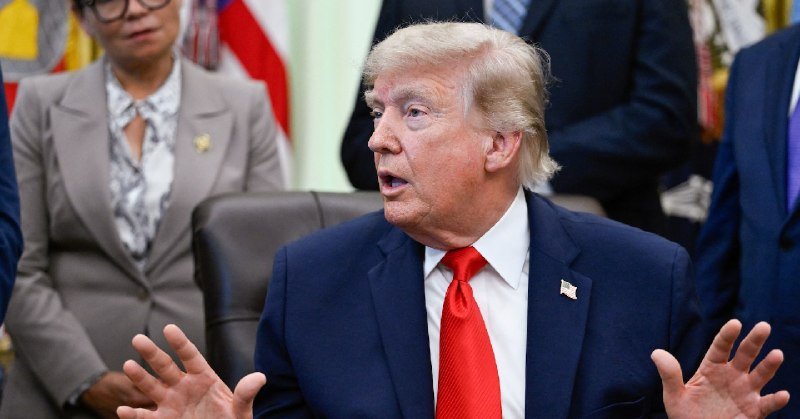
President Donald Trump disclosed on 10 June 2026 that the United States had run a secret military mission through the Strait of Hormuz, claiming the operation had enabled more than 100 million barrels of oil and over 200 commercial ships to transit the waterway, according to reporting carried by The Cradle and amplified by Ukrainian outlets covering the Middle East beat. The disclosure landed within hours of a separate, sharper public posture: Trump accusing Tehran of playing Washington "for suckers" and vowing to "hit Iran hard" if diplomacy did not bend to his terms, as reported by Middle East Eye at 18:55 UTC on 10 June 2026.
The pair of statements, delivered on the same day, sketch a White House pivoting from negotiated de-escalation toward coercive pressure — with the Strait of Hormuz, the narrow corridor between Iran and Oman through which a substantial share of seaborne crude ordinarily moves, again cast as both a vulnerability and a lever. The official figures Trump cited are large enough to be commercially meaningful; the political signal he attached to them is sharper still.
What Trump actually claimed
According to The Cradle's 19:50 UTC dispatch on 10 June 2026, Trump asserted that an undisclosed US military mission had facilitated the transit of more than 100 million barrels of oil and over 200 commercial ships through the strait, framing the episode as proof of American reach into one of the world's most sensitive energy corridors. The Cradle carried the claim at the level of Trump's own assertion; no independent confirmation of the precise tonnage or vessel count has surfaced in the thread material available to Monexus. The Ukrainian outlet TSN, posting at 19:14 UTC the same day, ran the same claim under a headline summarising the disclosure as "a secret operation in the Strait of Hormuz," underscoring how the story was already propagating across regional desks within minutes.
The numbers, if accurate, would be substantial. A single very large crude carrier can move around two million barrels; 100 million barrels therefore implies something on the order of fifty laden tanker movements, or a longer sequence of smaller Aframax and Suezmax transits, escorted or de-conflicted by US naval or air assets. The "over 200 commercial ships" figure widens the frame beyond oil to liquefied petroleum gas, container traffic, and the dry-bulk trade that also threads the strait. None of this is independently documented in the source items; the sourcing is, for now, the US presidency.
The harder line on Tehran
Hours earlier, Middle East Eye reported at 18:55 UTC that Trump had publicly pivoted from de-escalation, accusing Iran of "playing the US for suckers" and lamenting that a deal on his terms had not materialised. The piece carried a direct threat — "hit Iran hard" — that frames the diplomatic track as conditional and narrow. Read alongside the Hormuz disclosure, the sequence suggests a White House that has decided the political upside of a quiet naval channel is now best realised by making the channel visible: telegraphing capability, naming the chokepoint, and pairing the message with an explicit threat of escalation should Tehran refuse the shape of a deal on offer.
The framing is consistent with how a coercive maritime strategy is typically sold publicly. The volume moved is meant to demonstrate that the strait remains open for compliant commerce; the threat of force is meant to demonstrate the cost of any future attempt to close it. Whether those two messages reinforce each other, or undermine each other, depends on which audience Tehran is reading.
A counter-read from the other side of the chokepoint
Tehran has its own story to tell about the strait, and it is structurally different. Iranian commentary has long framed the US naval presence in the Gulf as the destabilising variable, not the stabilising one, and has pointed to incidents — the detention of commercial tankers, the downing of a US drone in 2019, periodic seizures of foreign-flagged vessels — as evidence that the corridor is already a contested space rather than a protected one. From that vantage, an American "secret mission" enabling commercial transit is less a reassurance than an admission: the world's most powerful navy had to intervene covertly to keep oil flowing through a waterway that, on a calm day, moves it for free.
The Cradle, a Beirut-based outlet that routinely carries regional counter-narratives to the Western wire line, gave Trump's claim prime placement without either endorsing or refuting the underlying numbers. That editorial choice is itself a signal: the claim is treated as a Washington utterance worth amplifying, not as an established fact worth corroborating. A reader trying to weigh the disclosure should hold the tonnage and ship-count figures as assertions, not data points, until an independent accounting appears.
What the corridor politics actually look like
Stripped of the rhetoric, the Strait of Hormuz is a structural problem the global economy has lived with for decades. It is narrow, heavily trafficked, and bounded on one side by a state that has, at various points, threatened to close it, and on the other by US Central Command and the Gulf monarchies whose exports depend on it staying open. Any operation to keep oil and ships moving through it, secret or otherwise, is doing two things at once: resolving a tactical congestion or threat problem, and reminding every observer — Tehran included — that the United States treats freedom of navigation through the strait as a non-negotiable.
That second function is the one that does the political work. A covert mission that quietly shepherded fifty tankers through would be a logistics footnote. A covert mission that the president then discloses from a podium, attaches a round number to, and pairs with a threat of striking Iran, is a piece of signalling. It tells domestic audiences that the administration is defending the oil market; it tells Gulf partners that the US security umbrella is operational; and it tells Tehran that the next phase of pressure will be visible rather than quiet.
What remains uncertain
The thread material does not establish when the supposed mission ran, which US assets were involved, which ships were escorted, or how the 100-million-barrel and 200-ship figures were derived. The Cradle carried the claim at face value; TSN relayed the headline; Middle East Eye focused on the political posture rather than the operational detail. No US Defense Department readout, no Fifth Fleet statement, and no commercial satellite confirmation appears in the sources available to Monexus. For now, the disclosure is a presidential assertion, not a corroborated record. The trajectory of the story — whether it hardens into a documented operation or softens into a talking point — will depend on what surfaces in the next seventy-two hours.
Desk note: Monexus has reported the 100-million-barrel and 200-ship figures as Trump's own claim, sourced to The Cradle's 19:50 UTC dispatch, rather than as established fact. The harder-line framing on Iran is sourced separately to Middle East Eye's 18:55 UTC piece, allowing the two threads to be reported in parallel without conflating them.
Wire provenance
This editorial synthesis draws on the following public wire/social posts:
- https://t.me/thecradlemedia
- https://t.me/TSN_ua