Trump's Strait of Hormuz Pitch Comes with a Birthday Candle and a Punching Bag
On the same June day the president took credit for escorting 200 ships through the Strait of Hormuz and wished himself world peace, his own network previewed 'bridges and power plants' as next targets — and a separate regulator quietly redrew the rules for betting on everything else.
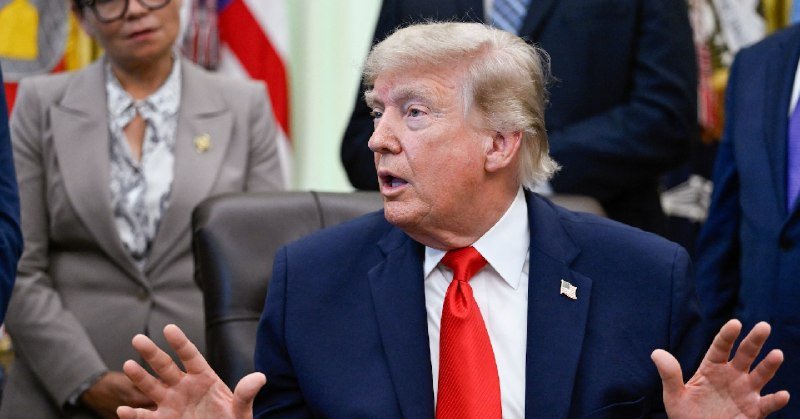
On 10 June 2026, the same White House that publicly yearned for "world's peace" to mark the president's birthday also claimed credit for shepherding "more than 100 million barrels of oil and over 200 commercial ships" safely through the Strait of Hormuz — and, on a separate network broadcast hours earlier, was being told by an anchor that its "next targets will be bridges and power plants." The collision of signals is not a communications problem. It is the policy.
Strip away the birthday-candle framing and the cables of congratulation, and what is left is a commander-in-chief asserting operational control over the most important energy chokepoint on earth while his own media ecosystem openly previewed escalation against a regional adversary. Two registers, same day, same desk.
The Hormuz ledger, as the White House tallies it
The claim itself came via Cointelegraph's wire at 18:05 UTC on 10 June 2026: U.S. military operations, the president said, had helped move more than 100 million barrels of oil and over 200 commercial ships safely through the strait during a period of acute Iranian-aligned harassment of commercial tonnage. There is no independent, ship-by-ship public ledger to confirm the 100-million-barrel figure, and the Strait of Hormuz is precisely the kind of theatre where official numbers run ahead of the data. The framing still matters. By publicly marrying the U.S. Navy's posture to a specific, named barrel count, the administration has converted a routine convoy-protection mission into a deliverable it can campaign on — and a target Tehran can be accused of threatening.
The other number worth watching is the network frame that followed: per a Middle East Spectator post at 22:26 UTC, Fox News told its audience the "next targets will be bridges and power plants." Read literally, that is an on-air description of an escalation ladder aimed at Iranian civilian infrastructure. Read as a messaging artefact, it does something more useful for an adversary than any official statement could: it advertises the next move before it is made.
A counter-narrative, in case anyone wants one
Iran's read of the same strait traffic, when its state-aligned outlets bother to issue one, is that U.S. escorts are an admission that Iran can disrupt the chokepoint at will and that Washington is overstretching naval capacity in a body of water Iran has spent two decades learning to menace. That framing is not symmetrical with the White House's — the U.S. side is setting the terms of what counts as "safe transit" — but it is the read most foreign ministries in the Gulf and across the broader Global South are quietly tracking. The structural fact underneath both stories is the same: roughly a fifth of the world's traded oil still funnels through a 21-mile-wide strait that no one's navy can actually close or permanently secure.
The quiet regulatory drift underneath the fireworks
While the Hormuz headlines and the birthday well-wishes competed for airtime, a separate, less photogenic U.S. agency was making its own kind of history. At 10:38 UTC on 10 June 2026, the Wall Street Journal reported — and Cointelegraph relayed — that the CFTC will propose new prediction-market rules, allowing most sports contracts while reserving the right to block markets "vulnerable to manipulation." The word "manipulation" is doing all the work in that sentence. The regulator is drawing a line between wagers it considers commercial entertainment (sports outcomes) and wagers it considers politically combustible (elections, war indices, Fed moves). Predict which bridge gets hit, in other words, and your book is reviewed on a different axis than the one taking bets on the Lakers.
That distinction is going to matter when, not if, the next Hormuz incident generates a derivatives market priced in minutes. A CFTC that has pre-emptively armed itself with a manipulation veto is a CFTC that can decide — quietly, after the fact — which financial instruments get to monetise a war in real time.
Stakes, and the part that remains unresolved
The honest read of 10 June 2026 is that three things are being normalised at once: presidential ownership of energy-corridor security, media previews of strikes on infrastructure, and a regulator extending its veto over the prediction economy. Each is defensible in isolation. Together they form a pattern in which the executive branch sets the military tempo, friendly broadcasters name the targets, and the financial plumbing is rearranged so that betting on the outcome sits a regulator's petition away from being shut down. The counterpoint worth keeping on the page is the one the official communiqués will not contain: none of the 100-million-barrel figure, the bridge-and-plant target list, or the new CFTC boundary has been independently audited, and the sources in circulation do not specify how either side's version of "safe transit" is measured. Until that is on the record, the chokepoint and the news cycle around it are both being priced on faith.
Desk note: Monexus ran the Hormuz claim, the Fox News target framing, and the CFTC filing as a single newsday because they were issued within twelve hours of each other and point to the same underlying question — who controls the corridor, the targets, and the market that monetises both.
Wire provenance
This editorial synthesis draws on the following public wire/social posts:
- https://t.me/insiderpaper
- https://t.me/Middle_East_Spectator
- https://t.me/Cointelegraph
- https://t.me/Cointelegraph