Trump escalates Iran pressure, signs $64bn homeland security bill in same afternoon
Inside a single White House afternoon, a $64 billion homeland security package and a not-yet-signed Iran memorandum collide, exposing the gap between Washington's stated maximum-pressure posture and the cash-and-carve-out architecture already being built around it.
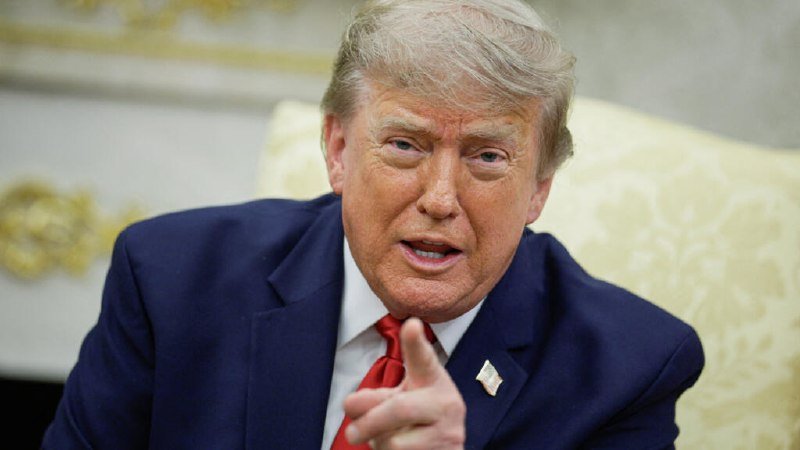
At 4:47 p.m. ET on 10 June 2026, the White House East Room emptied twice in the same hour. First, President Donald Trump signed a $64 billion homeland security supplemental into law, framing it as the infrastructure for what he called "the most aggressive pressure campaign ever mounted against the Iranian regime." Within minutes, he was back at the podium to announce that he had, again, cancelled a planned strike on Iran, and that a peace memorandum was, again, days from signature.
The two events are not separate stories. They are the same story told at two volumes: one legislative, one kinetic. The homeland security bill routes money to border enforcement, cyber operations, and maritime interdiction in the Gulf, the same Gulf whose shipping lanes Iran now claims to administer on its own terms. The Iran announcement, by contrast, claims the pressure is already producing a deal. Both can be true on a White House schedule. Neither is yet true in the verifiable record on the ground.
The bill that does the quiet work
The supplemental Trump signed on Wednesday afternoon bundles together three priorities that, until this year, lived in different committee jurisdictions. The first is a $22 billion Customs and Border Protection expansion, including 1,800 additional officers and the next tranche of border wall construction in Arizona and Texas. The second is a $19 billion tranche for the Cybersecurity and Infrastructure Security Agency, explicitly earmarked for "state-adjacent threat actors," a phrase that, in the bill's accompanying report, points only one direction. The third, and the most directly relevant to the Gulf, is $23 billion for the Coast Guard and for maritime domain-awareness assets, including surveillance drones, patrol cutters, and the radar backbone for the International Maritime Security Construct operating in and around the Strait of Hormuz.
The bill's own summary language is careful. It does not name Iran. It does not need to. The maritime package was drafted during the same fortnight in which Iranian fast-attack craft, according to regional wire reporting, approached commercial tankers in the Strait and were turned back by U.S. Navy escorts. The homeland security package is, in effect, the second front of the Iran pressure campaign: it pays for the tools that would be used to enforce any blockade, any sanctions regime, any future interdiction regime that the White House might want to impose whether or not a memorandum of understanding is signed.
The deal that may or may not exist
Within an hour of the bill signing, Trump was claiming the opposite end of that spectrum. He told reporters in the Roosevelt Room that a "14-point memorandum of understanding" with Tehran was close to final text, that it would be signed "remotely, possibly within days," and that it would end hostilities across every front of what the bill's drafters call "the state-adjacent threat." He repeated the phrase "they have no choice" three times. He also, in the same briefing, dismissed earlier reporting on the emerging terms as a "hoax."
The contradictions are not subtle. The memorandum reportedly circulating through Tehran includes, per Mer News Agency summaries republished across regional Telegram channels: a permanent cessation of hostilities on all fronts, including Lebanon; a U.S. commitment to non-interference in Iran's internal affairs; Iranian recognition of Israeli maritime rights in the southern Red Sea; and a phased release of frozen Iranian assets held in third-country escrow accounts. None of these terms has been confirmed on the record by the U.S. State Department. None has been confirmed on the record by Iran's foreign ministry. The shape exists only in the summaries of an Iranian outlet that is itself close to the negotiating team.
Iranian Foreign Minister Abbas Araghchi, in an interview carried on Iranian state television on the same afternoon, struck a markedly cooler note. "The best time to end a war is before it expands further," he said, in remarks Trump himself retweeted earlier in the day. But he added, in a separate statement widely republished across Persian-language and English-language accounts, that "the management of the Strait of Hormuz will not return to its pre-war state," and that the waterway "lies entirely within the territorial waters of Iran and Oman." A foreign minister who controls the world's most important oil chokepoint, and who is publicly asserting sovereign jurisdiction over it, is not the posture of a delegation that has been forced to the table.
A pattern of escalation dressed as resolution
The Wednesday briefing sits inside a now-familiar rhythm. NPR's news desk, in a piece timed to the same announcement, catalogued the latest in a series of "whiplash proclamations" since the start of what Trump has called the February 28 war on Iran: cancelled strikes, then resumed threats; a near-deal, then a hoax; ultimatums publicly issued, then quietly withdrawn. The Economist, in a piece Trump did not retweet, summarised the dynamic more bluntly: "Iran's fear of war has disappeared." The same publication reported that over the past week both the United States and Israel had bombed Iranian targets, that Iran had shot down an American helicopter, and that the regional baseline has shifted from deterrence to routine attrition.
That attrition has a price tag, and it is not theoretical. The New York Times reported on Wednesday that "the depletion of global oil reserves is putting additional pressure on Trump to reach an agreement," a sentence that, if accurate, frames the entire negotiating posture as a function of the spot price at Rotterdam and Singapore. Five minutes after Trump publicly called the announced points of the emerging deal a "hoax," according to a market-side account tracked across financial social media, U.S. equities shed roughly $460 billion in capitalisation. The number is unofficial and unverified by wire services. The direction is not.
The Gulf state that bought quiet
The most under-reported element of the Wednesday package sits between the bill and the deal. According to a regional report summarised on X and confirmed in part by Reuters, the United Arab Emirates has unlocked approximately $10 billion in previously frozen Iranian oil revenues, of which $3 billion was already delivered in cash. Iranian Revolutionary Guard Corps officials stayed at the UAE national security advisor's guest house in the run-up to the transfer, a logistical detail that explains why a Gulf state with formal U.S. security guarantees was nonetheless sitting across the table from the very force the homeland security bill is partly designed to contain. The payment is the price of de-escalation on the UAE's eastern flank. It is also, by any reasonable definition, a workaround of the U.S. sanctions architecture that the supplemental bill nominally reinforces.
That single fact reframes the day's two announcements. The homeland security bill asserts a maximum-pressure posture. The UAE transfer demonstrates the working architecture of something else entirely: a regional carve-out, brokered bilaterally, paid in cash, that delivers to Iran something the U.S. Treasury would not. The Iran deal Trump described on Wednesday is, in this reading, less an instrument of U.S. leverage than a ratification of deals already made.
What is actually being signed
No signature has yet been affixed to the 14-point memorandum. Araghchi told Iranian television the signing would be conducted remotely and might come in the coming days, contingent on internal decisions in Tehran. The full text has not been published. No official at the State Department has confirmed that the United States has agreed to the asset-release schedule that Iranian outlets have described. The strait-of-Hormuz clause, on Iran's side, is being announced as a fait accompli rather than a concession. The maritime package in the homeland security bill is being signed as if the strait clause does not exist.
The next forty-eight hours will clarify whether Wednesday produced a turning point or another entry in the cancellation-and-resumption ledger. Watch for two specific items: a joint statement from the State Department and the UAE foreign ministry, which would either confirm or quietly walk back the $10 billion figure; and the first on-record sentence from a senior Pentagon official acknowledging or denying the maritime interdiction allocations in the supplemental. Until one of those two documents lands, the day's two announcements remain what they have been for months: pressure and its denial, in the same voice, on the same afternoon.