Trump's oil-and-infrastructure threats put Iran's negotiators back at square one
A single news cycle on 10 June 2026 produced a coherent US pressure campaign: signalling strikes on power plants and bridges, public boasts about destroying Iranian oil shipments, and an appeal to Pakistan to keep the temperature down. Tehran is reading it as coercion. The read is not unreasonable.
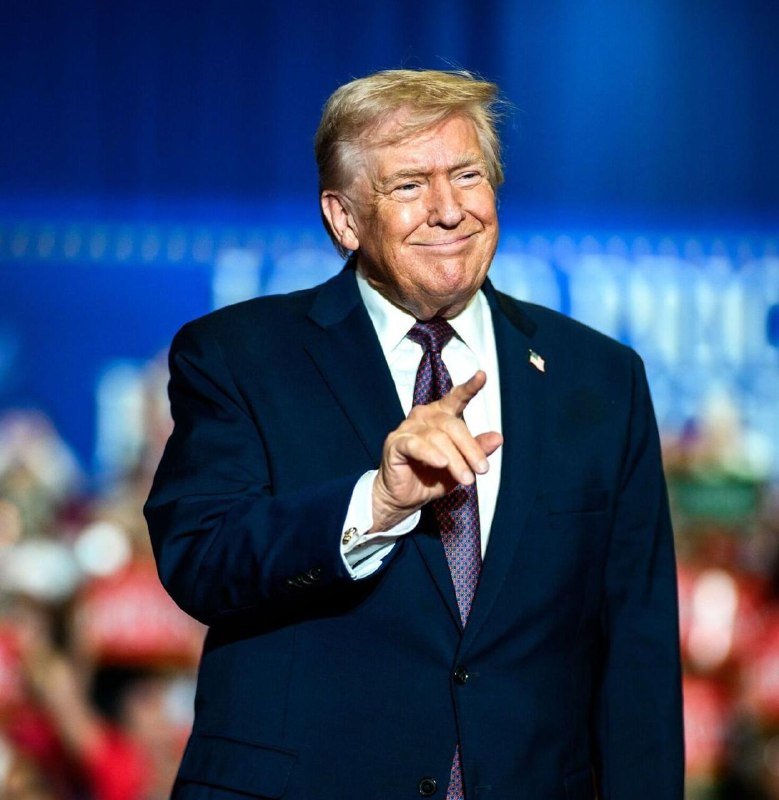
Within the space of three hours on the afternoon of 10 June 2026, the US president opened a press appearance with a public ultimatum to Iran, declined to rule out striking its power plants and bridges, claimed credit for destroying millions of barrels of Iranian oil, and disclosed that Pakistan's prime minister and field marshal had personally asked him to call off the latest round of attacks. By the close of the day, Iranian state media had translated each of those statements into a single, internally consistent message: the United States is not bargaining, it is bullying, and the only sensible response is to refuse the deal on the table.
The pattern matters more than any one sentence. Strip out the rhetorical packaging, the insults traded through translators, and the Tehran editorial boards that are now openly calling the US president a terrorist in their chyrons, and the underlying US posture is coherent: maximum economic and military pressure, calibrated just below the threshold that would force a wider war, and tied explicitly to a written agreement that Iran is being told to sign before that pressure intensifies. The interesting question is not whether that posture is real. It plainly is. The question is whether it is producing the outcome Washington claims to want — a nuclear deal — or whether it is producing the thing it publicly says it wants to avoid, which is a return to active combat in the Persian Gulf.
A pressure campaign in four parts
The day's messaging can be broken into four distinct moves, each of which is now on the public record. The first was the framing of the negotiation itself. "They've taken too long to negotiate a deal that would have been great for them, now they will have to pay price," the US president told reporters at 13:43 UTC, in remarks carried by Unusual Whales' X feed. The second was the explicit refusal to take infrastructure off the table. When a journalist asked whether he planned to attack Iran's power plants and bridges, the answer, as carried by Fars News International's Telegram channel at 16:41 UTC, was: "I won't tell you, but I can do it." The third was the boast about oil. The same president told the press conference, again per Fars's Telegram feed at 16:29 UTC, that "we've been taking out millions of barrels of oil. Every night, we took out oil," and that this campaign would now expand. The fourth was the diplomatic off-ramp. Trump said, also at 16:17 UTC per Fars, that he had "stopped the war at the request of Pakistan" and credited Pakistan's field marshal and prime minister by name.
Each of those four moves has a domestic US audience and an Iranian audience. The ultimatum and the infrastructure threat are aimed inward at a base that is being told the administration is not bluffing. The boast about oil is aimed at financial markets and at Tehran's own oil customers, who are being asked to calculate the risk of doing further business. The Pakistan reference is the only one with a clear diplomatic payload: it tells Tehran that a regional interlocutor is now embedded in the back channel, and that a face-saving pause is in principle available.
The Iranian read
The read inside Iran, as expressed through state-aligned outlets, is that the four-part posture is not a bargaining stance at all. Tasnim News, writing in English on its Telegram channel at 16:15 UTC, ran the line that "Iran keeps making us look stupid, because it has dealt with several very stupid presidents," and framed the entire press appearance as the residue of humiliation. Fars News, in the same window, paraphrased the same remarks as a US admission that "Iran should sign the agreement" — but added, in the same dispatch, the rider that Trump also said "we will strike Iran again." The contradiction is the point. The Iranian state press is reading the day's messaging as proof that Washington is preparing a follow-on strike regardless of whether a deal is signed, and is therefore using the deal as a political prop, not as a substantive offer.
That read is not irrational. It is, in fact, the read that the US messaging is designed to produce, if one assumes the messaging is intended for the Iranian public as much as for the Iranian government. The infrastructure threat, the oil campaign, and the insult-laden tone are all consistent with a strategy of trying to move Iranian domestic opinion — to give Tehran's negotiating team a political cover for accepting terms it would otherwise have to defend as surrender. The problem with that strategy is that it has been tried before, including in the run-up to the 2015 Joint Comprehensive Plan of Action, and it has historically hardened rather than softened Iranian positions.
The structural frame
What is unfolding in the Gulf is not, on the evidence of a single news cycle, a negotiating breakdown. It is a particular style of coercion, in which a written document is held in one hand and a military-industrial threat is held in the other, and the two are not separated by anything the other side can rely on. This is what sustained economic warfare tends to look like when the sanctioning power and the target state have no shared arbiter and no shared definition of what a successful outcome is. The US objective, as stated, is denuclearisation plus restraints on ballistic missiles plus a cap on regional proxy activity. The Iranian objective, as the day's Tasnim and Fars coverage makes plain, is sanctions relief that is durable, recognition of its enrichment programme as legitimate, and guarantees against a follow-on strike. Those are not minor gaps. They are the gaps that made the previous deal collapse.
The oil dimension is doing a lot of work. Iran's crude exports have been the country's principal source of foreign currency through the sanctions era, and any public statement that the US is now openly claiming to take barrels off the water at night is a direct strike at that revenue. If the claim is true, the effect is to compress Iran's negotiating window. If the claim is inflated, the effect is to advertise that the US is willing to claim capability it has not fully demonstrated, which is itself a coercive signal. Either way, the message to Iran's oil customers in Asia is that the risk premium on Iranian crude is going to widen.
What remains uncertain
The most important caveat is that the public record on 10 June 2026 is dominated by Iranian state media's translations of an American press appearance, with one additional input from an X account that aggregates market-moving political news. The transcript of the full press conference is not in the source set this article is built on, which means the exact wording, the exact sequence, and the exact context of each quote is filtered twice — first through Tehran's editorial choices, and second through an aggregator's selection. The direction of the messaging is unambiguous. The exact calibration — whether the infrastructure threat is a fresh escalation or a re-statement of an existing position, whether the oil boast refers to strikes on Iranian tankers or to broader enforcement against shadow-fleet shipping, whether the Pakistan intervention is brand new or a re-statement of a back-channel from earlier in the year — is not.
A further, quieter uncertainty is what the Pakistani government has actually said on the record. Trump credited both the prime minister and the field marshal of Pakistan by name, and credited them with a request to pause operations. Pakistan's foreign ministry has, on the evidence available here, not yet issued a confirming statement in the open record. If the credit is accurate, it confirms Islamabad as a back channel with the ability to move the US position in real time. If it is not, it is a diplomatic improvisation that puts Islamabad in an awkward position. The next forty-eight hours will tell.
The stakes
The near-term stakes are concrete. If Iran refuses the document on the table, the infrastructure threat is a credible next step, and the oil campaign expands. The most likely Iranian counter-move, on past pattern, is to recalibrate its nuclear posture publicly, to step up proxy activity in Iraq and the Gulf, and to attempt a managed spike in oil prices. The most likely US counter-counter-move is to widen sanctions enforcement and to accelerate the air campaign against Iran's export infrastructure. None of those moves are consistent with a return to a written deal. The longer the messaging cycle runs in its current register, the harder it becomes for either side to climb down without an internal audience treating the climb-down as defeat.
The wider stake is the precedent. A US posture in which written diplomacy is held in one hand and a strike on civilian infrastructure is held in the other — and the two are alternated in the same news cycle — is a posture that other regional states are watching in real time. The Gulf monarchies, Turkey, Egypt, and the Central Asian states are all reading the same transcripts. What they are reading is that the United States is prepared to apply that style of pressure to a country of nearly ninety million people, with the explicit endorsement of a regional Muslim-majority back channel. That is a model of how the current US administration intends to manage the rest of its file, and it is a model that the rest of the region is now quietly pricing in.
This publication framed the day's coverage as a single, internally consistent US coercion strategy rather than as a series of disconnected statements, in contrast to several wire services that ran the remarks as discrete quotes. The structural reading is supported by the timing and the sequence of the original Telegram and X dispatches.
Wire provenance
This editorial synthesis draws on the following public wire/social posts:
- https://t.me/FarsNewsInt
- https://t.me/tasnimnews_en
- https://t.me/tasnimnews_en
- https://t.me/ClashReport
- https://t.me/FarsNewsInt
- https://t.me/JahanTasnim
- https://t.me/FarsNewsInt
Follow the event.
These dated source records provide context. They do not retrospectively verify this archive article.
Separate what the nuclear watchdog reported from what it could not determine after the June 2025 strikes.