Trump's midnight oil claim, Iran's World Cup broadside, and the contradictions of a deal that has no name
A late-night boast about stolen Iranian crude, an escalating verbal barrage, and a Foreign Ministry swipe at the United States as 2026 World Cup co-host — together they describe a deal that is more rumour than document.
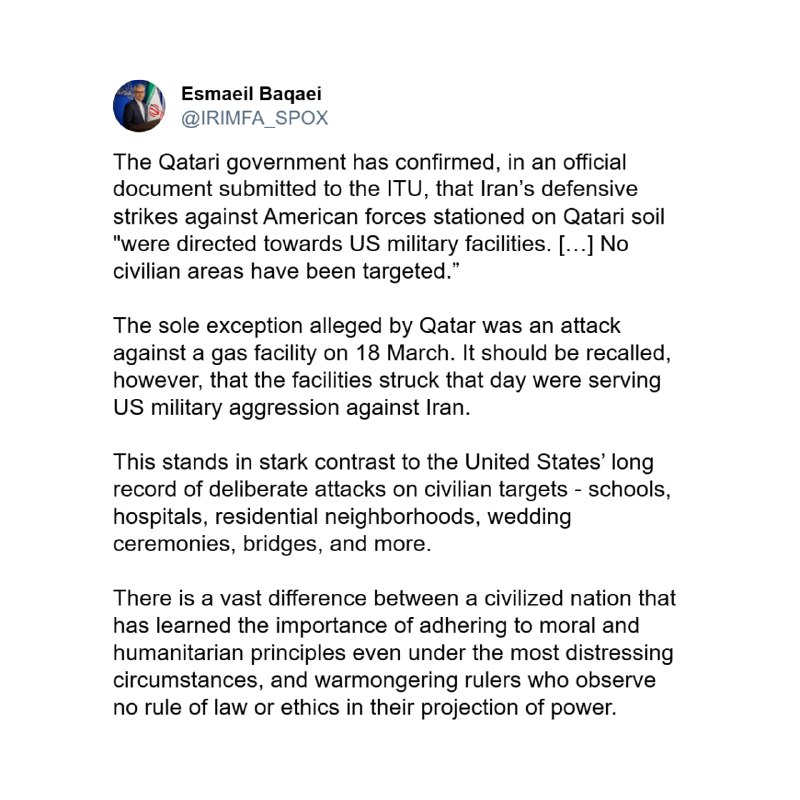
On 10 June 2026, the public diplomacy between Washington and Tehran collapsed into three registers at once: a presidential boast, a foreign-ministry broadside, and a parallel dispute over the conduct of the 2026 World Cup. Read together, the exchanges do not describe a negotiation nearing resolution. They describe one that has lost its script.
A deal that was supposed to be weeks away is now, on the public record, all posture and counter-posture. The administration is signalling leverage; Tehran is signalling resentment; and the diplomatic language in between has thinned to a single word — pressure — applied from both ends of a hotline that increasingly rings only when one side needs the other to know it has not picked up.
The midnight oil claim
At 18:40 UTC on 10 June, Iran's Foreign Ministry publicly accused the United States of undermining the diplomatic process by sending contradictory messages and repeatedly changing its demands, an escalation of the language the Islamic Republic has used to describe the still-undefined framework that has been in negotiation since the spring. The statement came the same day that President Donald Trump, according to a 17:44 UTC Telegram post by the channel @Megatron_ron and a 16:09 UTC post on the Polymarket account, claimed publicly that the United States has been secretly removing "millions of barrels" of Iranian oil from the market every night — a boast that, if accurate, would describe an active maritime interdiction campaign the administration has not officially confirmed.
The claim, whether operational fact or negotiating theatre, performs two functions at once. It tells a domestic audience that the United States is squeezing Tehran without the costs of a hot war. It tells Tehran that the cost of non-compliance is not future but ongoing. The ambiguity is the point. A confirmed oil interception programme would invite legal questions, allied consultation, and oil-market reaction that the White House has so far avoided. An unconfirmed boast has none of those liabilities. It is a sanction delivered by rumour, in the same currency as the one Iran has long accused the United States of running against it.
The oil claim also lands in a market already pricing in disruption. A "millions of barrels per night" framing — even a rhetorical one — moves Brent. It reassures Gulf partners that the United States is willing to act on the water, not just at the podium. And it gives Iran's negotiators a paper trail of grievance: the same administration demanding talks is publicly claiming to steal the resource that funds the state they are demanding talks with.
The World Cup fight
The same day, the Foreign Ministry's spokesperson turned the microphones toward a different front: the 2026 World Cup, which the United States is co-hosting. According to a 18:50 UTC PressTV summary, the spokesperson sharply criticised the United States' conduct as co-host, arguing that the tournament must not be used as a platform for discrimination. The framing matters less for its specifics than for its venue. Iran does not have an embassy in Washington; it does not have many remaining official channels. FIFA tournaments, the UN General Assembly, and the Non-Aligned Movement are among the few global stages where a Foreign Ministry spokesperson can speak in a room the American press is obliged to cover.
The strategic effect is to widen the dispute. A nuclear-file disagreement is between two governments. A World Cup conduct dispute is between one government and the global audience the United States has spent the past decade courting. The implicit message to European and Latin American co-host broadcasters: the country that built the post-war liberal order is also, on Iran's account, willing to deploy exclusionary policing at the very events it claims to be opening up. Tehran cannot block the tournament. It can, however, place a permanent question mark over its hosting.
The World Cup fight is also a loyalty test for the Gulf and Turkey, both of whom want this dispute to end in a way that does not damage their own relationships with Washington. By tying the question to a global sporting event, Iran forces those governments either to defend U.S. policing publicly or to call for restraint in language they would not otherwise have to use.
What is actually being negotiated
Almost nothing in the public record. No draft text has been released; no document has been initialled; no sanctions waiver has been telegraphed. The administration has variously described the exchange as a "deal," a "framework," and a "nuclear file," sometimes within the same briefing. Iran has described it as a process of demands that keep changing — language that, in the Iranian negotiating tradition, is code for: we are being asked to concede without being told what we are conceding toward.
This is the structural problem beneath the surface noise. The United States is conducting the negotiation the way it conducts sanctions: as a permission architecture in which each step is a unilateral decision. Iran is conducting it the way it conducts resistance: as a process in which each concession is a public loss that must be priced in domestically. The two operating systems do not connect. They share a vocabulary — verification, enrichment, snapback — but not an accounting.
The midnight oil claim is the clearest tell. The United States is not claiming to negotiate; it is claiming to act. That is what a deadline looks like when the deadline has already passed.
The counter-read
There is a plausible alternative read. It runs as follows: the public theatrics are exactly what a working negotiation looks like at the final, most dangerous stage. The U.S. is signalling to Israel and to the Gulf that it is not going soft. Iran is signalling to its hardliners that it is not being rolled. The World Cup complaint is colour, not substance. The oil claim is a market test, not an operational admission. In this reading, the deal is close, the bombast is for home audiences, and a signed text will appear within weeks, leaving everyone room to claim victory.
The evidence against this read is that no U.S. official has confirmed any of the moving parts, and no Iranian official has confirmed the moving parts in the other direction. The most recent explicit warning — Trump's 12:50 UTC 10 June post that Iran will "pay the price" for taking too long to accept a deal — is not the language of a process nearing closure. It is the language of a process that has decided to test what happens if the other side does not move. Pressure of that kind, applied in public, has a half-life measured in days, not months. Either something breaks, or the threats lose force and the next round has to start from a lower baseline.
The structural reality is that there is no public deal to be analysed, only the mood of a negotiation that has not yet produced a single page of agreed text. The mainstream framing — that diplomacy is "intense" and "ongoing" — is technically correct and substantively empty. A deal is a document. There is no document.
What remains uncertain
The sources do not specify the volume, location, or legality of any oil interdiction campaign the United States may or may not be running. They do not specify the contents of any current U.S. proposal, the number of centrifuges Iran is enriching with, or the status of IAEA inspections. They do not specify which specific U.S. behaviour at the World Cup the Iranian spokesperson is protesting against, or whether any FIFA body has been approached. Each of these is a real question that the public record currently cannot answer.
What the public record does show, on 10 June 2026, is that the diplomatic language on both sides has hardened in a single day, the operational language has escalated in a single day, and the symbolic language has been deliberately widened to include a global sporting event. A negotiation that is in its final stage should be narrowing, not expanding. This one is doing the opposite.
The honest read is that no one outside the rooms knows what is being negotiated, and that the people inside the rooms are broadcasting louder than at any point in the cycle. The next 72 hours will tell whether that volume is the sound of a deal or the sound of a collapse. The public, on the evidence of 10 June, should plan for both.
This publication has reported on U.S.–Iran negotiations using Telegram-sourced statements and the public Polymarket feed because no wire service has so far published a confirmed text or confirmed interdiction figures; the desk note flags that the lead claims — particularly the "millions of barrels" figure — remain unverified by any U.S. official on the public record as of 18:50 UTC on 10 June 2026.
Wire provenance
This editorial synthesis draws on the following public wire/social posts:
- https://t.me/presstv
- https://t.me/presstv
- https://t.me/megatron_ron