Tehran's waiting game runs out of clock — and Washington names the price
A White House ultimatum turns months of fitful talks into a coercion problem. Tehran's options narrow, and the regional bill for delay is about to come due.
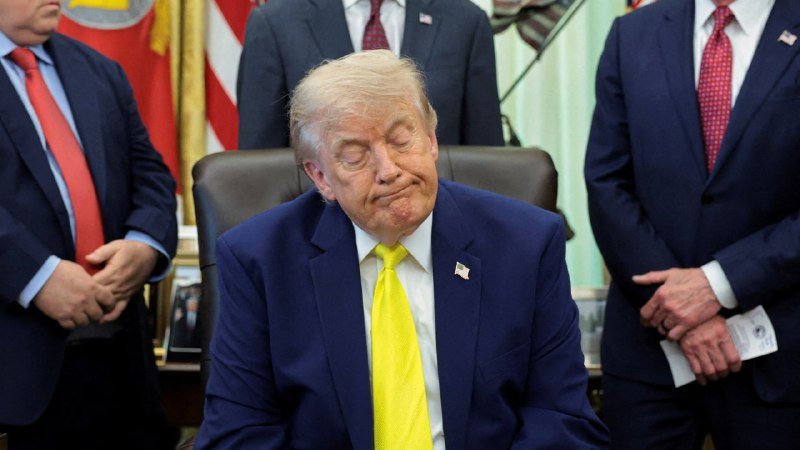
The line landed on Wednesday morning, Jerusalem time, in the clipped syntax that has become this administration's diplomatic signature. Reporting carried by Israeli channel N12's Amit Segal on 10 June 2026 at 11:05 UTC quoted the US President as saying: "The Iranians took too long to negotiate a deal — now they will have to pay the price." It was, by any reading, the public burial of a six-week window that had opened on 3 June in Muscat, when Omani mediators brought American and Iranian delegations into the same room for the first time since 2023. What replaces negotiation is, as of this writing, undefined — and that is itself the point.
For months, Tehran played a recognisable game. Delay the talks, leak a counter-proposal, allow sanctions to bite, wait for the American political calendar to do what economic pressure could not. It is a game Iran has played well before — and one that has cost the Islamic Republic before, too. The question now is whether the price being named is rhetorical, kinetic, or financial, and whether the regional states being asked to absorb the consequences have any say in the answer.
The clock the White House built
Inside the Trump administration's calculus, the Muscat track was always a one-shot instrument. The first round, brokered by Omani foreign minister Badr Albusaidi, was treated by Washington as a probe rather than a process. The Israeli press reading — carried by Segal, who travels with the Prime Minister's office — is that the United States went in with a maximalist floor on enrichment, missile range, and proxy disarmament, and emerged with Iranian counter-demands that, in the White House's telling, regressed on every front. The two-month gap between the first indirect talks in late April and the early-June Muscat session was, in this reading, time Iran spent constructing an off-ramp that did not exist.
The pattern is not new. The 2015 Joint Comprehensive Plan of Action succeeded because Tehran's negotiators and the Obama team converged on a formula where the delay cost was symmetric — both sides wanted the deal, both sides feared the failure. The current iteration has no such symmetry. The American side has publicly cast enrichment-to-zero as the only acceptable outcome; the Iranian side has treated that condition as a non-starter. Between those two poles, the price being named is a fog rather than a figure.
The regional underwriters
What makes this moment more combustible than a bilateral failure is who else is in the room. The Gulf states, which quietly bankrolled much of the sanctions enforcement that brought Iran back to the table, are now in the position of having to decide whether the price is one they pay. Saudi Arabia and the United Arab Emirates, both of whom upgraded diplomatic ties with Tehran in 2023 and 2024 respectively, face the awkward arithmetic of watching a deal they enabled die on terms they did not set. Israel, for its part, has made clear through back-channel signalling and Segal's own reporting that it regards the enrichment question as a red line — and that the alternative to a deal is not a return to talks but a different kind of pressure campaign.
Iran's regional partners — the axis often shorthanded as the "resistance economy" — have less leverage than at any point since 2015. Hezbollah is rebuilding after a year of attrition. The Houthis have lost Red Sea revenue to a sustained coalition interdiction effort. Tehran's currency, the rial, has stabilised only because of ad hoc Gulf and Chinese oil-for-yuan arrangements. The delay strategy that worked in 2012-2015, when oil was above $100 and Iran had credit lines Moscow was willing to extend, runs on fuel Tehran no longer has.
The price, named and unnamed
The Trump formulation is, deliberately, ambiguous. The price can be a snapback of UN sanctions that were suspended under the 2015 deal and that several European parties are now publicly preparing to trigger. The price can be a designation of the Central Bank of Iran under existing terrorism-financing authorities. The price can be a coordinated strike on the hardened enrichment sites at Natanz and Fordow, with the bunker-buster inventory that was reportedly forward-deployed in 2025. Or the price can be none of the above — a rhetorical escalation that buys another cycle, in which case the administration would argue, correctly, that the pattern has been repeating since the 1990s.
The honest reading is that the administration has built optionality, not a plan. Each of the four prices has a different coalition cost, a different market reaction, and a different effect on the November midterms. Naming the price publicly before naming it privately is, in this reading, a tactic to surface Iran's counter-bid — to force Tehran to either accept maximalist terms or to reveal that the maximum it can deliver is well below what was offered.
What Tehran can still say
The counter-narrative from Tehran — visible in Iranian state media and in commentary carried by outlets sympathetic to the Islamic Republic — is that the United States is negotiating with itself. The argument runs that Iranian sovereignty over enrichment is non-negotiable under international law, that the Trump maximum has no diplomatic floor, and that the regional states now being asked to underwrite a coercion campaign have their own reasons to resist. There is some weight to this. The 2015 deal held for eight years partly because the Gulf states and the European Union treated the price of its collapse as higher than the cost of enforcement. Whether that coalition still exists is a question the next ten days will answer.
The structural fact underneath both readings is that the delay strategy that bought Iran 2015 is no longer available in 2026. Tehran's economy is smaller, more sanctioned, and more dependent on a smaller set of customers than it was a decade ago. The price being named is, in that sense, already being paid. The question is whether it is paid in rial, in centrifuges, or in lives — and on whose side of the Gulf.
The serious paragraph
The wager inside the Trump ultimatum is that an Iranian no is, in fact, less costly to Washington than a yes — and that the regional bill will be paid in places Tehran cannot protect. That calculation has been wrong before. It may be wrong now. But the public framing, as of this writing, has removed the room for ambiguity, and the next move belongs to a government in Tehran that has fewer good options than at any point in the post-2015 era.
— Monexus framed this against the wire consensus that the Muscat track was always closer to a probe than a process. The Israeli-channel sourcing is foregrounded because the ultimatum language was carried there first; the Iranian counter-position is given equal weight, because the diplomatic record demands it.
Wire provenance
This editorial synthesis draws on the following public wire/social posts:
- https://t.me/amitsegal
Follow the event.
These dated source records provide context. They do not retrospectively verify this archive article.
Separate what the nuclear watchdog reported from what it could not determine after the June 2025 strikes.