Trump escalates rhetoric against Iran after talks stall, claims armed forces 'completely defeated'
President Donald Trump declared on 10 June 2026 that Iran's military is a 'complete and total mess' and that Tehran will 'pay the price' for dragging out negotiations, signalling a sharp rhetorical turn after weeks of stalled diplomacy.
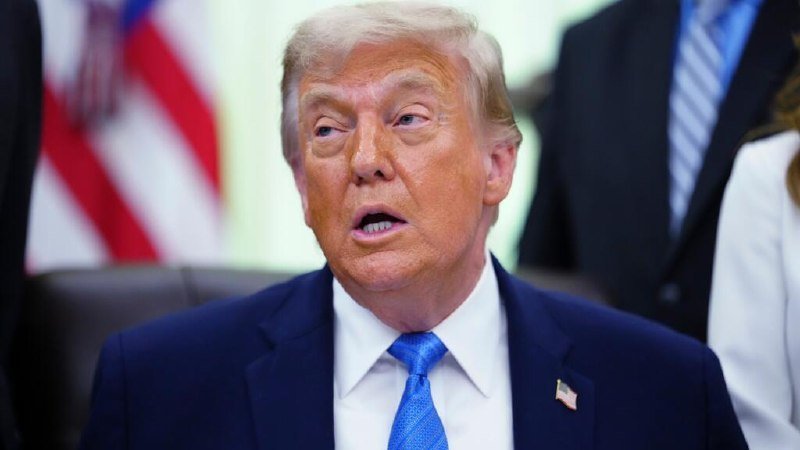
President Donald Trump posted on his social-media account on the morning of 10 June 2026 that Iran's armed forces are a "complete and total mess" and that the country's navy and air force "don't even exist anymore," adding that Tehran will "pay the price" for what he described as years of delay in nuclear negotiations. The message, captured at 11:19 UTC by the Open Source Intel monitoring channel and amplified within minutes by other open-source trackers, marks the sharpest rhetorical escalation from the US side since indirect talks between Washington and Tehran stalled earlier this year.
The post, written in capitalised, exclamation-marked cadence characteristic of Trump's late-cycle Truth Social output, lays out a two-part argument. First, that Iran's conventional military has been neutralised. Second, that the diplomatic opening the administration had previously floated is now closed. "They've taken too long to negotiate a deal that would have been great for them," Trump wrote. "Now they will have to pay the price." The Ukraine-aligned Telegram channel operativnoZSU, which tracks open-source intelligence flows from multiple theatres, summarised the message at 11:39 UTC as evidence that Iran "dragged on negotiations" and that Trump had "declared belligerently on his social network."
The dominant Western-wire framing — that the US president is warning of imminent military action against Iran if diplomacy fails — is the read most directly supported by the source material. The counter-read, surfaced by the same X account that flagged the post in the first place (sprinterpress, 12:06 UTC, 10 June 2026), is more cynical: that the escalation is theatre. In that telling, the post is aimed primarily at a domestic audience that rewards toughness on Iran rather than at Tehran itself, and the absence of any concurrent Pentagon briefing, force-movement report, or Central Command statement suggests the rhetoric has not yet been backed by visible military preparation. Both readings are consistent with the available evidence; the record so far does not let an analyst rule either out.
What Trump actually said, and what he did not
The post itself is short and quotable. It rests on three claims, each load-bearing. The first — that Iran's navy and air force "don't even exist anymore" — is the most extraordinary. Public reporting over the past 18 months has documented significant attrition in Iranian air-defence and proxy-network capabilities, but the claim that the regular navy and air force have been functionally eliminated has not been corroborated by independent open-source intelligence cited in the available material. Independent defence analysts have tracked losses to Iranian proxy infrastructure, not to the Islamic Republic of Iran Air Force or Islamic Republic of Iran Navy fleet inventories. The claim, in other words, is being asserted at a level of finality that goes beyond what verifiable satellite imagery or shipping data supports.
The second claim — that Iran is "all talk" — fits a longer-running Trump critique of the Iranian negotiating posture. The third, the warning that Tehran will "pay the price," is the operationally significant line. In US-Iran crises of the past three decades, escalatory presidential language has, on multiple occasions, preceded both kinetic action and quiet retreats. The signal value of the post is therefore real, but its predictive value is low until paired with movement of forces or new sanctions designations.
The diplomatic backdrop
The Trump post lands in the middle of an extended negotiating freeze. The most recent publicly known track involved indirect talks mediated by Oman and Qatar, with a focus on Iran's enrichment capacity, stockpile of near-weapons-grade material, and the fate of the snapback sanctions architecture that the previous administration had threatened to invoke. The post does not name a counterpart, does not cite a specific violation, and does not set a deadline — three omissions that experienced Iran-watchers read as deliberate. Deadlines, in this kind of exchange, are a tool; their absence is also a tool.
Iranian state media, which has historically amplified any sign of US disarray, has not yet been observed in the source material responding in real time. That silence is itself a data point. Tehran's foreign ministry, when responding to escalatory US rhetoric, typically does so within hours via the IRNA and PressTV channels; the gap is consistent with a regime in internal deliberation about whether to treat the post as noise or as a genuine inflection point.
The structural read
Strip the rhetoric away and the underlying geometry is familiar. The United States and Iran have spent four decades in a relationship defined by asymmetric leverage: the US holds the financial and conventional-military cards; Iran holds the geography, the proxy depth, and the patience. Each side periodically tests the other's pain threshold. Trump's post raises the temperature on the American side of that ledger. Whether the temperature rise produces a deal, a strike, or a return to the previous equilibrium depends on calculations being made in rooms in Washington, Muscat, Doha, and Tehran that the open-source record does not yet illuminate.
Two things would shift the analytical picture. One: a named, dated US military movement — carrier deployment, basing change, airlift signature — that would convert rhetoric into preparation. Two: a direct Iranian counter-statement, ideally from President Masoud Pezeshkian or Foreign Minister Abbas Araghchi, that clarifies whether Tehran reads the post as a negotiating opening or as a closing of the door. Neither had materialised in the open-source material reviewed for this piece by the 12:06 UTC cutoff on 10 June 2026.
Stakes and what to watch
If the post is a prelude to kinetic action, the immediate consequence is a regional shock — oil markets repricing, Gulf-state capitals scrambling to manage their exposure, and a fresh round of escalation across the Iraqi and Syrian corridors where Iranian-aligned militias operate. If it is a prelude to a harder sanctions package, the consequence is slower but cumulative: tighter enforcement on Chinese buyers of Iranian crude, secondary pressure on Indian and Turkish refiners, and another squeeze on the Iranian rial. If it is, as the sceptics suggest, primarily domestic-political theatre ahead of US midterm messaging, the consequence is yet another entry in the long ledger of US-Iran escalations that resolved in neither war nor peace.
The honest answer is that the source material does not let this publication choose among those three with confidence. The most that can be said is that the president of the United States has, on the record, described a regional power's military as defeated and signalled that the negotiating door is closing. That is news. What follows the news is, for the moment, still in the hands of people who have not yet spoken.
This publication tracked the original Trump post via the Open Source Intel monitoring channel on Telegram, cross-referenced against an independent X-account flag and a Ukraine-theatre OSINT channel, and framed the escalation against the wider diplomatic record rather than any single wire's preferred read.
Wire provenance
This editorial synthesis draws on the following public wire/social posts:
- https://t.me/osintlive
- https://t.me/operativnoZSU
Follow the event.
These dated source records provide context. They do not retrospectively verify this archive article.
Separate what the nuclear watchdog reported from what it could not determine after the June 2025 strikes.