Trump vows fresh strikes on Iran hours after first wave, signs border-security bill into law
On 10 June 2026, President Donald Trump announced renewed US strikes on Iran and signed the Secure America Act, conflating two crises within hours and leaving the timing of de-escalation to his own discretion.
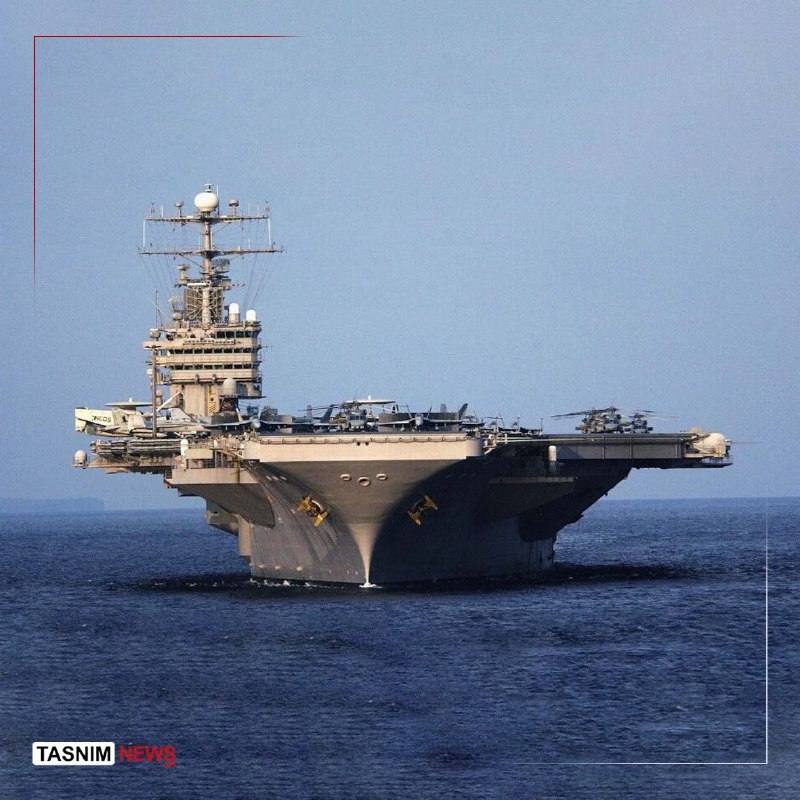
At 16:09 UTC on 10 June 2026, US President Donald Trump told reporters that the United States had struck Iran "hard yesterday" and would "hit them again hard today," signalling an escalation that he framed in the same breath as both a military operation and a continuing negotiation. The remarks, carried by the Telegram wire channel @rnintel, came roughly 25 minutes after a separate post on @thecradlemedia summarising the same statement, and preceded a third item on @FotrosResistancee attributing to Trump the line: "We are going to be attacking Iran and attacking them very hard. We will be resuming bombing. We have the right to do that." Less than ten minutes later, the President signed the Secure America Act at the White House, an immigration and border-enforcement package that the @insiderpaper wire described as providing $38bn to ICE and $26bn to Border Patrol.
The cluster of declarations, posted inside a roughly twenty-minute window, fused two policy tracks that the administration had previously run in parallel. For the first time on the public record available to Monexus, the President explicitly tied the Middle East operation to a domestic security argument, calling Iran a country that was "playing us for suckers," a phrase captured on @insiderpaper at 16:17 UTC. The framing is significant not for its novelty — every US president of the modern era has justified Middle East action in domestic-political terms — but for the speed at which the administration appears to be constructing that bridge, and for the absence, in the available reporting, of any congressional consultation either on the renewed strikes or on the framing of the new law.
The Iran track: a second wave without a written end-state
The 10 June statements did not specify targets, ordnance, or the rules of engagement for the announced second wave. They did, however, establish a rhetorical pattern that the administration has used before: a one-day interval between the first and announced follow-up strikes, a public declaration of timing, and a justification framed in personal rather than institutional language. The claim that the US has been "taking out millions of barrels of oil," carried in the @rnintel post at 16:09 UTC, is unverified by the sources available to Monexus and is reproduced here only as the President's reported statement.
What is verifiable is the sequence. A first round of strikes was carried out on 9 June 2026, per the President's own characterisation on 10 June. A second round was announced for the same day, 10 June. The window between operations is therefore measured in hours, not weeks. In conventional US force-employment terms, that interval is short enough to suggest a pre-approved target package rather than a deliberative re-decision; it is too short, on the public record, to confirm either way. The administration has not, in the available wire traffic, named a third-party broker, a UN Security Council notification, or an allied-government readout, and the Iranian-side response is not captured in the source items Monexus reviewed.
The domestic track: a $64bn immigration bill signed without visible floor debate
The Secure America Act, as described in the @insiderpaper item posted at 16:12 UTC, allocates $38bn to Immigration and Customs Enforcement and $26bn to US Border Patrol. The wire did not include a section-by-section summary, a CBO score, or a roll-call vote tally in the material Monexus reviewed. The bill's signing, in other words, was reported as a presidential act with a price tag attached and a short institutional rationale — "to ensure these critical law enforcement agencies have the necessary resources," per the partial quote carried on the channel — but the legislative pathway that produced it was not in the wire traffic available to Monexus at the time of writing.
That asymmetry matters. The dollar figure, $64bn combined, is large by the standards of any single fiscal-year appropriations cycle for those agencies. It is small, however, relative to the supplemental packages Congress has passed for other contingencies in the past five years, and the framing of the law as a "border" measure, rather than a counter-narcotics or counter-terrorism measure, signals that the administration is choosing to anchor the legislation in the executive's migration portfolio rather than in the national-security portfolio. The choice has downstream consequences: ICE spending is operationally easier to redirect across geographies than Border Patrol spending, which is fixed to the southwest border by statute and by the agency's own mission set.
A counter-narrative: the strikes as leverage, not as a war
There is a plausible read of the 10 June sequence that does not involve a slide toward open war. On this account, the announced second wave is a pressure tactic tied to an active negotiation track that Monexus cannot see in the public wire. The President's choice to publicly pre-announce the timing of follow-on strikes, an unusual decision in modern US practice, is consistent with a coercive bargaining posture: a negotiating counterpart is meant to absorb the cost of escalation in real time and recalculate. The phrase "playing us for suckers," carried at 16:17 UTC on @insiderpaper, is the kind of insult-as-signal language that has historically appeared in US-Iran communications when the diplomatic channel is live rather than severed.
The reading has a real empirical weakness, however: there is no named counterpart, no quoted mediator, and no draft agreement in the public reporting Monexus reviewed. Without those, "leverage" and "war" become indistinguishable in the wire, and the prudent assumption is that they were intended to be. The President has built, intentionally or otherwise, a situation in which Tehran, the US public, and allied capitals must react to a rolling series of statements rather than to a single, dated policy document.
The structural frame: a one-person decision loop in two policy domains
The 10 June cluster is structurally interesting because it collapses two policy domains — overseas military action and domestic fiscal authorisation — into a single decision-making loop centered on the President. The first decision, to strike Iran on 9 June, was made and executed before the public record Monexus reviewed captured any allied readout. The second decision, to strike again on 10 June, was announced in advance, in plain English, on a rolling wire. The third decision, to sign the Secure America Act, was made in the same hour and bundled rhetorically with the second by the President's own framing.
That is not the only way to organise US national-security policy, but it is the way this administration has chosen. The structural pattern, observable across multiple administrations of both parties in the post-2001 period, is one in which the executive's discretion over the use of force and over emergency fiscal instruments has expanded, while the consultative mechanisms designed to balance that discretion — congressional authorisations, allied sign-offs, judicial review of targeting — have narrowed. The 10 June events did not invent that pattern. They compressed it into a single news cycle.
Stakes and what remains genuinely uncertain
The near-term stakes are concrete. A second round of US strikes on Iran, if executed as announced, will likely produce Iranian retaliation of some form — direct or via proxies — within a horizon of days to weeks. The domestic stakes of the Secure America Act are slower-burning but durable: a $64bn baseline for interior enforcement raises the political and operational floor for any successor administration and reshapes the migrant-population management apparatus in ways that will be visible in the fiscal year 2027 budget.
What remains genuinely uncertain, on the source material Monexus reviewed, is fourfold: first, the specific target set of the announced second wave; second, the identity of any third-party broker or allied government involved in parallel diplomacy; third, the legislative history of the Secure America Act prior to its 10 June signing; and fourth, the Iranian government's read of the President's statement, which the available wire does not capture. Until at least two of those four are filled in by reporting outside this cluster, the Monexus editorial line is that the 10 June events are best read as a deliberate compression of decision authority, not as a textbook coercive-bargaining move and not as a slide into open war. The President's own statements, sourced above, are the only hard evidence the public record currently offers, and they were designed to keep it that way.
Desk note: Monexus carried the President's statements in his own words with attribution to the wire channels on which they appeared, and declined to elevate speculation about targets, casualties, or Iranian responses above what the available reporting supports. The institutional question — whether a 20-minute cluster of declarations should, in a healthy republic, be the entire public record of two consequential policy tracks — is left for the reader.
Wire provenance
This editorial synthesis draws on the following public wire/social posts:
- https://t.me/insiderpaper
- https://t.me/FotrosResistancee
- https://t.me/insiderpaper
- https://t.me/insiderpaper
- https://t.me/rnintel
- https://t.me/thecradlemedia
- https://t.me/TheCradleMedia
- https://t.me/s/insiderpaper
Follow the event.
These dated source records provide context. They do not retrospectively verify this archive article.
Separate what the nuclear watchdog reported from what it could not determine after the June 2025 strikes.