Trump Floats New Strikes on Iran's Energy and Bridge Network as Nuclear Talks Stall
On 10 June 2026, the US president told Fox News he is close to ordering additional strikes on Iranian energy infrastructure and bridges, signalling a hardening of Washington's posture as negotiations drag.
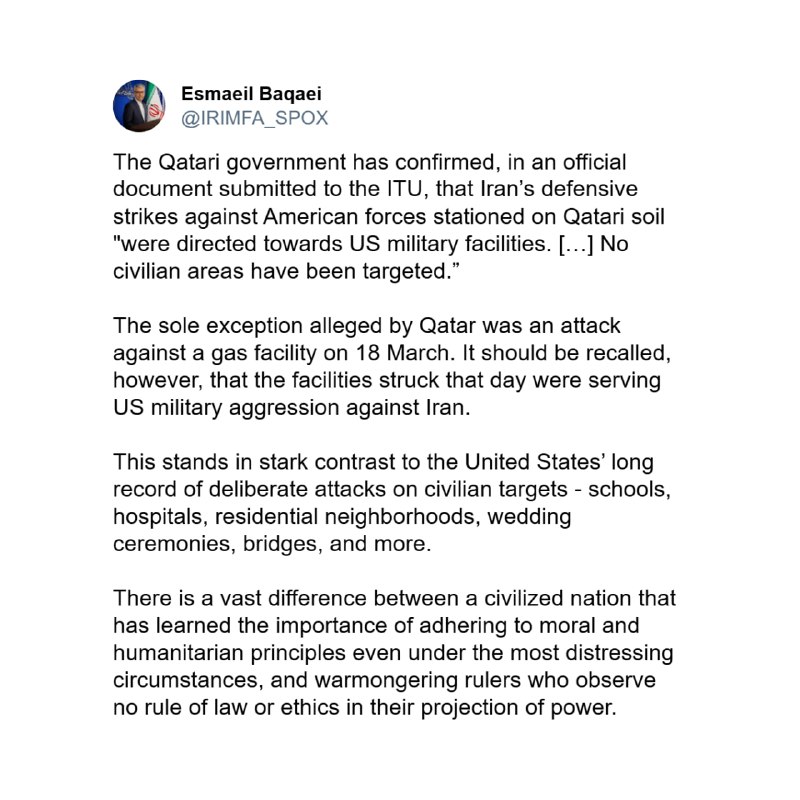
At 11:26 UTC on 10 June 2026, the Iranian-aligned channel Fotros Resistance reposted a Fox News clip in which Donald Trump told the network he was close to ordering fresh strikes on Iran, singling out energy infrastructure and bridges as targets. Within twenty-six minutes, the line had been confirmed from a second direction: the Ukrainian milblogger channel Operativno ZSU carried a translation of Trump's own social-media post, in which he declared that Iran had "dragged on negotiations for a very long time" and "will now pay for it." By 11:52 UTC the message had migrated to Fox News's own Telegram feed, with the network reporting that Trump said he was close to authorising additional strikes because Iran was taking too long to reach an agreement. The Spectator Index, citing Trump's own X account, framed the same message as a price-tag threat: Iran will pay for the delay.
The convergence of these four feeds in half an hour matters less for what they each say than for what they jointly establish: a US president publicly attaching a deadline-cost framing to a non-compliance ultimatum, and naming the categories of civilian-adjacent infrastructure that would absorb the cost. This piece reads that statement as an inflection point in the post-12-day-war US-Iran standoff — the moment when Washington's leverage-by-bombing campaign, which began in the spring, is being recast as leverage-by-renewed-bombing.
What Trump said, and to whom
The substantive content of the threat is narrow and worth pinning down. According to the Fox News Telegram relay at 11:52 UTC on 10 June 2026, Trump told the network that he was close to ordering new strikes because Iran was taking too long to reach an agreement. The channel GeoConfirmed Political Watch, which logged the comment at 11:29 UTC the same day, added a layer of specificity the Fox headline had elided: the targets under consideration were energy infrastructure and bridges. Fotros Resistance, reposting the Fox News segment at 11:26 UTC, framed the targets the same way — power plants and bridges. Operativno ZSU at 11:39 UTC quoted Trump's social-media text verbatim: that Iran had "dragged on negotiations for a very long time" and would now pay for it.
The four accounts triangulate to a single picture. The threat is not a vague escalation. It names two classes of target — energy facilities and bridges — that are politically, economically and humanitarianly heavy choices. Energy infrastructure in Iran is overwhelmingly civilian-grid in character: the country has been gradually reconnected to international grids and to its own consumers after the strikes of spring 2026, and its hydrocarbon exports remain under heavy but leaky sanctions. Bridges, depending on which ones, straddle the line between military logistics and civilian transit. The implicit message — that delay will be met with a return to the targeting list — is itself the lever.
The counter-narrative, and what it omits
Iranian-aligned channels did not invent the threat; they relayed it. That is the unusual feature of the morning's information flow. Fotros Resistance, the Telegram channel that first surfaced the Fox clip in this thread, is operationally sympathetic to the Islamic Republic, but its post on 10 June did not dispute the underlying claim — it emphasised the targets (power plants and bridges) in language that read as a warning to domestic Iranian audiences. Operativno ZSU, the Ukrainian milblogger channel, framed the threat in the third person, treating it as a foreign-policy event relevant to its audience's interest in US coercive diplomacy.
The absent voice in the immediate Telegram feed is the Iranian foreign ministry. The sources available do not include an MFA briefing, an ambassador's statement, or a Tasnim or PressTV framing of the renewed threat. The Cradle, Middle East Eye and the Iranian state outlets are silent in the thread as it stands at 11:52 UTC; Iran's first response, if any, was not in the messages that propagated fastest. That silence is itself part of the pattern: a US threat, in this format, is designed to be received before it is answered. The intended audience is not Tehran's diplomats but Tehran's negotiators.
The Western wire response, similarly, is sparse. Fox News, as both the source of the quote and its first Telegram amplifier, is the only major outlet visible in the thread context. The threats to energy and bridge infrastructure, if confirmed by a Western wire beyond Fox, would normally also surface on Reuters, Bloomberg and the AP wires within hours. The thread as assembled does not show that confirmation; the analysis here is built on Fox, on Trump's own X account via The Spectator Index, and on the relays.
The structural pattern — deadline diplomacy by other means
The pattern is familiar from earlier rounds of the standoff. The first US strike wave on Iran earlier in 2026 was, in the language of US officials at the time, intended to set the conditions for negotiation — to remove specific nuclear and missile assets and to create a window in which Iran, in financial and military distress, would agree to a more intrusive inspections regime. That logic was openly described in US commentary at the time as "bombing to the table." The 10 June threat is, in form, a continuation: the table exists; Iran is at it; the cost of leaving it is being recalibrated upward.
What is different now is the targeting language. Energy infrastructure and bridges are not nuclear sites, not missile production lines, not IRGC command nodes. They are the connective tissue of a civilian economy. A threat to bomb them is a threat to raise the cost of non-compliance in a way that is immediately legible to Iran's population and to its oil customers, but that is also a step closer to the kind of strikes that the international legal consensus treats as collective punishment of a civilian population. The threat stops short of that line; it does not, on the evidence available, describe strikes that have happened, only strikes that the president is "close" to ordering.
Inside the standoff, this is the move that converts a frozen conflict back into a kinetic one without requiring a public ultimatum or a withdrawal from talks. Iran can continue to negotiate; it simply negotiates against a live threat to its grid and its bridges. The leverage of the US position is that the threat is not yet an act; the cost to the US position is that the threat has to be executed, or visibly withdrawn, on a deadline the president himself has set in public. Each time Trump names a target category in advance, the credibility cost of failing to follow through rises; each time a target category is named and not struck, the deterrence value of naming falls.
Stakes and the next 72 hours
The immediate market effect is in oil and in Iranian-asset risk premia. A credible US threat to Iranian energy infrastructure puts a floor under Brent by reintroducing the possibility of supply disruption, even as Iran's exports have been partly rerouted through shadow-fleet shipping and to buyers in Asia. A threat to bridges, depending on which ones, touches the internal logistics of fuel distribution and the physical movement of military equipment. The political effect inside Iran is harder to calibrate from outside: the 2025–26 internal crackdown after the spring strikes, and the public fatigue with economic stress, mean that the regime's tolerance for resumed bombing is a function of the political cost of conceding at the table, not of the military cost of absorbing more strikes.
The 72-hour window ahead of the next round of talks — wherever they are scheduled, in whatever format — is the period in which the threat either becomes a strike list or gets rolled into a face-saving diplomatic formulation. The sources do not specify whether negotiations are currently scheduled, paused, or in continuous session through intermediaries. That is the single largest gap in the public record as of 11:52 UTC. The thread as assembled shows a US threat, an Iranian silence, and a Western wire that is yet to amplify beyond the originating Fox News interview. The most plausible reads are: (a) the threat is a negotiating instrument that will be dialled back in private; (b) the threat is a genuine escalation that has not yet generated a wire response; (c) the threat is being tested for domestic political effect ahead of a decision point, with the negotiating track and the military track running in parallel until one of them breaks.
What the sources do not show is the Iranian counter-frame. There is no quoted Iranian official in the thread, no Tasnim or IRNA readout, no ambassador's press conference, no statement from the foreign ministry on the renewed threat. The Cradle, Middle East Eye, and the Iranian state outlets are not in the four-message cluster that propagated fastest. Monexus will update this assessment as those counter-frames arrive. For now, the public record is one-sided by structure: a US president has named targets inside Iran that he is close to striking, and the Iranian side has not yet been heard from in the channels that moved first. That asymmetry is, in itself, part of the story.
How Monexus framed this: the wire read is a Trump threat; we treat it as a negotiating posture whose target categories (energy, bridges) are doing most of the signalling work, while flagging the gap between the originating Fox News interview and the absent Iranian and wider-Western responses.
Wire provenance
This editorial synthesis draws on the following public wire/social posts:
- https://t.me/englishabuali/
- https://t.me/osintlive/
- https://t.me/operativnoZSU/
- https://t.me/GeoPWatch/
- https://t.me/FotrosResistancee/
- https://twitter.com/spectatorindex/status/2064669897058304091/photo/1
Follow the event.
These dated source records provide context. They do not retrospectively verify this archive article.
Separate what the nuclear watchdog reported from what it could not determine after the June 2025 strikes.