Trump turns the spigot: how a US strike campaign on Iran is being sold as an energy policy
On 10 June 2026, Donald Trump paired bellicose threats against Iran with a confession of intent: suppressed oil supply is, in his telling, a tool to manage American consumer prices once the shooting stops.
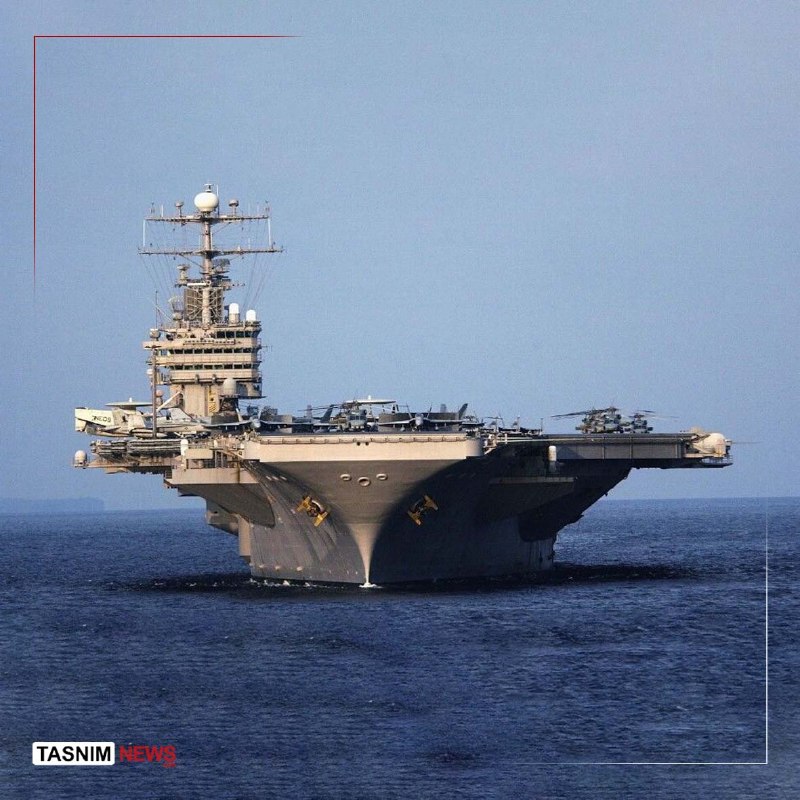
At 15:57 UTC on 10 June 2026, Donald Trump told a rally crowd that the United States had hit Iran "hard yesterday" and would hit it "again hard today," and that Washington would "attack Iran very hard." The line landed inside a second statement, attributed to Trump in a separate Telegram clip circulated an hour later by GeoPolitical Watch, that framed the escalation in the language of an energy trader rather than a wartime president. "I love the inflation," he said, explaining that once the war was over he could claim credit for taking "millions of barrels of oil late at night with no lights." The pairing — combat and crude — is the news of the day, and the fault line along which the next phase of US-Iran confrontation will be read.
The first 24 hours of an air campaign are usually framed as a security story: what was struck, who was killed, what the retaliation will look like. This one is being framed, by the man who ordered it, as an energy story. The two frames are not separate. They are the same operation sold to two audiences, and the gap between them is where the policy will be judged.
What was said, and where
The bellicose portion of Trump's remarks travelled widely within minutes. A War Monitors channel posted the line "We will attack Iran very hard" at 15:57 UTC on 10 June, citing the president directly. A second channel, @rnintel, broadcast the same timestamp with a longer quote: "We hit them [Iran] hard yesterday, we're gonna hit them again hard today," and noted, as a factual addendum, that at least one US Air Force B-52 was tracked heading toward the region. Iranian state television, PressTV, confirmed the substance of the threat from the Iranian side, posting that "US President Donald Trump says the US will attack Iran today." The four-source convergence — two Telegram channels focused on military monitoring, an independent OSINT feed, and Iranian state media — is what gives the claim operational weight. Each carries a different bias; they agree on the quotation.
The energy framing is more unusual. In the clip circulated by GeoPolitical Watch, Trump pivoted from the strike threat to the price of gasoline. The president, in the clip, says he is content to let inflation run in the short term because the war itself is removing supply from the market in a way that he believes will, once hostilities end, redound to his political credit. The mechanism is crude, and the candour is rarer than the mechanism. It is one of the few recent instances in which a US president has publicly tied a kinetic Middle East operation to a domestic consumer-price calculation in the same breath.
Reading the strike as an oil policy
The conventional read on a US air campaign against Iran is that it is about nuclear capability, missile programmes, or regional proxy behaviour. Those are real objectives. But the immediate economic effect of any strike on Iranian production, refining, or export infrastructure is a tightening of the seaborne crude market. Iran exports somewhere on the order of 1.5 million barrels per day in normal conditions, the bulk of it to Chinese teapot refineries and a handful of Asian buyers operating just inside or just outside US sanctions. Removing even a third of that volume, even for a quarter, would tighten a market that has been, on most analyst accounts, adequately supplied but not glutted. The price effect of such a shock is mechanical, not political.
Trump's stated logic, in the GeoPolitical Watch clip, inverts the usual political economy. Presidents typically seek to suppress the price of fuel in an election year. The framing in the clip is different: the president is treating the war as a price suppression tool — taking oil off the market, the clip suggests, while the political cost of the operation is borne now, and the price benefit is harvested later. The line "I love the inflation" is, in context, an admission that the consumer pain of the operation is the point, not a side effect. The promised relief is the post-war dividend.
This is not the same as a covert strategic petroleum reserve operation, and it is not the same as a cartel cut. It is a state of war being treated, in the public remarks of the commander-in-chief, as a production cut by another name.
The counter-read from Tehran, and from the wires
The reading from Tehran is that the strikes are an act of war aimed at regime change or, more narrowly, at the destruction of Iran's missile and nuclear infrastructure. Iranian state media has, in the past, framed US actions as an attempt to recolonise the country's energy sector; that framing is unavailable to Tehran in the current circumstances only if Iran chooses to keep the conflict off the energy dimension, which it has not signalled any interest in doing. PressTV's reporting on Trump's 10 June threat is itself a piece of the message: the Iranian side wants the world to know that the US president has openly tied combat operations to oil markets, because that framing isolates Washington from the consumer base it claims to be defending.
Western wire and think-tank coverage, in the days preceding the strikes, had warned of precisely this dual-use problem. The argument, put plainly, is that any US administration using force against Iranian energy infrastructure risks being read by the rest of the world as a country that bombs oil fields to manipulate their price. That reading does not require ill intent on Washington's part to be persuasive; it merely requires a plausible alternative explanation, which Trump has now provided in his own words. The longer the strikes continue, the harder it becomes for the administration to deny the framing.
A second counter-read, more sympathetic to the White House, holds that a successful and brief operation could in fact lower prices over the medium term by removing the geopolitical risk premium that has been baked into crude since 2019, when the US exited the Joint Comprehensive Plan of Action. In this version of the argument, the strikes are not a production cut but a confidence shock — markets price in the absence of a nuclear-armed Iran, the premium compresses, the consumer wins. The version requires the war to stay short, the disruption to Iranian exports to be limited, and the Strait of Hormuz to remain open. The version is fragile.
The structural pattern: oil, the dollar, and the politics of scarcity
What is being demonstrated, beyond the immediate event, is a recurrence. For half a century, the United States has used its position in the global energy system — as producer, as consumer, as guarantor of sea lanes, as issuer of the currency in which crude is priced — as a tool of statecraft. The tool has been used in three ways: by adjusting the flow of dollars into and out of oil markets; by adjusting the physical flow of crude; and, more rarely, by adjusting the flow of military hardware and personnel into and around the Gulf. The 10 June episode belongs to the third category, with the second as a stated objective.
The structural problem is that each of those tools works less well than it once did. The shale revolution of the 2010s made the US a swing producer, which changed the politics of scarcity at home but did not change the politics of scarcity for the buyers of Middle Eastern crude, who are now mostly in Asia. The formal and informal weaponisation of the dollar — the sanctions architecture built up since 2017 — has pushed a growing share of oil trade into non-dollar settlement, particularly via Chinese and Indian counterparties. The military guarantor role is more expensive, and more openly contested, than it was in 1990. A president who announces that a war is also a price intervention is, in effect, saying out loud what the architecture has been doing implicitly for years.
This is the part of the story that is not about Trump or about Iran's nuclear programme. It is about a system in which the supply of seaborne energy, the settlement currency, and the regional security umbrella are no longer moving in the same direction. The strikes of 10 June 2026 are a stress test of that system. The result will depend on whether the rest of the world reads the operation as a security measure with an energy side effect, or as an energy intervention with a security justification. The president has, in his own remarks, made the second reading easier.
Stakes, and what remains uncertain
The immediate stakes are concrete. A sustained US strike campaign on Iranian energy infrastructure would push benchmark crude into territory not seen since the 2008 and 2022 spikes, with knock-on effects for inflation prints in the EU, the UK, the major Asian importers, and the United States itself. The political cost of those prints will be paid by incumbent governments, including — in the US case — the administration that ordered the operation. The strategic cost, if the operation is read abroad as a price-fixing exercise, is the slow erosion of the moral and political authority that has, until now, allowed the US to organise coalitions around sanctions and export controls.
What remains uncertain is the duration and the target set. The four sources in the public record on 10 June confirm the rhetoric of the strike and the general direction of escalation, including at least one B-52 in the air. They do not specify what has been hit, what the casualty picture looks like, or how Tehran will respond beyond its existing missile and proxy inventories. They do not confirm whether the strikes have, as of 15:57 UTC, hit Iranian energy infrastructure specifically, or whether the production cut implied by Trump's energy remarks is a forecast rather than a current state. The sources also do not specify whether the Strait of Hormuz remains fully open to commercial traffic. Until those questions resolve, the price of the war is, in Trump's own framing, an open variable.
What the sources do confirm, and what is newsworthy on its own, is that the president of the United States has, in a single day, publicly connected a kinetic Middle East operation to a domestic consumer-price intervention, and has done so in a tone of satisfaction rather than regret. That pairing — combat and crude, delivered in the same hour — is the frame in which the next phase of the war will be argued over, in Washington, in Tehran, and in every oil-importing capital that has spent the last decade trying to insure itself against exactly this kind of move.
How Monexus framed this versus the wire: most wire copy on 10 June 2026 has led on the strike threat as a security story. This piece leads on the strike threat as an energy story, on the grounds that the president himself made the energy framing the operative one, and that the energy framing is where the policy will be judged over the next quarter.
Wire provenance
This editorial synthesis draws on the following public wire/social posts:
- https://t.me/GeoPWatch
- https://t.me/warmonitors
- https://t.me/rnintel
- https://t.me/presstv