Trump Floats New Strikes on Iran's Power Plants and Bridges
President Trump tells Fox News the U.S. is "getting close" to ordering fresh strikes on Iranian power plants and bridges, reigniting a confrontation that has barely cooled.
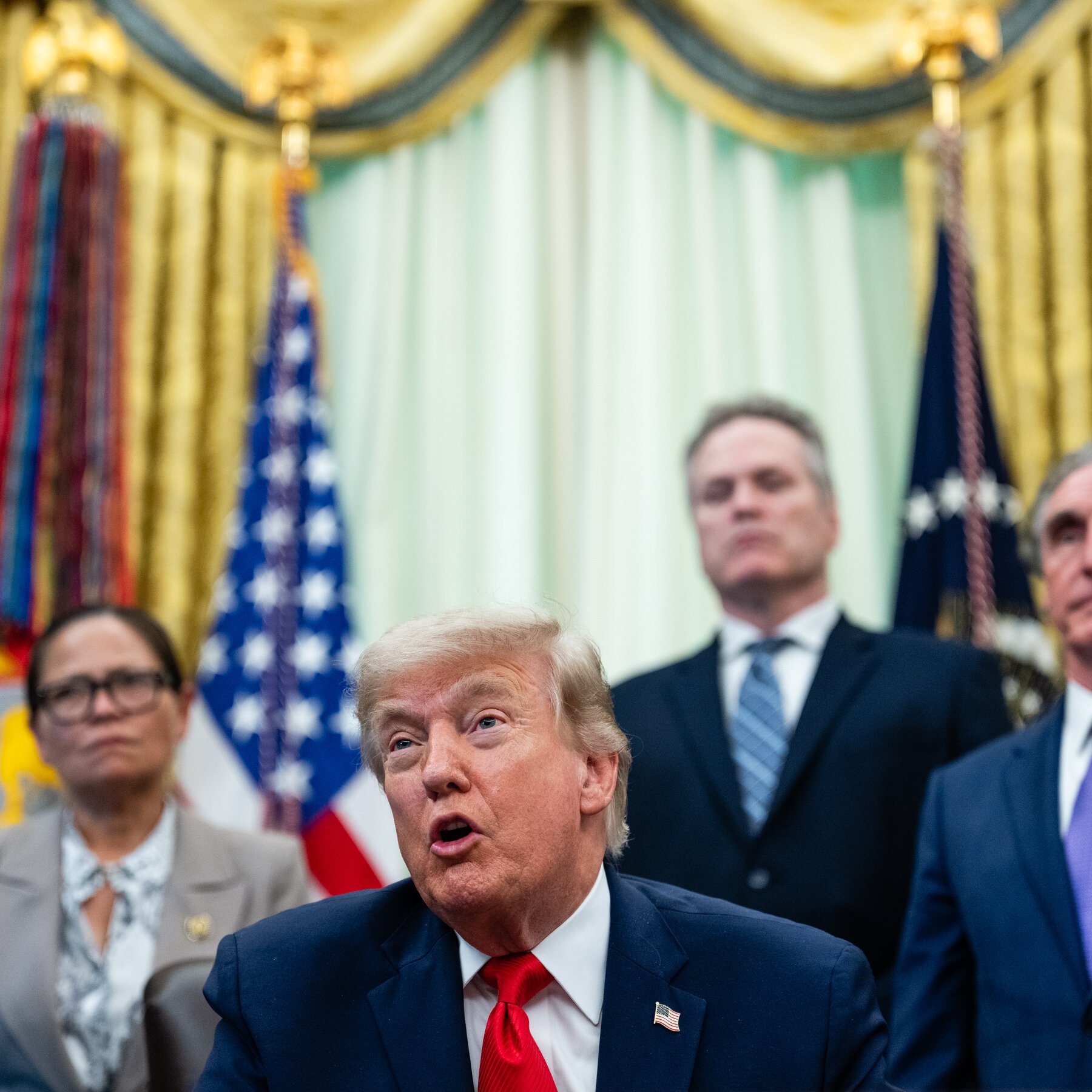
The threat arrived in the format it always does. Speaking to Fox News correspondent Trey Yingst on the morning of 10 June 2026, U.S. President Donald Trump said Washington is "getting close" to ordering fresh strikes against Iranian power plants and bridges, citing what he described as continued Iranian "tapping" of the United States. The remarks, carried verbatim by Telegram channels tracking the exchange, mark the most direct escalation rhetoric from an American president since the last round of U.S.–Iran strikes earlier in the year.
The point worth taking seriously is the specificity. Strikes on power plants and bridges are not the language of a sanctions package or a diplomatic demarche. They are the language of a country preparing to degrade another country's civilian-adjacent infrastructure. That is a deliberate choice, and it deserves to be read as one.
What Trump actually said
In the Fox News interview aired 10 June 2026, Trump told Yingst that the U.S. was "getting close" to ordering strikes on Iranian power plants and bridges. The trigger he cited was continued Iranian activity he characterised as "tapping the United States along." The framing — power plants first, bridges second — is the same targeting logic U.S. planners have used in previous Middle East campaigns: hit electricity generation to compress decision-making, hit transport nodes to amplify the economic pain.
The Telegram channels carrying the quotes — BellumActaNews and OSINTdefender, with corroboration from Faytuks News — agree on the substance. That is notable because these three channels often differ on framing; here, the words line up. The single most important fact is that an American president has publicly pre-announced infrastructure targeting against a country that is not currently at war with the United States.
The counter-narrative Tehran will push
Iranian state media, when it responds — and it will, almost certainly within hours — will frame this as confirmation of an American policy of infrastructure warfare against a sovereign state. That is not an unreasonable frame. Strikes on power plants and bridges in any country, including one designated a U.S. adversary, fall into a category of action that international humanitarian lawyers have spent two decades debating. The 1977 Additional Protocols to the Geneva Conventions treat electricity installations as "objects indispensable to the survival of the civilian population," with carve-outs only for narrowly defined military use.
The Iranian counter-argument will run roughly: Washington is signalling that diplomacy has failed before diplomacy has been tried, and the signalling itself is a coercive act. That argument will land hardest in capitals that have watched U.S. policy in the region cycle between negotiation and bombardment for forty years — Ankara, Islamabad, New Delhi, Brasília. The harder fact for Tehran, though, is that "tapping the United States along" implies a specific and ongoing Iranian action, and any country that is publicly performing provocation cannot easily claim victimhood at the same time.
What the structural picture looks like
Read against the rest of 2026, the pattern is consistent. The earlier U.S. strikes on Iran this year — and the Israeli operations that ran in parallel — were followed by a pause long enough to permit back-channel negotiation, then by a slow drift back toward confrontation language. That is the rhythm: pressure, negotiation, fatigue, escalation, pressure again. The economic logic underpinning it has not changed. Sanctions enforcement on Iranian oil exports requires the implicit threat of kinetic action to make shipping-insurance and banking-counterparty decisions stick. When that threat dulls, the revenue flows return, and the leverage decays.
The targeting choice — power plants, bridges — is the tell that someone inside the policy process is preparing options packages that go beyond the previous round's calibrated strikes. That does not mean the strikes will be ordered. Presidential threats have a half-life, and the gap between a Fox interview and a tablet strike is filled with lawyers, four-stars, and congressional phone calls. But the option is being groomed in public, which is its own kind of escalation.
What remains uncertain
Three things are not knowable from the interview alone. First, the operational meaning of "close" — whether that means days, weeks, or the kind of indefinite horizon that lets the threat do diplomatic work without anyone having to pull the trigger. Second, whether the targeting language was pre-coordinated with Israel, which has its own campaign logic running against Iranian assets in Syria and Lebanon, and which would prefer predictability over surprise. Third, and most consequentially, whether Iran responds to the threat with a counter-escalation — a Hormuz move, a proxy strike on a Gulf installation, an acceleration of its nuclear program at Natanz and Fordow — that makes the pre-announcement look, in retrospect, like the moment the slide back into open conflict became irreversible.
What this publication finds most worth watching is not the next headline but the next forty-eight hours of Iranian state-media framing. Tehran's reply will tell us whether it reads Trump's words as the opening of a real escalation window, or as pressure talk that can be waited out. The two readings produce very different worlds by midsummer.
This article relies on Telegram-channel reporting of a single television interview. The wire confirmation from Reuters, AP, and the major Western broadcasters is not yet in the source set; treat the quotes as accurate pending that confirmation.
Wire provenance
This editorial synthesis draws on the following public wire/social posts:
- https://t.me/BellumActaNews
- https://t.me/osintlive
- https://t.me/osintlive
Follow the event.
These dated source records provide context. They do not retrospectively verify this archive article.
Separate what the nuclear watchdog reported from what it could not determine after the June 2025 strikes.