Trump vows renewed strikes on Iran as 'no deal' ultimatum sets collision course
Trump's 10 June ultimatum pairs a renewed strike threat with a retweet of Iran's foreign minister, while the oil-reserve disclosure explains why the ultimatum exists at all: a market that shed $460 billion in five minutes now sets the strike calendar.
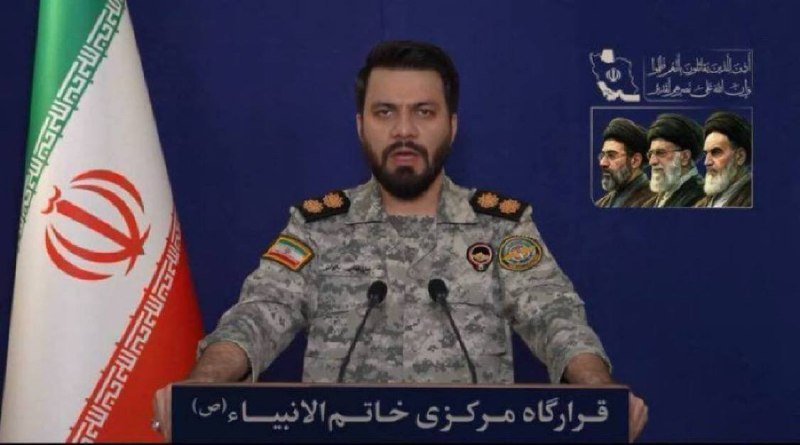
On 10 June 2026, Donald Trump issued a public ultimatum framed as a deadline: either Tehran accepts the memorandum of understanding on the table or the United States resumes strikes. The statement, delivered on the president's own social channels, was retweeted alongside a quote from Iranian Foreign Minister Abbas Araghchi suggesting the best time to end the war is "right now." That pairing is the story. A sitting American president, mid-war, amplifying the language of the foreign minister his military has been bombing since 28 February, on the same day an Axios interview surfaced in which he demanded public explanations of Iranian claims he then proceeded to amplify.
A pattern of ultimatums that never quite expire
Since the opening strikes on 28 February, Trump has publicly set ultimatums for military action against Iran at least eight times, according to an MS NOW review of his speeches, interviews and social posts. NPR's tally of the record reads the same way: each cancellation of a planned strike has been paired, sometimes within hours, with a new claim that a peace deal is near. The 10 June ultimatum is the latest instalment. The novelty this time is that the public posture is no longer "deal close, strikes paused." It is "deal close, strikes optional." Trump told Axios he wanted clarifications from Tehran on Iranian state-media reporting that frozen assets would flow the moment the memorandum is signed. He then retweeted the very foreign minister whose government produced that reporting.
The whiplash is not noise. It is the negotiating register. Iranian missile impacts were recorded at Ramat David Airbase in northern Israel, with the IAF's 157th Squadron, an electronic-warfare unit, reported among those hit. The Economist, paraphrased on social channels, put the strategic reversal bluntly: "Iran's fear of war has disappeared." When the Iranian side can absorb an airbase strike and keep talking, the ultimatum loses its original coercive geometry.
The oil disclosure buried under the war chatter
What the wire summaries have underweighted is the second-order story sitting inside the same news cycle. The New York Times reporting circulating on the 12 June feed argues that depletion of global oil reserves is adding fresh pressure on Trump to reach an agreement. That is a structural concession, not a tactical one. A president who needs crude in the tank is a president whose strike calendar is governed by storage data and shipping flows, not by the inflammatory vocabulary of the day.
Five minutes after Trump dismissed the announced points of the agreement as a "hoax," US equity markets shed roughly $460 billion in capitalisation. The market read the statement as a credible step toward resumed strikes, priced Brent accordingly, and forced a partial walk-back. The chain is now visible: ultimatum, market reaction, Iranian counter-strike, partial walk-back, new ultimatum. Each loop tightens the constraint. The "hoax" line and the Ramat David impact landed inside the same news hour. That is the rhythm the oil story describes.
The UAE corridor and the asset-release question
A Middle East Eye report carried on the wire adds the financial plumbing. IRGC officials stayed at the UAE national security advisor's guest house last week to cut a de-escalation arrangement; the UAE, the report says, paid Iran billions of dollars to halt strikes. That money is not in the memorandum. It is in a parallel channel, and it explains why Tehran can talk about frozen-asset release without sounding naive. Araghchi told Iranian television that "once the memorandum is signed, our assets will be released and none of our assets can be frozen again," and framed the reconstruction of wartime damage as part of the deal.
He also made clear the first item is the blockade: "America's blockade must be lifted, and it is the first thing that is included in the understanding." The phrase matters because it concedes, on the Iranian side, that everything else is contingent on Washington's first move. Trump's complaint to Axios about Iranian state-media framing of asset release is, in this light, a complaint about sequencing being read aloud. The UAE channel is what makes the sequencing bearable for Tehran. Without that liquidity bridge, the blockade demand has no commercial floor.
Hormuz, JSOC and the items not yet on the table
Two structural items sit outside the memorandum as described on the wire. Araghchi's own television comments outline a new Hormuz regime: a legal framework under international law, no tolls, fees only for services rendered, no unilateral American writ over the strait. That is a doctrine, not a clause. It will outlive whichever side signs first. CBS News reporting on the same feed says US military planners are drawing up contingency options to secure Iranian nuclear materials if a deal holds, centred on JSOC units trained for counter-proliferation. Counter-proliferation planning is what militaries do when they expect the deal to fail in eighteen months. It is also what they do when they expect the deal to hold and want the leverage to keep it holding.
The third item is the one neither side is naming: who runs the asset release. Trump wants the optics of "frozen funds released to the Iranian people," not "frozen funds released to the IRGC." Araghchi wants the optics of "reconstruction of damage inflicted." Pakistan's Prime Minister Shehbaz Sharif announced on X that the final agreed text of the deal has been reached, with next steps in motion, an unusual third-party certification for what is supposed to be a bilateral instrument. Sharif's involvement is itself a tell: someone outside the room is needed to lock the optics, which is what third parties get paid to do.
What 10 June actually set
The 10 June statement is best read as a marker, not a calendar event. It is the moment Trump publicly reserves the right to resume strikes while publicly claiming a deal is hours away. Those two positions can coexist for a few weeks. They cannot coexist through a Hormuz-service-fee negotiation, a JSOC counter-proliferation plan, or a UAE reconciliation that the Iranian side insists must include reconstruction money. The next forcing function is the memorandum signature itself, expected in Europe, and the question it does not resolve: what happens to the price of Brent if Tehran signs and Trump calls the announcement a "hoax" in the same afternoon. That is the test the market already ran, and the market already answered.
Sources
- https://reut.rs/4fxMocP
- https://t.me/englishabuali
- https://t.me/ClashReport
- https://t.me/rnintel
- https://t.me/WarMonitors
- https://t.me/thecradlemedia
- https://t.me/presstv
Desk note: Monexus leads on Trump's own 10 June statement rather than the Pakistani prime minister's certification, because the American president's public posture is the load-bearing variable in the next seventy-two hours. Telegram channels are cited as wire monitors for on-the-record statements, not as editorial frame. The Cradle and PressTV are flagged for transparency; their content is treated as primary only when confirmed against mainstream wire reporting.
Follow the event.
These dated source records provide context. They do not retrospectively verify this archive article.
Separate what the nuclear watchdog reported from what it could not determine after the June 2025 strikes.