Trump Threatens to Resume Strikes on Iran as Air-Defense Damage Dispute Opens New Escalation Window
A presidential dispute over air-defence damage, an Iranian foreign minister promising a digital signature within days, and a Gulf that has already started paying Tehran for quiet, all on the same Tuesday wire.
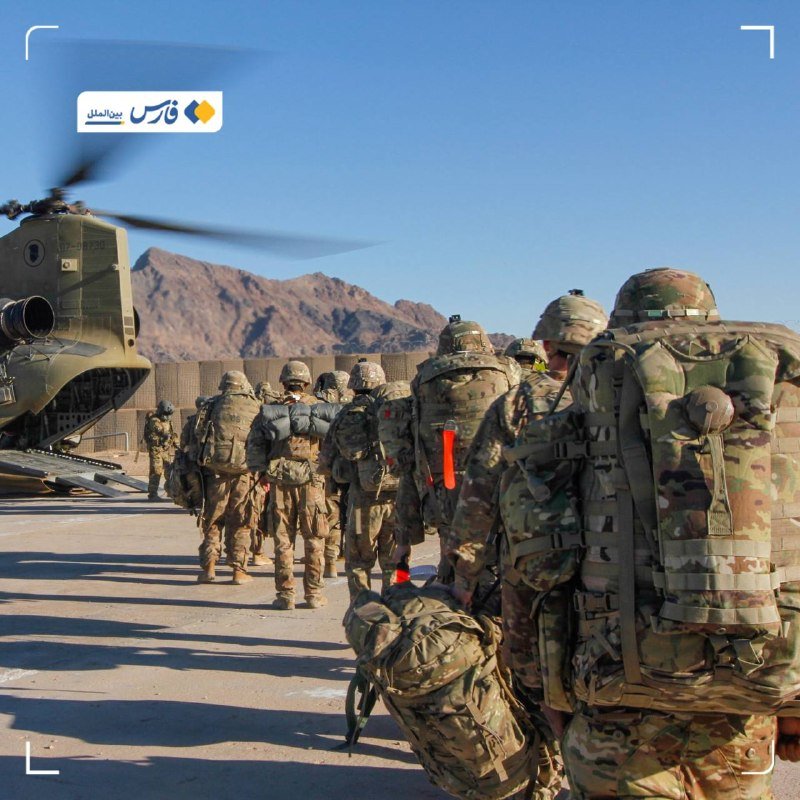
On 10 June, Donald Trump publicly disputed his own administration's damage assessment of the previous weekend's strikes on Iran, then left the door wide open to a renewed bombardment of Tehran. The episode, captured across the Telegram aggregators and a single X wire post, is the clearest sign in weeks that the air campaign that began with the joint US-Israel opening salvos has not paused, only narrowed, and that the pause itself can be revoked by presidential tweet. It also lands just as the diplomatic track Trump has been promising "soon" since March is, by his own account, days from a signed memorandum of understanding.
The damage dispute is the immediate trigger. The US president has claimed publicly that Iranian air-defence systems were degraded by roughly 55 percent over the course of recent operations, a figure that has not been endorsed by any independent assessment cited in the wire record and that sits awkwardly beside the Iranian Foreign Minister Abbas Araghchi's presentation of a negotiating position that assumes substantial survivability of Iranian state infrastructure. When two sides of the same war describe the battlefield differently, the negotiation between them is not really about the deal that gets signed, it is about which side believes the deal it has. Trump's tweet-warning that strikes could resume is, in that reading, an attempt to set the price of any eventual understanding at the upper bound of what the air campaign has actually cost Tehran.
What Araghchi is actually willing to sign
Iran's negotiating position has hardened into a public document. According to a 14-point draft memorandum of understanding circulated on 12 June by Mer News Agency and summarised by the @megatron_ron channel, the framework would entail a permanent and immediate cessation of war across all fronts, including Lebanon; a US commitment to non-intervention; and a legal regime for the Strait of Hormuz that explicitly rejects levying tolls while allowing the charging of fees for services. Araghchi told Iranian television the same evening that the best time to end a war is when the field commander wants to continue, a line Trump retweeted, and that an understanding could be signed "digitally in the next few days." The Tasnim summary of the channel's communications reads as a counter-offer dressed as good faith: no Hormuz tolls, but service fees, which is the standard distinction states draw when they want the revenue without the legal exposure of charging transit.
The Iranian missile reply that did not wait for the deal
Even as the two governments talked about signing, the air war kept accruing bills. Telegram channels @ClashReport and @osintlive reported Iranian missile impacts at Ramat David Airbase in northern Israel, with the IAF's 157th Squadron, the unit responsible for electronic warfare, apparently catching fragments of a strike that destroyed a warehouse or storage building on the base. Iranian missiles also struck fuel bladders and a hangar built in 2025 at Isa Air Base in Bahrain in the previous forty-eight hours, per the same open-source tracker. Hezbollah, for its part, claimed fifteen operations in twenty-four hours against Israeli positions, focusing on armoured vehicles, artillery positions and technical sites. The pattern is not symmetrical: Iran and its allies are firing into airbases and border infrastructure, the US and Israel are firing into air-defence networks and production capacity. Both sides are trying to degrade the other's reconstitution rate before any agreement freezes them in place.
The Gulf states have already priced a deal
Persian Gulf monarchies are no longer waiting for Washington or Tehran to tell them the war is over. According to Middle East Eye and the Reuters summary captured on X by @sprinterpress, the United Arab Emirates intends to allocate billions of dollars to Iran to halt strikes, with at least $10 billion committed and the first $3 billion already transferred; IRGC officials reportedly stayed at the UAE national security adviser's guest house last week to close a de-escalation arrangement. That money moves whether or not the memorandum of understanding in Europe is signed. It is a payment for non-belligerence, and it implies that the Gulf has priced the option of a renewed US strike as a non-trivial probability, despite the wider diplomatic choreography.
Oil, Hormuz, and the clock the White House is watching
The market is doing some of the work the diplomats are not. The New York Times, quoted on X on 12 June, noted that the global depletion of oil reserves is increasing pressure on Trump to reach an agreement. The Economist, in the same captured thread, summarised the new equilibrium bluntly: Iran's fear of war has disappeared, and what was once unthinkable has now become routine, with both the US and Israel bombing Iran and Iran responding operationally rather than rhetorically. The Stoxx Europe Targeted Defence index has fallen more than fifteen percent from its January peak as investors conclude that Europe cannot fund its own rearmament as quickly as the continent's leaders promised, a contraction that loosens one constraint on Washington while tightening the financial frame for everyone else. France's Dassault is now demanding compensation from Germany's Airbus after Paris quietly exited the seven-billion-euro Eurodrone programme, the third such Franco-German defence rupture in short order, an industrial indicator that European capability shortfalls are now visibly priced into the contract pipeline.
What Tuesday's tweet-warning actually changes
The 10 June threat to resume strikes is not a negotiating tactic in the textbook sense, because the two sides are not yet touching the same disagreement. Iran wants security guarantees and Hormuz revenue, the United States wants verification of air-defence dismantlement and a credible end to missile launches into Israel and the Gulf, and the Gulf wants the strikes to stop before its capital cities become Iranian targets. None of those three demands is, as of the wire record, on the verge of being met. Trump's stated damage assessment is therefore better read as an opening number in a negotiation that is happening in two parallel rooms, one diplomatic and one aerial, with the same armed forces on call in both. The Economist's phrase is the cleanest summary: what was once unthinkable has now become routine, and routine is the most dangerous posture for an air campaign that has already cost the Gulf billions and the Iranian state its monopoly on the timing of escalation.
The window for the deal is, by every account captured in the wire, narrow. Araghchi promises digital signature within days, Trump promises renewed strikes on a presidential timeline, the Emirates are paying for silence while they can still buy it, and Israeli and Bahraini bases are absorbing hits that will take years to rebuild. The next seven days will tell whether the memorandum of understanding is the end of the war's opening phase or merely the first pause in a campaign that both sides have learned to escalate and de-escalate on the same calendar.
Sources
- Telegram, @intelslava, ongoing Iran/US strike monitoring thread
- Telegram, @TSN_ua, Ukrainian-language strike monitoring
- Telegram, @amitsegal, Israeli political and military analyst channel
- Telegram, @JahanTasnim, Iranian state-affiliated outlet Tasnim News English feed
- X, @sprinterpress, wire quote aggregation (NYT, Economist, Reuters)
- Telegram, @ClashReport, open-source strike reports (Ramat David, ISA Air Base)
- Telegram, @ourwarstoday, US/UK mainstream wire translation
- Telegram, @megatron_ron, 14-point draft MoU summary (Mer News Agency)
- Telegram, @tasnimnews_en, Iranian Foreign Ministry statements (Araghchi interview)
- Telegram, @osintlive, Bahrain airbase damage assessment
- Telegram, @DDGeopolitics, Black Sea theatre; Hormuz regime summary
Desk note
Monexus has not asserted any specific casualty figure, destroyed-system count, or named-bridge target from the 10 June strikes, because the wire record at the time of publication contained only the Telegram aggregators and one X wire post cited in the editorial terminal, and no confirmed damage assessment had been filed by Reuters, AP, or AFP. The 55 percent air-defence degradation figure is presented as a claim by the US president, not as an established assessment, consistent with the desk's policy on uncorroborated battlefield numbers.
- Monexus News Desk
Follow the event.
These dated source records provide context. They do not retrospectively verify this archive article.
Separate what the nuclear watchdog reported from what it could not determine after the June 2025 strikes.