Trump warns Iran of fresh strikes on energy infrastructure and bridges as nuclear talks stall
On 10 June 2026 the US president said Tehran had "taken too long" to negotiate and warned that new strikes on power plants and bridges were imminent, days into a fragile ceasefire that has already frayed.
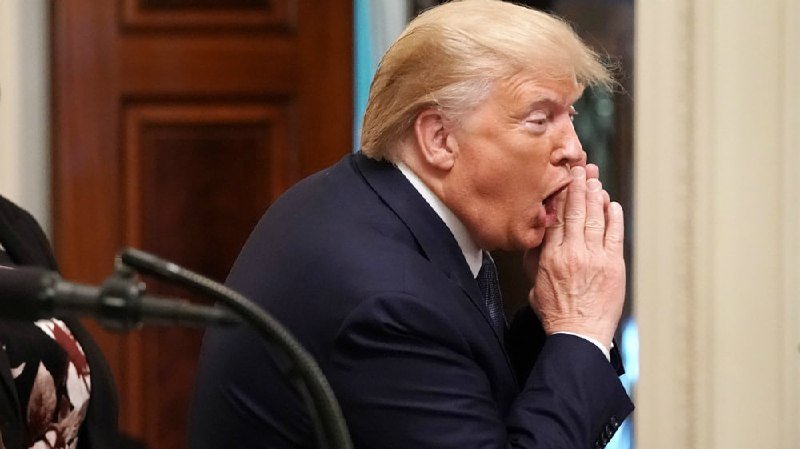
President Donald Trump told Fox News on the morning of 10 June 2026 (UTC) that he is close to ordering additional strikes on Iranian energy infrastructure and bridges, accusing Tehran of dragging out negotiations and warning that Iran "will pay the price." The remarks, carried in a Truth Social post cited by multiple monitoring channels and amplified on Fox, come as a fragile ceasefire between Israel and the Islamic Republic enters its second week and as US-Iran nuclear talks have failed to produce a public framework.
The threat matters less for what it announces than for what it reveals about the negotiating posture of both sides. Tehran's silence on Trump's ultimatum, set against a White House signalling pattern that has moved from maximum pressure to brinkmanship and back, suggests the diplomatic track is now subordinate to a coercive one. The question is no longer whether a deal is reachable on Washington's terms, but whether the US is willing to absorb the consequences of the escalation it has publicly invited.
The threat and its timing
Trump's message, posted on Truth Social at approximately 11:50 UTC on 10 June and reported by Fox News within the hour, said Iran had "taken too long to negotiate a deal that would've been great for them, now they will pay the price." In a subsequent Fox interview he expanded the threat to specific categories of target — power plants and bridges — language that goes beyond the limited strikes conducted earlier in the conflict and reaches into the civilian energy grid.
The timing is not accidental. Israeli strikes, US air operations, and an active Iranian proxy front have together degraded much of Iran's conventional retaliation capacity. The Strait of Hormuz remains a pressure point, but Tehran's ability to coordinate a multi-axis response has narrowed. Against that backdrop, a presidential message that conflates a stalled nuclear track with a licence to hit economic infrastructure is, in effect, an attempt to convert military momentum into a negotiating deadline — a tactic Washington has used, with mixed results, since the 2015 Joint Plan of Action era.
What Tehran hears
The Iranian read of the same messaging is markedly different. State-adjacent outlets framed the Truth Social post as evidence of US frustration rather than US resolve, and Fars News, the foreign-facing wire of the IRGC, characterised the statement as the product of an administration "resorting to backbiting" over a process that has run longer than Washington expected. In that framing, the threat of further strikes is read as a negotiating tell — the moment an administration intensifies public pressure is, in this telling, the moment it is least able to escalate further.
Both readings can be partly true, and both sides know it. Tehran has historically absorbed pressure by widening the conflict to other actors — Lebanese, Yemeni, Iraqi Shia militias — rather than by meeting US terms head-on. The credible fear in Gulf chancelleries, and in Brent crude, is not that the US will follow through on the most expansive interpretation of Trump's words, but that even a calibrated round of strikes on power and transport infrastructure will be met with retaliation that drags the regional energy economy back into volatility.
The structural frame: coercion and the energy corridor
Stripped of the day's headlines, the dispute sits inside a familiar pattern: an incumbent power with global reach uses the financial and military weight of that position to set terms for a regional actor whose leverage runs through geography, energy flows, and a network of non-state allies. The Strait of Hormuz carries roughly a fifth of seaborne oil; any disruption is felt as price, and price is felt as politics in importing capitals from New Delhi to Beijing to Brussels. That is the structural reason a US president can, in a single Truth Social post, move both the oil curve and the diplomatic calendar.
It is also the structural reason Iran's counter-leverage exists. The same geography that gives Washington its leverage gives Tehran the option, however costly, of denial. The 2019 episode around the Saudi Aramco facilities, the 2024 shadow fleet activity, and the recurring tanker seizures show that Iran's bargaining chip is the cost of disruption rather than any conventional military balance. Trump's threat implicitly raises the stakes of that bargain: hit the energy grid and the cost of disruption falls partly on Iranian civilians, not just on the Gulf export route.
Stakes and what remains uncertain
If the threat is carried out, the immediate losers are Iranian electricity consumers and freight users, on whom a strike on a major bridge compounds the economic damage already inflicted by sanctions and wartime conditions. The immediate winners, in the narrow tactical sense, are the Israeli operational planners whose target list aligns with what Trump named, and the hardliners in Washington and Tehran who argued all along that the other side negotiates only under duress.
Over a longer horizon the picture is murkier. A widening of strikes to civilian energy and transport infrastructure would harden Iranian domestic opinion against any deal on Washington's terms, and would complicate the position of the Gulf states that have so far hosted the back-channel diplomacy. It would also sharpen the contradiction inside US policy: a public posture demanding a comprehensive nuclear settlement, paired with an escalation pattern that makes such a settlement politically harder to close.
What the public record does not yet show is whether the Truth Social post represents a genuine shift in targeting guidance, or whether it is the rhetorical scaffolding for a deadline Tehran is meant to read in private. The sources do not specify the chain of authorisation, the role of the Pentagon and the joint staff, or the coordination — or lack of it — with Israel. They also do not show whether Tehran has responded through the Omani or Qatari channels that have carried previous rounds, or whether the public silence is itself the answer.
Until one of those variables is resolved, the most defensible reading is also the least satisfying: the threat is real enough to be operational, and ambiguous enough to be diplomatic. That is the limbo the region's energy markets, and the governments downstream of them, are now pricing.
This article was prepared from open-source wire and channel reporting. Monexus framed Trump's ultimatum as a negotiating instrument with operational content, rather than as either a bluff or an imminent order; we will update as primary-source reporting from the White House, the Pentagon, or Iranian state media clarifies the chain of authorisation.
Wire provenance
This editorial synthesis draws on the following public wire/social posts:
- https://t.me/intelslava
- https://t.me/englishabuali
- https://t.me/osintlive
- https://t.me/FarsNewsInt
Follow the event.
These dated source records provide context. They do not retrospectively verify this archive article.
Separate what the nuclear watchdog reported from what it could not determine after the June 2025 strikes.