Trump warns of further strikes on Iranian energy and bridge targets as nuclear deal talks stall
Donald Trump tells Fox News additional strikes on Iranian power plants and bridges are imminent, framing Tehran's negotiating posture as the trigger for escalation.
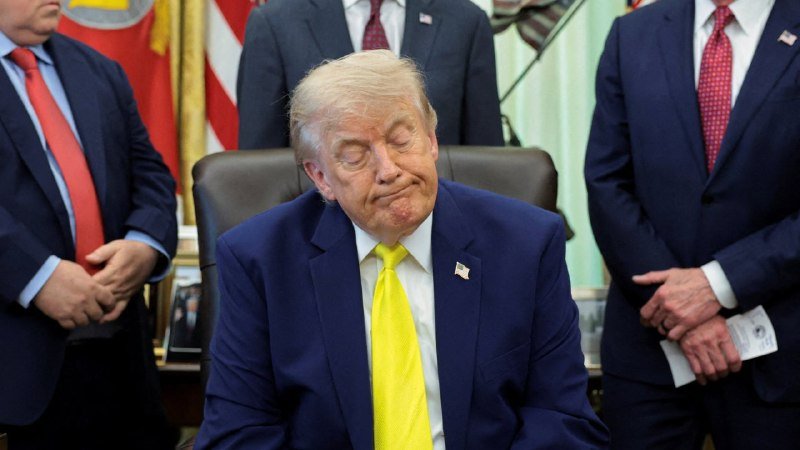
At 11:50 UTC on 10 June 2026, Donald Trump used his social-media account to declare that Iran "will now pay the price" for dragging out nuclear negotiations, escalating a rhetorical pattern that has run in parallel with American military action against Iranian targets. The post was aggregated minutes later by the Telegram channel The Spectator Index, which has become a routine conduit for translating the President's Truth Social commentary into the wider war-monitoring ecosystem, and was republished by the Ukrainian milblogger channel operativnoZSU, where it sat alongside frontline footage from the country's north-east.
The post is the most explicit signalling yet that the Trump administration is preparing to widen the air campaign against the Islamic Republic. Hours earlier, in a 11:29 UTC clip circulated by the Telegram channel GeoPWatch, Trump told Fox News he was "close to ordering" further strikes on Iranian energy infrastructure and bridges — a target set that goes beyond the nuclear and military sites hit in the opening rounds of the air war and points directly at the domestic economy. The FotrosResistancee channel, an Iranian-resistance-aligned feed on Telegram, framed the same remarks at 11:26 UTC as a renewed threat to "power plants and bridges," language that tracks the Fox interview almost word for word.
What Trump is actually threatening
The escalation, in its plainest reading, is a tactical shift. The first wave of US strikes on Iran earlier in 2026 focused on hardened nuclear and missile sites — facilities whose destruction advances a defined arms-control objective. The new target list described to Fox News — power plants and bridges — is different in kind. Striking the electricity grid would degrade Iranian industrial output, military logistics and civilian life simultaneously. Hitting bridges cuts the road network that moves refined petroleum and military freight. Neither target set, on its face, brings Iran closer to denuclearisation; both are tools of economic coercion.
That distinction matters because it clarifies the negotiating theory behind the threats. The administration's public line — repeated in the Truth Social post and on Fox — is that Iran has "dragged on" talks for "a very long time" and must now absorb the cost of delay. The implied offer is familiar from Trump's first-term economic statecraft: pain now, relief later, in exchange for concessions Tehran has so far refused. Whether that theory still holds against an adversary that has already absorbed the first round of strikes is a different question, and one the President's messaging does not address.
The counter-read from Tehran
The Iranian side has not been silent. The framing in Iranian state-aligned messaging — repeated by outlets including PressTV, Tasnim and IRNA — is that the US is using negotiations as a cover for a regime-change air campaign, and that any further escalation is the responsibility of Washington, not Tehran. The resistance-aligned channels on Telegram have used starker language, calling the threats a continuation of "economic terrorism" aimed at breaking Iranian society. The sources cited above do not contain a direct, on-record Iranian response to the 10 June remarks, and that gap is itself informative: the formal Iranian response will likely come from the foreign ministry in the next 24 to 48 hours, and will be calibrated to the actual strikes, not the threats.
A second counter-read, less commented on in the Western wire, holds that Trump's public threats are a negotiating tool rather than a war plan. By floating bridge and grid targets on Fox News and then repeating the line on social media, the President may be attempting to compress the negotiating timeline without committing to a second, more destructive phase of the air war. The argument is the same logic that produced the May strikes: a limited demonstration of force designed to bring the other side back to the table. Critics of that approach, including several former officials quoted in US press coverage, note that the strategy stops working once Tehran prices in the threat and decides the cost of conceding exceeds the cost of absorbing further punishment.
Structural pressure on both sides
What is unusual about the current phase is the symmetry of constraint. Iran's economy is operating under sustained sanctions and the visible damage of a partial air campaign; its negotiating leverage rests on the size of its enrichment stockpile and the geographic depth of its missile forces. The Trump administration, for its part, is balancing a domestic base that wants the deal done, an Israeli government pressing for a harder line, and Gulf partners who prefer de-escalation but cannot publicly say so. Trump's public positioning — blame for delay on Iran, threats aimed at civilian-adjacent infrastructure, talks held open in name only — is the rhetorical compromise that keeps each of those audiences onside.
Inside that frame, the energy-infrastructure target list is the load-bearing element. Strikes on power plants are the kind of action that produces immediate, visible economic effect in Iran without the political cost of casualties, and they leave bridges — also named — as a reserve lever. The order in which those targets are hit, and the duration of the campaign, will tell outside observers whether the administration has decided that a deal is still possible in 2026 or whether it has moved to a posture of managed economic strangulation.
What remains unclear
The sources circulating on 10 June are not yet a complete picture. The Fox News interview clip is being relayed through Telegram channels with no direct link to the original broadcast; The Spectator Index is paraphrasing rather than quoting the Truth Social post. The exact list of targeted facilities, the timing of any order, and the status of the back-channel talks that reportedly continued through May are not in the available reporting. It is also not yet clear whether the Israeli government has been consulted on the new target set, or whether the Gulf states have been given advance notice — both of which would materially change the diplomatic arithmetic.
What the day does establish is that the negotiating track, such as it was, has not produced a breakthrough. The administration's public posture is now closer to coercion-by-bombing than to arms-control diplomacy, and Iran's formal response will be the next signal worth watching. Until then, the President's social-media timeline is, in effect, the negotiating text.
This publication treats the Iran file through the dual lens of Western wire reporting and Iranian state-aligned sources, giving each framing structural seriousness. Where the source set is dominated by Telegram aggregators — as it is on 10 June — that limitation is named rather than hidden.
Wire provenance
This editorial synthesis draws on the following public wire/social posts:
- https://twitter.com/spectatorindex/status/2064669897058304091
- https://t.me/operativnoZSU/
- https://t.me/GeoPWatch/
- https://t.me/FotrosResistancee/
Follow the event.
These dated source records provide context. They do not retrospectively verify this archive article.
Separate what the nuclear watchdog reported from what it could not determine after the June 2025 strikes.