Trump's Iran Taunt Is Not a Negotiation — It's the Pre-Negotiation Posture
On 10 June 2026, Donald Trump posted on Truth Social that Iran's military is 'a complete and total mess.' The outburst tells us less about Iranian capabilities than about Washington's negotiating posture on the eve of talks.
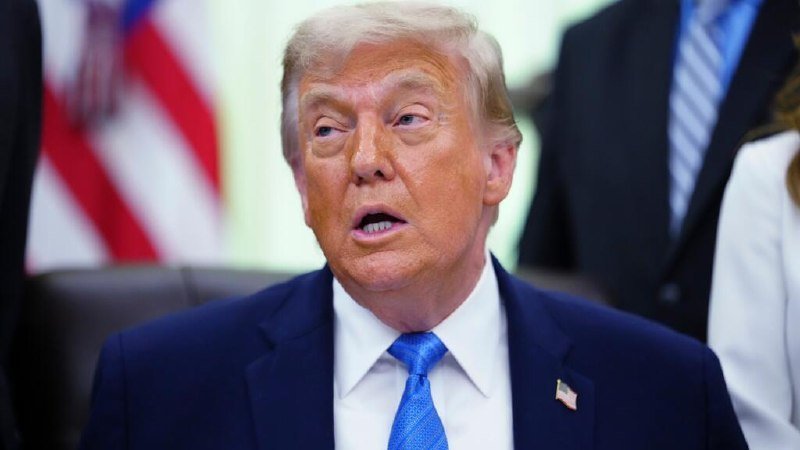
At 11:06 UTC on 10 June 2026, monitoring channels on Telegram began carrying the same short, sharp message from Donald Trump's Truth Social account: Iran's military is "a complete and total mess," with much of its navy and air force "completely defeated," and the country itself "all talk and no action." Within fifteen minutes the line was echoed by Open Source Intel, GeoPolitics Watch, RnIntel, Insider Paper, Clash Report and the Iranian outlet Fars News International. By 11:20 UTC the post had become, for a few hours at least, the dominant frame in English-language and Farsi-language channels tracking US-Iran relations.
Strip away the theatre and the post is interesting less for what it says about Iran than for what it tells us about the American negotiating position. Insult-first diplomacy is a known instrument: it compresses the other side's room for face-saving compromise, signals domestic resolve, and pre-positions the public for a hardening of terms. Read that way, the Truth Social outburst is not the failure of a negotiation. It is the negotiating posture itself, performed in public.
What the post actually says
The text, as carried by Open Source Intel, runs in two parts. First, an indictment of delay: "They've taken too long to negotiate a deal that would have been great for them, now they will have to pay the price!!!" Second, a capability assessment in superlatives: Iran's military is "a complete and total mess"; its navy and air force "don't even exist anymore"; the country is "all talk and no action." The characterisation is not new in style — similar language has appeared in earlier Trump posts about North Korea, China and Venezuela — but the timing is what matters.
Fars News International, an outlet with formal ties to the Iranian state, framed the same post differently: Trump's "disappointment with the prolongation of the process of agreement" and "resorting to backbiting" — a translation that, deliberately or not, reframes the taunt as a tantrum rather than a position. The gap between the English-language wire's reading of the post and the Iranian-state-adjacent reading of it is itself the story.
The counter-frame, given equal airtime
Two readings have to be held simultaneously. The first is Washington's: Iran has dragged out talks for months, used the diplomatic process as cover for sanctions relief and continued enrichment, and forfeited the generous terms on the table. On this account, public humiliation is a deliberate lever to drag Tehran back to the table at a lower price.
The second is Tehran's, voiced in the Fars English summary and in long-standing positions of the Iranian foreign ministry: the maximum-pressure architecture of recent years has not destroyed Iran's missile and drone programmes, its proxy network is intact, and the country has demonstrated an ability to absorb, recalibrate and retaliate. A public insult from a US president is a propaganda gift in the domestic Iranian information environment, where it strengthens the hand of those who argue against any deal at all. There is a real argument, in other words, that the post does the opposite of what it claims to do — stiffens Iranian resolve rather than softening it.
Monexus does not know which reading will prove correct. Both should be on the table.
The structural picture, in plain prose
The US-Iran negotiation has been running on a familiar template for two decades: maximum pressure, partial talks, collapse, sanctions snapback, repeat. The 2015 nuclear agreement was the high-water mark; its 2018 withdrawal was the defining break. Since then, the American side has alternated between sanctions escalation and intermittent, lower-rank talks in Muscat, Doha, and Geneva. The current cycle, on the evidence of the public record, looks like more of the same — with a Truth Social register layered on top.
What is structurally new is the medium. Direct-to-camera, direct-to-Truth-Social messaging removes the diplomatic filters that historically cushioned insults between the US president and a sitting foreign government. It also forecloses some of the room that professional negotiators in both capitals had used, in earlier rounds, to find face-saving language. That makes a near-term deal harder, not easier — and it raises the cost of a public breakdown if the talks do collapse.
Stakes — and what is still unverified
If the trajectory continues, the losers are legible. A deal-free status quo means continued sanctions pressure on the Iranian economy, continued enrichment activity in Iran, and continued risk of a kinetic episode around the Strait of Hormuz, through which roughly a fifth of global oil traffic passes. The winners are also legible: the hardliners on both sides, who can use the failed talks to justify the next round of militarisation.
Several things remain unverified. The thread context does not specify which round of talks the post refers to, the most recent date of a confirmed US-Iran meeting, or whether any sanctions-related measures have formally snapped back since the post. The capability claims in the post — navy and air force "don't even exist anymore" — are not independently corroborated in the available reporting and should be read as political rhetoric, not as an intelligence assessment. The Iranian state response has so far been carried by Fars News and aggregated by the same OSINT channels; a formal foreign ministry statement has not been seen in this thread.
The honest summary: a US president used a public social-media platform, on 10 June 2026, to call a foreign country's military a mess. Iran's state-adjacent press called the move a tantrum. The diplomatic substance behind the post is still being assembled. The market-moving facts — whether talks resume, whether sanctions are tightened or loosened, whether a kinetic option moves up or down the American menu — are not in this thread. Watch the next 72 hours; the public posturing tells you the direction, the absence of follow-through will tell you the truth.
Desk note: Monexus framed Trump's post as a negotiating instrument first and a credibility claim about Iranian capabilities second. Mainstream English wires have run the line as fact-adjacent; Fars News, with its editorial line, read the same post as a tantrum. The two readings are reproduced here at equal weight, in keeping with how this desk handles opposing-source pairs on Middle East diplomacy.
Wire provenance
This editorial synthesis draws on the following public wire/social posts:
- https://t.me/s/osintlive
- https://t.me/s/GeoPWatch
- https://t.me/s/FarsNewsInt
- https://t.me/s/rnintel
- https://t.me/s/insiderpaper
- https://t.me/s/ClashReport
Follow the event.
These dated source records provide context. They do not retrospectively verify this archive article.
Separate what the nuclear watchdog reported from what it could not determine after the June 2025 strikes.