Maximum pressure, signature pending: parsing Trump's Iran ultimatum
A public ultimatum, an on-camera peace claim, and a fresh Indian-market compensation case together reveal how the Iran file is being priced, packaged, and pushed by Washington — and how the deal may already be closer to signature than the rhetoric suggests.
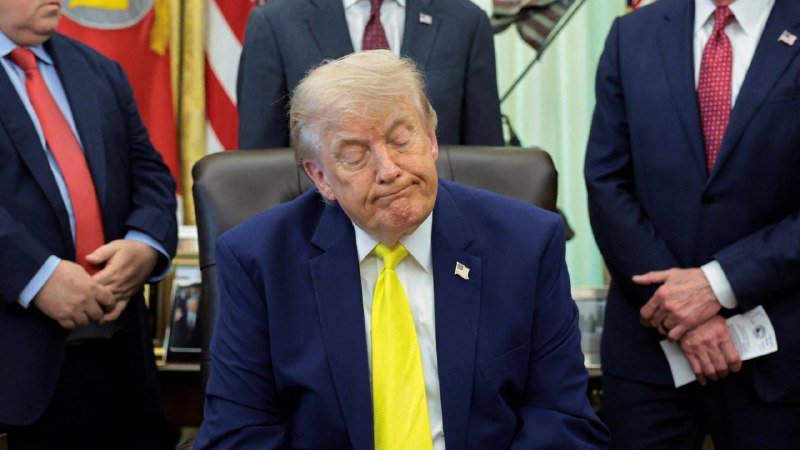
A working nuclear understanding between the United States and the Islamic Republic now sits on a knife-edge that Donald Trump himself drew in plain English on 10 June 2026. The American president told reporters that Iran had "agreed not to have a nuclear weapon, all they have to do is sign the paper," characterising the dossier as "fully negotiated" while reserving the option of a kinetic alternative if the text is not initialed. The line — circulated widely on social media the same afternoon — does not describe a deal. It describes a sales pitch in the final stretch of one, and the distance between those two things is where the next fortnight of Middle Eastern diplomacy will be fought.
The substantive claim is straightforward, and the room for misreading is not. Washington is offering Tehran a face-saving formula: no weaponisation, retained civilian enrichment, intrusive inspections, and a sanctions unwind calibrated to the Iranian balance-of-payments calendar. In exchange, the United States wants a signature, not a communiqué. Trump's parallel warning — that a failure to sign would be met by a strike "hard today" — is the standard coercive architecture that has preceded every previous round of this negotiation, including the 2015 Joint Plan of Action that the same administration repudiated in 2018. The threat is real, the deal is real, and the question of which arrives first is the only one that matters.
The shape of the ultimatum
The pressure is structured, not improvised. On 10 June 2026, multiple wires carried Trump's statement that an Iranian commitment to forgo a nuclear weapon was the central concession, and that the remaining work was procedural. Reporting from Fox, syndicated through the financial press, characterised the posture as "maximum pressure" — the same phrase that defined Trump's first-term economic warfare on Tehran, and a deliberate signal to the oil market that the administration is willing to walk away rather than accept an ambiguous text. Indian Express carried the warning on its global desk on 10 June, framing the strike language as conditional rather than imminent.
The conditional structure is doing political work at home as much as diplomatic work in Geneva, Vienna and Muscat. A president who frames the choice as binary — sign, or be struck — forces Tehran's negotiators to absorb the cost of any last-mile friction in front of a domestic audience that has invested heavily in the negotiation's success. It also pre-positions the American public for either outcome: a signature can be sold as a historic win; a strike, as the inevitable consequence of Iranian intransigence. The third option — a slow collapse into sanctions-and-sanctions, the trajectory of 2019 to 2023 — is the one neither side is publicly pricing.
The non-Western wire read
Western financial commentary has, predictably, treated the ultimatum as a bullish signal for crude: a deal removes the premium that has anchored Brent since the Houthi disruption began, while a strike adds a risk premium that is harder to quantify. Indian wire coverage in the same 24-hour window emphasised a different second-order effect — the reputational cost to any Iranian-aligned capital of being the deal-breaker at the moment the United Arab Emirates was absorbing the political fallout from a separate traffic accident in Dubai that killed seven and prompted an Indian-origin billionaire to publicly offer a two-crore-rupee compensation package. The juxtaposition is the story. Gulf capital is being asked, in effect, to underwrite a wider security settlement while the optics of an Iranian refusal would be processed in the same news cycle as civilian loss on the Emirates' motorways.
Iranian state media has, to its credit, refused the framing. The negotiating team in Muscat has reiterated that any agreement must include a verified sanctions-relief mechanism with automatic snap-back if the United States withdraws — a direct response to the 2018 precedent. The point is not that Tehran's position is the more reasonable one. It is that the diplomatic file is not a signature, it is a contract, and the contract's durability is what every previous round of this negotiation failed to price.
What the Indian market tells you
The Indian Express carried a third item in the same 10 June cycle that is worth holding next to the Iran file: a Securities and Exchange Board of India proposal to require pooled pay disclosure for asset-management-company staff. The mechanism is mundane. The signal is not. It tells you that the capital architecture being built around a hypothetical Iran deal — and around its absence — assumes transparency about who carries the risk and who carries the reward. A sanctions unwind will move petrodollar recycling through Indian and Emirati asset managers at scale. A strike will move risk premiums through the same channels. Either way, the principals are being identified in advance, which is itself a constraint on the kind of back-channel deal that closed the 2015 file.
The structural frame
What the United States is selling, in plain terms, is the maintenance of a dollar-centric sanctions architecture with a narrow window for Iranian reintegration. The trade is energy-for-scrutiny: Iranian crude back into international markets, priced and cleared in dollars, against verification that makes weaponisation materially harder. The architecture is coercive, but it is also legible, and legibility is what allows the Gulf monarchies, the Indian treasury, the Chinese refiners, and the European insurers to plan around it. The alternative — a strike that destroys Iranian infrastructure and suspends the negotiation file for a decade — is legible too, and that legibility is why the threat is more useful as a closing lever than as an opening move.
The unresolved question is whether the signature Trump is demanding is the same document Tehran believes it is signing. The American framing treats the disarmament commitment as the entire bargain. The Iranian framing treats sanctions relief — automatic, verifiable, and protected against future unilateral withdrawal — as a co-equal commitment. If those two readings collapse into one text, the file closes. If they do not, the ultimatum becomes the strike, and the strike resets the clock on everything the Gulf monarchies, the Indian refiners, and the Chinese offtakers have spent three years pricing.
The sources available to this publication do not specify the text under negotiation, do not name the venue of the next round, and do not confirm whether the Iranian Majles has been formally briefed. What they do confirm is the shape of the public American position as of 10 June 2026: a deal described as fully negotiated, a strike described as available, and a signature treated as the only remaining deliverable. The bet being placed, by both sides, is that the other cannot afford to walk away first. The next ten days will tell.
Desk note: Monexus framed the ultimatum against the wire consensus — a bullish-for-deal, bearish-for-strike binary — and read the Indian Express's parallel coverage on the Dubai crash and the SEBI disclosure rule as connective tissue. The point was to show that the Iran file is being priced in adjacent markets in real time, not adjudicated in isolation in Geneva.
Wire provenance
This editorial synthesis draws on the following public wire/social posts:
- https://x.com/unusual_whales/status/
- https://x.com/unusual_whales/status/
Follow the event.
These dated source records provide context. They do not retrospectively verify this archive article.
Separate what the nuclear watchdog reported from what it could not determine after the June 2025 strikes.