Trump's Iran ultimatum reads more like a negotiation opening than a war plan
A single afternoon of presidential remarks swung between 'going to hit hard today' and 'all they have to do is sign the paper.' That is not a contradiction. It is the strategy.
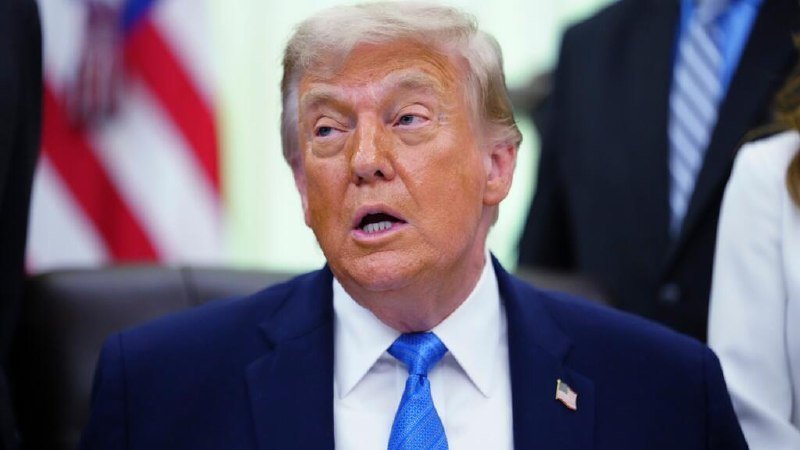
Within the space of roughly forty minutes on the afternoon of 10 June 2026, the President of the United States issued two statements that, on their face, point in opposite directions. At 15:53 UTC, in remarks covered by Al Jazeera, he said the US was "going to hit [Iran] hard today" and warned strikes could continue against Iranian civilian infrastructure. At 15:55 UTC, he said Iran "cannot have a nuclear weapon, and they won't, and they have agreed to that. All they have to do is sign the paper." Twelve minutes later, he added that he had "been working with Iran for a number of months, and they should sign the deal." Treat the apparent contradiction as the message, not as incoherence.
The shape of the ultimatum
Read the remarks together and a familiar bargaining architecture appears. The escalation — public confirmation of continued strikes, the threat to widen targets, the boast about "taking out millions of barrels of oil every night" — is the stick. The offer — a deal "fully negotiated," reduced to a signature — is the carrot. The gap between the two is the negotiating space. Iranian negotiators, sitting across from American counterparts or watching from Tehran, are being asked to price the difference.
The sequence matters. By 16:09 UTC, the President was back to "I think they are going to want to make a deal." By 16:25 UTC, according to the OSINTtechnical account that monitors open-source video of presidential remarks, he had confirmed another round of strikes was coming "hard again today." Threat and offer, threat and offer — compressed into an afternoon news cycle. This is not improvised; it is the cadence that an earlier generation of Trump-administration Iran policy (2018–2021) explicitly branded as "maximum pressure." The Unusual Whales account, citing Fox, summarised the intent bluntly: "maximum pressure to get a deal done."
What the language reveals
Three tells suggest the rhetoric is calibrated for an audience of one: the Iranian decision-maker who has to decide whether to sign. First, the deal is described as "fully negotiated." That phrase forecloses the Iranian counter-argument that the document on the table is a moving target. Second, the President frames Iran's acceptance of the no-nuclear-weapon principle as already conceded ("they have agreed to that") — converting a contested outcome into a stated fact. Third, he leaves a face-saving verb: "sign." The Iranian side does not have to admit defeat in words; it only has to perform a single bureaucratic act. The architecture is designed to make acceptance cheap and refusal expensive.
The strikes serve a parallel function. By widening the target set to include civilian-infrastructure-adjacent energy assets, the US raises the cost of refusal without crossing the line that would force a broader regional war. That is a contested judgement — Iranian-aligned outlets will frame the same strikes as escalatory rather than coercive — but it is the most parsimonious read of the pattern: every military move is paired, within minutes or hours, with an offer to talk.
The counter-narrative worth taking seriously
A reader who distrusts this framing is not naive. The same pattern of public threats followed by deal-talk has, in earlier episodes, ended with the threats being executed for weeks or months, not hours. The Al Jazeera headline — "may keep going with strikes" — leaves the time horizon open. Iranian state media, which this analysis does not have direct sourcing for in the present thread but can be expected to broadcast, will frame the strikes themselves as the policy, and the deal-overture as a propaganda flourish. That is also a coherent read of the evidence.
The honest answer is that the same evidentiary record supports both readings. The President is the only person who knows the ratio of coercion to negotiation in his own intent, and he has incentive to keep that ratio ambiguous. Markets, which is where the claim will be arbitrated in the short run, will price it both ways: oil up on strike reports, down on deal-talk, up again when the next strike is confirmed.
Structural stakes
Whatever the President's true intent, the visible pattern has already produced two structural effects. First, oil supply has been disrupted, by the President's own description, at a scale measured in millions of barrels per night — a number large enough to affect global benchmarks even before any sustained campaign is confirmed. Second, the negotiating table has been re-centred on the US draft text. Iran is no longer being asked to start a process; it is being asked to ratify one. That is a meaningful narrowing of the diplomatic space, and it is the prize the campaign is designed to deliver — whether or not the bombs keep falling next week.
The remaining uncertainty is timing. The sources do not specify whether the next round of strikes, announced for 10 June 2026 itself, was carried out as promised or held in reserve. Until that is independently verified, the strategic picture is half-developed: the ultimatum is on the table, the clock is running, and the outcome is genuinely undecided.
This publication framed today's escalation as a negotiating move rather than a war plan, in contrast to wire headlines that led on the strike threat alone. The wire is reporting the stick; we are tracking the carrot that the President attached to it.
Wire provenance
This editorial synthesis draws on the following public wire/social posts:
- https://twitter.com/Osinttechnical/status/2064739426220019906
- https://t.me/ClashReport/
- https://t.me/ClashReport/
- https://t.me/ClashReport/
- https://t.me/ClashReport/
- https://twitter.com/unusual_whales/status/
Follow the event.
These dated source records provide context. They do not retrospectively verify this archive article.
Separate what the nuclear watchdog reported from what it could not determine after the June 2025 strikes.