Trump's Iran ultimatum: a deal, a strike, or a bluff — and what Pakistan has to do with it
Within minutes on 10 June 2026, the US president threatened to 'hit Iran hard,' claimed a Pakistani-brokered reprieve, and said 22 ships had been seized at night with their lights off.
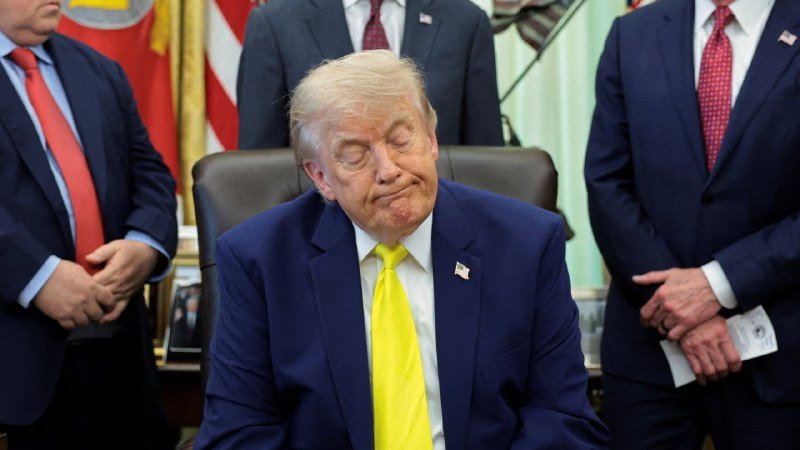
At 15:50 UTC on 10 June 2026, a flurry of statements from US President Donald Trump hit Telegram channels monitoring the White House beat. The first message was unambiguous: "We will be attacking Iran hard." The second, minutes later, softened the picture. "I gave them [Iran] a break on the request of Pakistan," the president said, naming both Pakistan's prime minister and its field marshal as brokers. By 16:13 UTC the same feed carried a third variation: "We took 22 ships the other night, late at night, with no lights" — a claim that, if accurate, describes a naval operation of a scale the public has not seen disclosed elsewhere. (t.me/ClashReport, t.me/GeoPWatch)
The pattern is the story. Within a single broadcast cycle the US government has run at least three distinct framings of its Iran policy — imminent attack, Pakistani-brokered pause, and a covert maritime campaign — while insisting a nuclear deal is "fully negotiated" and awaiting a signature. Each of these can be true, or none of them can. What is undeniable is that the messaging, not the underlying operations, is now the principal instrument of US pressure on Tehran.
The shape of the threat
The most concrete operational claim is also the most unusual. Trump told reporters that the United States had "been taking out millions of barrels of oil" and that Iran had been unaware of the campaign until the moment of disclosure. The 22-ship seizure, allegedly conducted at night without lights, is a specific figure that has not, as of this writing, been independently confirmed by US Central Command, the Pentagon, or wire reporting. (t.me/ClashReport, 16:05 UTC) The claim sits awkwardly next to a parallel assertion that "they shot down our helicopter" — an incident that, if real, would itself warrant a formal military statement. (t.me/FotrosResistancee, 16:13 UTC)
Al Jazeera's breaking-news wire, filed at 15:53 UTC, framed the broader posture as a hardening: Trump "renews threats to bomb the country's civilian infrastructure" and claims Iran is "completely defeated." (Al Jazeera breaking news, 10 June 2026) That is the language of escalation, not negotiation. It is also the language of a domestic political audience.
Pakistan as the unlikely interlocutor
What is new in this cycle is the public elevation of Pakistan. Trump named Islamabad — and specifically the country's military leadership — as the party that secured a "break." A field marshal is a senior Pakistani Army rank; the reference appears to be to Chief of Army Staff General Asim Munir, though the circulated excerpts do not name him directly. (t.me/ClashReport, 15:51 and 16:13 UTC; t.me/GeoPWatch, 15:51 UTC) Pakistan's role is not ceremonial: it is one of the few capitals with a working line to both Washington and Tehran, and it has, in recent years, mediated between Iran and Saudi Arabia.
That Islamabad is being thanked on the record suggests the Trump administration is signalling that back-channel work is ongoing even as public threats escalate. The more cynical reading — and it deserves airtime — is that the invocation of Pakistan is itself a lever: a public message to Tehran that its regional options are narrowing, and a public message to India's neighbourhood that the United States still has the temperature dial.
The nuclear deal that is "fully negotiated"
The cleanest line in the day's messaging is the nuclear one. "Iran cannot have a nuclear weapon, and they won't, and they have agreed to that," Trump said. "All they have to do is sign the paper. It's fully negotiated." (t.me/ClashReport, 15:55 UTC) A separate message at 16:09 UTC added that "they are going to want to make a deal."
That formulation puts the entire burden of refusal on Tehran. If Iran signs, the president has a foreign-policy win. If Iran refuses, the president has a casus belli. The structural problem is that the United States has not published the text of what it claims is fully negotiated, and Iranian state media have, in parallel coverage, framed any ultimatum as non-negotiable. The reading gap between "fully negotiated" and "they have to sign" is the room in which a war starts.
What is actually known, and what is not
Three things are corroborated across the day's messaging. First, the US public posture is hardening, not softening. Second, Pakistan is being positioned as a broker, and the Pakistani military — not the civilian foreign ministry — is the lead face. Third, the administration wants a signed nuclear commitment framed as Tehran's last, easy option.
Three things are not corroborated. The 22-ship seizure has no independent confirmation. The downing of a US helicopter has no independent confirmation. And the "fully negotiated" text of any deal has not been disclosed. The sources available to this publication on 10 June 2026 do not include a US Defense Department readout, an Iranian foreign ministry briefing, or a wire-service confirmation from a named US or Iranian official beyond the president's own remarks. The honest framing is that we are watching a messaging war, not yet a military one — and that a messaging war can become a military one in the time it takes to read out a single statement.
The stakes are concrete. A strike on Iranian civilian infrastructure, as Al Jazeera's wire notes the president has threatened, would invite retaliation through Iraqi Shia militias, the Houthis, and potentially Hezbollah, with knock-on effects on Gulf shipping and global energy prices. The maritime campaign, if real, is already a price event. And the Pakistani channel, if it holds, is a thread that could be cut the moment Washington decides the public pressure has done its work.
Desk note: the wire framing of this story is that Trump is "hardening" his tone. Monexus frames it as a three-track signalling operation — kinetic threat, regional brokerage, and a written deal that does not yet exist — running simultaneously, and assesses that the threat track is the one most likely to be executed first.
Wire provenance
This editorial synthesis draws on the following public wire/social posts:
- https://t.me/ClashReport
- https://t.me/ClashReport
- https://t.me/ClashReport
- https://t.me/ClashReport
- https://t.me/ClashReport
- https://t.me/ClashReport
- https://t.me/GeoPWatch
- https://t.me/FotrosResistancee
Follow the event.
These dated source records provide context. They do not retrospectively verify this archive article.
Separate what the nuclear watchdog reported from what it could not determine after the June 2025 strikes.