Trump's Iran ultimatum reads more like theatre than strategy
Three Telegram items in one morning: a blockade declared the most successful in naval history, a power-grid threat, and a phrase no White House press secretary has confirmed. The gap between the rhetoric and the policy is now the story.
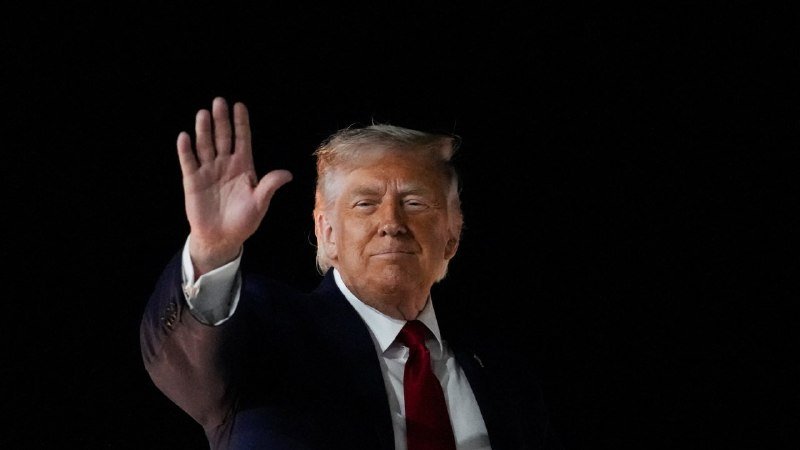
At 12:34 UTC on 10 June 2026, BRICS News relayed a Fox report that President Donald Trump is "nearing a decision" to launch fresh strikes on Iranian power plants and bridges. Twenty-eight minutes earlier, the same channel had Trump calling the US naval blockade of Iran "the most successful Blockade in the history of Naval Warfare." Forty minutes before that, the channel reported him saying "Praise be to Allah." Three statements, one morning, each requiring a different audience to land. Read together, they tell a more revealing story than any one of them does alone.
The shape of US policy toward Iran this week is not a strategy. It is a sequence of postures — each one calibrated to a different camera, a different constituency, a different news cycle. That is the thesis this publication keeps returning to: the gap between the rhetoric of escalation and the logistics of an actual war with a country the size of Iran is now wider than at any point since 2019, and the White House is openly performing the difference.
A blockade described, a blockade absent
The "most successful" claim is the most testable, and on inspection it raises more questions than it answers. A naval blockade, in the formal sense recognised by international law, requires a declared zone, neutralised merchant traffic, and — under the San Remo Manual that codifies the law of naval warfare — effective enforcement sufficient to make transit genuinely hazardous. BRICS News's own item describes the operation in Trump's own words, not in Pentagon or US Naval Forces Central Command language. The sources do not specify the corridor, the tonnage intercepted, or the number of vessels boarded. The sources also do not confirm whether the operation has the legal character of a blockade at all, or whether it is a looser sanctions-enforcement posture that is being rebranded for domestic consumption.
That ambiguity is doing political work. To a domestic base, "blockade" signals resolve. To oil markets, it is a single word that can spike Brent by several dollars without any change in the actual flow of crude out of the Gulf. To Tehran, it forces a calculation about whether the next incident at sea is an enforcement action or the opening move of something larger. To legal advisers at the Department of Defense, it is a serious question about the threshold at which US commanders may use force.
The power-grid threat, and what it would actually mean
The second item — a threatened follow-on round of strikes on power plants and bridges — sits in a different policy register. Strikes on dual-use infrastructure are not a new American tool. What is new is the public warning, in advance, in those exact terms, to a country that has spent the last two years hardening its grid and dispersing its command-and-control nodes. There is no public indication, in any of the three items or in the Telegram channel's sourcing, of what targets are on the proposed list, what the rules of engagement would be, or whether the US has secured overflight rights or deconfliction with regional partners who would absorb the political fallout.
Iran's grid is also not a single switch. Striking transmission lines and generation capacity produces a humanitarian bill — water treatment, hospital backup, civil aviation — that no Western ally has shown a willingness to underwrite politically. If the threat is genuine, the planning required to make it credible is enormous. If the threat is rhetorical, it is calibrated to produce a Tehran offer at the negotiating table, not damage on the ground.
The third line, and why it matters most
The "Praise be to Allah" line is the easiest to dismiss and the hardest to ignore. It is the only one of the three that cannot be parsed as standard coercive diplomacy. By itself it tells us little. In sequence with the blockade claim and the power-grid threat, it suggests a presidency that has stopped pretending its messaging is coherent. A coherent Iran policy does not run a blockade, threaten infrastructure strikes, and then deliver a phrase that would not be out of place at an Iranian state-broadcast press conference, all in the same Telegram wire.
This is the structural point. Diplomacy with Iran is a decades-long exercise in reading signals through noise. The signals coming out of Washington this week are not noise in the technical sense; they are intentionally loud. The noise is the structure. Each statement is aimed at a specific audience — the domestic base, oil traders, Iranian negotiators, Gulf partners, Israeli planners — and none of them are compatible with each other.
The other reading, and why it still does not hold
The most charitable read of the three items is that the US is running a maximalist pressure campaign and the public statements are the visible tip of a private escalation ladder that includes sanctions designations, interdictions at sea, and back-channel terms. On that reading, the contradictions are features: each statement forces Tehran to ask whether the next move is rhetorical or operational, and the uncertainty itself is the lever.
This publication finds that read less persuasive than it might have been a month ago. Coercive ambiguity works against an adversary that is uncertain about its own red lines. The Iranian leadership's public posture, in the items summarised here and in the broader Telegram wire, is the opposite of uncertain. The domestic Iranian narrative is that the US is bluffing; a serious escalation would need to puncture that narrative in a way no item in the current record suggests has been planned. The threats, in their current form, look more like an attempt to extract a concession than a prelude to a strike.
Stakes, in plain terms
If the trajectory holds, the losers are predictable: Iranian civilians absorbing sanctions pressure, Gulf states absorbing the risk of an accident at sea, oil importers absorbing the price. The winners, in the short term, are domestic political audiences in the US for whom the language of strength is the deliverable itself, and the broader sense that a US administration can move a market or a foreign government on a single Telegram post. Over a longer horizon, the winner is whichever side manages to convert this episode into a stable arrangement. Nothing in the three items reviewed here suggests that work is under way.
The three statements may resolve in the next 48 hours into either a new round of sanctions, a discrete military action, or a walk-back. Until then, the policy is the performance, and the performance is the policy.
This publication's framing prioritises the gap between declared US intent and verifiable operational posture — a gap the wire services have largely accepted at face value.
Wire provenance
This editorial synthesis draws on the following public wire/social posts:
- https://t.me/s/bricsnews
- https://t.me/s/bricsnews
- https://t.me/s/bricsnews
Follow the event.
These dated source records provide context. They do not retrospectively verify this archive article.
Separate what the nuclear watchdog reported from what it could not determine after the June 2025 strikes.