Trump's Iran Gamble, the World Cup Betting Bonanza, and a Presidency That Loves Inflation
On a single Tuesday in June 2026, the US president claimed credit for siphoning Iranian oil, teased equity stakes in top AI firms, defended inflation, and was accused of timing a war to disrupt a World Cup. The pattern is the story.
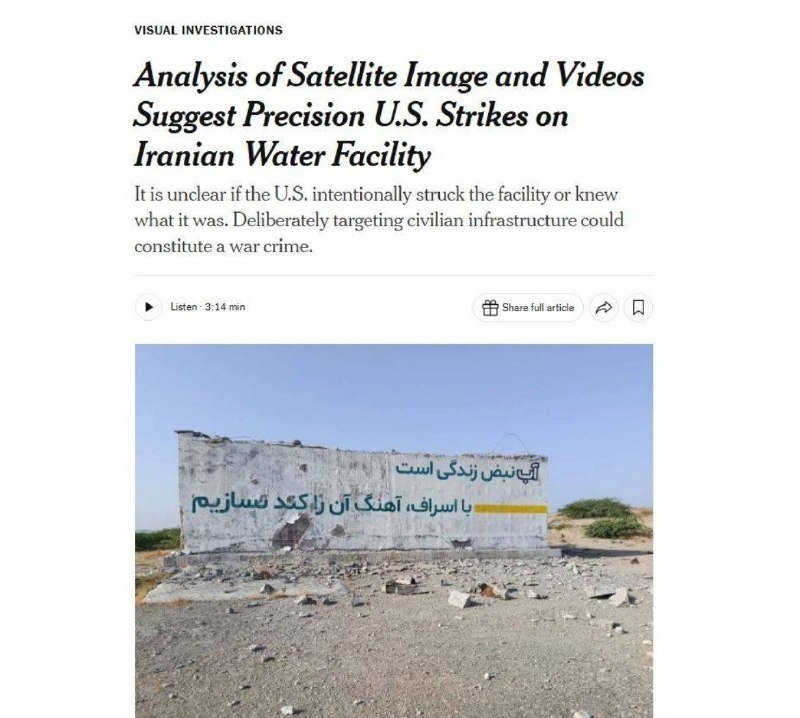
On 10 June 2026, in a single afternoon of televised remarks from the White House, Donald Trump told the world that the United States had been covertly removing "millions of barrels" of oil from Iran every night, that Iran had already agreed to forgo a nuclear weapon and merely needed to "sign the paper," and that the country's military is now "a complete and total mess." Within hours, Polymarket's news desk was running the quotes as flash alerts and Fox framed the posture as "maximum pressure." It was, by any measure, a consequential afternoon — and it was not even the most commented-upon Trump story of the day.
The throughline is structural. In roughly twelve hours, the same presidency asserted kinetic pressure on a regional adversary, claimed ownership of an energy shock it had engineered, and re-litigated the cost-of-living record that helped return it to office. Read in isolation, each line is a different story. Read together, they describe a governing style that treats economic damage, military escalation, and market spectacle as interchangeable instruments of leverage. That is the framing worth interrogating — not whether any one claim is true, but what the bundle tells us about how power is being exercised in real time.
The oil claim and the credibility tax
The headline assertion, carried by Polymarket's just-in feed at 15:56 UTC, is staggering on its face: a US operation to extract "millions of barrels" of Iranian oil nightly, on a schedule so covert that, per the BBC's write-up of his remarks at 17:05 UTC, Tehran supposedly "didn't know until right now." If accurate, this would represent a campaign-grade oil interdiction on a scale with no obvious public precedent, with strategic consequences that would extend well beyond the negotiating table.
It is also a claim made by the principal, with no third-party corroboration in the day's reporting. That distinction matters. Negotiating under what the press has been calling maximum pressure works only if the counterparty believes the escalation is real and reversible. Public claims of covert action have a credibility cost: each one that cannot be independently verified narrows the space between deterrence and bluster. By the same token, the assertion that Iran's military is a "complete and total mess" — issued at 15:17 UTC via Unusual Whales' feed of the remarks — is the kind of description a defence ministry might decline to put in writing even if it believed it, because naming the target's weakness aloud is the opposite of strategy.
The counter-narrative is not that the US is bluffing. It is that the line between a deterrent posture and a public-relations posture is being deliberately blurred, and that Iranian, Chinese, and Gulf state planners are now reading the rhetoric as carefully as they read the satellite imagery.
The inflation question that will not go away
The same afternoon, Trump told reporters he "love[s] the inflation." The BBC's write-up of the exchange, timestamped 17:05 UTC, also reports him claiming credit for the oil operation. The juxtaposition is the point. A president who openly embraces the price level as a political asset — who treats the energy bill his administration says it is moving as both a sanctions tool and a domestic talking point — is making a bet that the public will accept higher fuel costs as the price of geopolitical posture.
The historical baseline is unflattering. Inflation expectations are sticky precisely because they reflect what households and firms believe policymakers will tolerate. When the head of the executive branch describes a cost-of-living shock as a feature, the work of central banks — including the Federal Reserve, which the same administration has at times leaned on to cut — becomes harder, not easier. The 2024 election was, in significant part, a referendum on the cumulative price level. The administration's calculus appears to be that the geopolitical dividend of a steeper oil squeeze outweighs the political cost of the receipts at the pump. That is a defensible position only if the squeeze produces a deal on terms the White House can claim. If it produces a long, ambiguous stalemate instead, the cost falls on the same voters who priced the previous cycle.
The World Cup, the betting market, and the security theatre
Hours after the Iran remarks, BBC News reported at 18:39 UTC that this year's expanded World Cup is expected to be the largest betting event in history, driven by the increase in the number of matches. The same tournament — co-hosted across North American venues — opened into an argument that, per a widely circulated post on X from the account @sprinterpress at 22:16 UTC, the United States had effectively chosen the eve of the competition to start a war, on the theory that the inflow of fans and media would create cover for the operation and for "all kinds of scum" to "infiltrate under the pretext of cheering."
Whether or not that accusation has any operational basis, the timing is now the story. A tournament scaled up to drive a record betting handle is, by design, a global attention sink. To the extent that geopolitical action is timed to disappear inside that noise, the question for the press — and for regulators in the host cities — is straightforward: what is the documented security posture, and what is the documented correlation, if any, between the escalation timeline and the tournament calendar? The public deserves the ledger, even if the ledger is short.
The AI equity stake, and the new industrial policy
Slotted between the oil claim and the Iran warning, Polymarket reported at 15:56 UTC that the US government will seek equity stakes in top AI companies to make the public "very rich." The proposal sits inside a wider pattern of executive-branch interventions in the AI sector — export controls on chips, tariffs on advanced semiconductors, antitrust posture toward the dominant model providers. Adding direct equity ownership to that mix converts a regulatory role into an ownership role. The upside, as the framing suggests, is that the state captures the returns it has helped enable. The risk is that the line between steward and principal agent blurs, and that decisions about compute, data, and export licensing become entangled with the Treasury's balance sheet.
It also raises a question the briefing did not address: which companies, on what terms, with what governance protections for the public minority? Without those details, the announcement is a banner, not a policy.
Stakes and the week ahead
If the Iran track produces a signed non-nuclear-weapon understanding on terms the White House can claim, the oil claims, the inflation rhetoric, and even the security complaints about the World Cup window will be absorbed as the cost of leverage. If it produces an ambiguous stalemate, the same statements become the basis for a much harder domestic argument about energy prices, the security of major sporting events, and the credibility of public escalation claims. The serious paragraph is this: the voters and allies who are being asked to absorb these costs are not being shown the underlying documents. They are being shown quotes. The next seven days will tell us whether the quotes are followed by paper, or by more quotes.
Desk note: Monexus framed Tuesday's bundle as a single governing pattern rather than as three separate stories, because separating them obscures the structural argument. Wire coverage ran the items as discrete headlines.
Wire provenance
This editorial synthesis draws on the following public wire/social posts:
- https://x.com/polymarket/status/0
- https://x.com/unusual_whales/status/0
- https://x.com/unusual_whales/status/0
- https://x.com/unusual_whales/status/0
- https://x.com/polymarket/status/0
- https://x.com/polymarket/status/0
- https://x.com/sprinterpress/status/0
Follow the event.
These dated source records provide context. They do not retrospectively verify this archive article.
Separate what the nuclear watchdog reported from what it could not determine after the June 2025 strikes.