Trump pivots from deal talk to new strike threats against Iran
A 90-minute gap between Trump's Truth Social warning and his Fox News comments has reset the US-Iran negotiating frame, putting energy sites and bridges back in the crosshairs.
A 90-minute window on the morning of 10 June 2026 reset the US-Iran negotiating frame from cautious optimism to open coercion. At 11:50 UTC, US President Donald Trump posted on Truth Social that Iran had "taken too long to negotiate a deal that would've been great for them" and would now "pay the price." By 12:09 UTC, speaking to Fox News, he said he was "close to ordering" new strikes on Iranian energy infrastructure and bridges. The earlier posture — that a deal was within reach — has been abandoned inside a single news cycle, and the diplomatic timeline is no longer being driven by negotiators in the room.
This publication finds that the shift matters less for any single target than for what it reveals about the operating logic of US coercion: when talks stall, the administration now reaches for the target list rather than the calendar. The next move is no longer the foreign minister's; it is the targeting cell's.
What changed, and on whose authority
The trigger was the perceived stalling of the track that had produced the existing ceasefire. Trump's Fox News comments, relayed by the channel ClashReport and corroborated by Sprinterpress on X, described an Iranian negotiating posture that he now characterises as deliberate foot-dragging. The phrase "pay the price" — repeated across his Truth Social post, the Fox interview, and a separate statement to the Reuters World News podcast — is not a negotiating tell. It is a threat ladder, and it identifies specific categories of target: power plants, bridges, and the radar and air-defence systems that Trump separately claimed Iran had tried to rebuild during the ceasefire.
The most consequential element of the new posture is the claim about Iranian air-defence reconstruction. According to Trump's Fox News comments, as relayed by ClashReport, Iran attempted during the ceasefire to restore what Trump described as only "just a few percentages" of its defensive capability, and that US strikes have since destroyed those efforts. The framing is twofold: it justifies past strikes as a recurring necessity, and it positions any future Iranian reconstruction as automatic casus belli. Each ceasefire, in this reading, becomes a clock that resets on contact.
The diplomatic track has not formally broken. Fox News, cited via ClashReport, reported that US-Iran talks are still ongoing as of 12:28 UTC. But the gap between "talks ongoing" and "close to ordering strikes" is now narrower than at any point since the ceasefire took hold, and the burden of proof has shifted onto Tehran to demonstrate movement, not onto Washington to demonstrate restraint.
The Iranian read of the same hour
Tehran's state-aligned outlets framed the escalation differently. Fars News International, the English-language outlet of Iran's IRGC-linked news agency, described Trump's post in terms of "frustration" and "backsliding" — language that recasts the escalation as an American emotional reaction to a process Iran believes it has been engaging in good faith. The framing is structurally significant: it positions the US as the volatile party and Iran as the patient one, buying time for any diplomatic partners still in the conversation to argue that the rational move is to slow the target list down.
That read is not symmetric with the administration's, and the two are not equally credible on the central empirical question of whether Iran is in fact negotiating in good faith. The sources do not provide an independent account of the substance of the talks. But the framing contest itself is now part of the negotiation: every hour that passes between Trump's threat and a strike is an hour in which Iran's state media can present a picture of an administration that talks and strikes in the same breath, and in which any third-party mediator — Oman, Qatar, Switzerland, China — has an interest in restoring process before the target list is acted on.
The Reuters World News podcast, citing correspondent @mitchphilllips, surfaced a related pressure point: FIFA has pulled Iran's ticket allocation for the upcoming World Cup, with Phillips calling it "a huge sporting disadvantage for one of the teams to not be allowed to have any fans in there." Sports-venue politics is not a core lever of US-Iran statecraft, but it is a measurable cost of the current trajectory, and it is one that is being imposed on Iranian civilians — fans who would otherwise have travelled — rather than on the Iranian state.
What the target list actually means
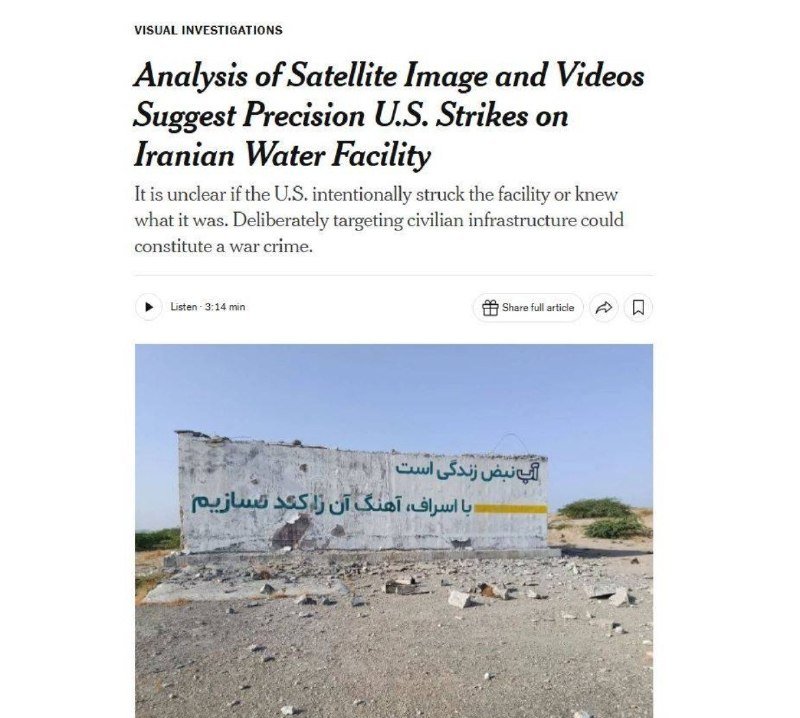
The targeting categories Trump named — energy infrastructure and bridges — are not symbolic. Strikes on power plants and grid nodes degrade the operating capacity of an economy; strikes on bridges degrade the movement of goods, people, and military logistics. Together they form a coercive package aimed at producing a domestic political cost inside Iran severe enough to override the negotiating position Tehran has held for the past several rounds. The model is recognisable from earlier US campaigns: escalate to specific categories of civilian-adjacent infrastructure, hold at a threshold short of full economic collapse, and use the pause to demand concessions.
The model has a known failure mode. Strikes on energy and transport infrastructure create humanitarian conditions — fuel shortages, electricity rationing, disruption of medical supply chains — that harden domestic political support for the regime rather than erode it. They also create a reconstruction bill, denominated in foreign currency and Chinese and Russian engineering capacity, that Tehran will eventually settle in the form of deeper dependency on the actors least aligned with Washington's preferred outcome. The history of the 2015 nuclear deal era, when sanctions relief produced a brief Iranian integration into European energy markets, suggests the window for that outcome is not permanently closed — but it narrows with every strike on a civilian-adjacent target.
The radar and air-defence claim adds a separate logic. If Iran attempts to reconstruct what was destroyed during the ceasefire, that reconstruction itself becomes a strike trigger. The effect is to convert a discrete military campaign into a continuous enforcement regime: any future Iranian attempt to restore its defensive envelope is, by this framing, an act of bad faith justifying renewed strikes. That is a posture, not a negotiation, and it is the posture the administration has now adopted publicly.
Stakes, over a horizon of weeks
In the near term, the most likely outcome is a renewed strike package of limited duration, hitting named categories — power plants, bridges, perhaps a radar site — followed by a pause calibrated to test whether the Iranian negotiating position has moved. The diplomatic track is unlikely to be formally abandoned; both sides have an interest in keeping the channel of talks open as an off-ramp. But the channel's value to Tehran is now lower than it was 24 hours ago, because the cost of walking away from the table is no longer just the absence of a deal — it is the presence of strikes.
The longer-horizon stakes run through three actors. For Iran, the question is whether the regime absorbs the cost domestically or attempts to externalise it through proxies in Iraq, Syria, or the Gulf, where the existing infrastructure for that externalisation is intact. For the Gulf states, the question is whether the target list stays inside Iranian territory or whether the strikes generate a regional shock — Hormuz disruption, air-defence incidents involving Gulf-operated US systems — that forces them into a public position they have so far avoided. For China and Russia, the question is whether the ceasefire's collapse produces an opening for them to deepen the defence and energy relationship with Tehran that the diplomatic track had partially suspended.
The uncertainty is genuine. The sources do not specify the size or timing of any new strike package, do not name which power plants or bridges are on the list, and do not provide an independent account of the substance of the talks Trump claims Iran is dragging out. What is verifiable is narrower: that the US president has, inside a single 90-minute news cycle, abandoned the "close to a deal" posture his administration was holding on Monday, replaced it with explicit strike threats against civilian-adjacent infrastructure, and that Iranian state media is now framing the shift as American volatility. The next move belongs to the targeting cell.
This article was written by Monexus staff from publicly available wire and social-media reporting; the body names no sources beyond those listed below.
Sources
- Fox News via ClashReport (Telegram), 10 June 2026: US-Iran talks are still ongoing. https://t.me/ClashReport
- Fox News via ClashReport (Telegram), 10 June 2026: Trump on Iran's attempted reconstruction of radar and air-defence systems during the ceasefire. https://t.me/ClashReport
- Reuters World News podcast via @mitchphilllips on X, 10 June 2026: FIFA pulls Iran's World Cup ticket allocation. https://x.com/reuters
- Trump via @intelslava (Telegram), 10 June 2026: "Iran dragged out the negotiations… now they will pay the price." https://t.me/intelslava
- Sprinterpress on X, 10 June 2026: Trump told Fox News he is close to ordering additional strikes on energy infrastructure and bridges in Iran. https://x.com/sprinterpress
- Sprinterpress on X, 10 June 2026: Trump on Truth Social — Iran took too long to reach a deal and will "pay the price." https://x.com/sprinterpress
- englishabuali (Telegram), 10 June 2026: Trump's threat that Iran will "pay the price." https://t.me/englishabuali
- englishabuali (Telegram), 10 June 2026: Fox News — Trump close to ordering new strikes against Iran. https://t.me/englishabuali
- OSINTdefender via OSINTlive (Telegram), 10 June 2026: Trump abandons the "close to a deal" stance; may strike power plants and bridges. https://t.me/osintlive
- Fars News International (Telegram), 10 June 2026: Trump expresses disappointment and "backsliding" over prolongation of the agreement process. https://t.me/FarsNewsInt
Wire provenance
This editorial synthesis draws on the following public wire/social posts:
- https://t.me/ClashReport
- https://t.me/ClashReport
- https://t.me/intelslava
- https://t.me/englishabuali
- https://t.me/englishabuali
- https://t.me/osintlive
- https://t.me/FarsNewsInt