The Strait Claim: How a Trump Truth Social Post Reset the Hormuz Debate
A Truth Social announcement that the United States "controls" the Strait of Hormuz turns a routine escort mission into a doctrinal declaration — and obliges Tehran, Riyadh and Beijing to recalibrate in real time.
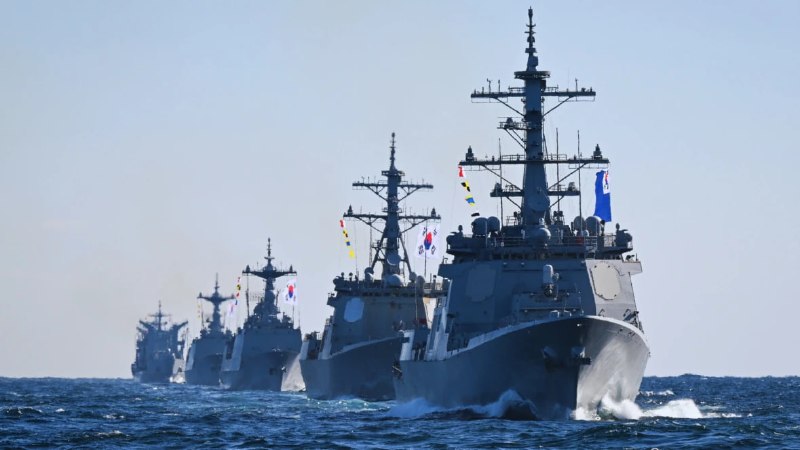
On 10 June 2026, at roughly 17:57 UTC, U.S. President Donald Trump used Truth Social to make a claim that did not previously exist in the public posture of any sitting American administration. The United States, he wrote, controls the Strait of Hormuz — not Iran. The post, picked up within minutes by Telegram channels tracking the open-source feed (Clash Report, OSINTLIVE, RN Intel, Bellum Acta News), disclosed for the first time that, in the President's own words, he had "directed our Great U.S. Military to execute a secret mission" the previous month to escort oil tankers and commercial vessels through the waterway. He added that the U.S. Navy has now escorted more than 200 ships out of the Persian Gulf and is, in his formulation, in charge of the strait. In a separate remark the same afternoon, Trump asserted that the U.S. operation had "taken out millions of barrels of oil" from the corridor and "22 ships," and that Iran only learned of the campaign at the moment of disclosure.
The claim matters less for its operational specifics — most of which remain unverified — than for what it does to the diplomatic grammar of the Gulf. For four decades the American position on the strait was a careful refusal of sovereignty: the U.S. Navy keeps the waterway open on behalf of international commerce, but no flag flies over the chokepoint. On 10 June, that distinction was dissolved in a single sentence.
The operational claim, stripped to what is verifiable
What can be confirmed from the thread material is narrow but specific. Trump posted on Truth Social on 10 June 2026, the posts were screenshotted and circulated on Telegram within minutes by at least four separate open-source channels (Clash Report, OSINTLIVE, RN Intel, Bellum Acta News), and the message contains three distinct assertions: that a secret U.S. military mission began roughly a month earlier; that the U.S. Navy has since escorted more than 200 commercial ships through the strait; and that 22 vessels and "millions of barrels of oil" have been removed or intercepted during the operation. Trump also said, in the same release, that Iran was unaware of the campaign until the announcement.
Everything else is consequential but unverified. No Pentagon readout, no CENTCOM release, no Iranian naval command confirmation, and no shipping-data dashboard referenced in the thread material corroborates the 200-ship figure, the 22-ship interdiction tally, or the surprise element. The Independent Petroleum and tanker-tracking services that normally publish such numbers (Kpler, Vortexa, Lloyd's List Intelligence) are not cited. That matters. A "secret mission" announced in a social-media post is, by definition, no longer secret; what is also no longer available is any independent baseline against which to measure the claim.
The diplomatic shockwave, in real time
The Iranian reaction will determine whether 10 June 2026 becomes a date or a footnote. Iranian state outlets have not, in the material available to this publication, yet published a formal counter-claim. The framing Iran is most likely to adopt — and the framing its regional partners, principally the Houthis in Yemen and certain Iraqi militias, have used in past cycles — is that any unilateral U.S. assertion of control over a waterway Iran regards as an internal security perimeter is itself the casus belli. The IRGC Navy's doctrine of "smart control" has long held that the strait is a card Tehran can play in any escalation, not a chess piece Washington can name.
The Gulf Arab states occupy the awkward middle. Saudi Arabia, the United Arab Emirates, Oman and Qatar all have commercial interests in keeping the strait open, all rely on U.S. naval cover to keep it open, and none have been party to the announcement that the United States now runs it. Riyadh and Abu Dhabi did not ask for this declaration. A doctrine that binds the U.S. Navy more tightly to the corridor also binds the Gulf monarchies more tightly to the U.S. Navy. That is a strategic gain for some Gulf capitals and a strategic complication for others. Oman, which sits on the strait's southern flank and has historically mediated between Tehran and Washington, is the state most exposed to the diplomatic consequences of a U.S. claim that effectively treats the waterway as a U.S. lake.
China and India, the two largest non-OECD customers for Gulf crude, are the silent parties to the announcement. Roughly 80% of Gulf oil exports flow eastward, and any disruption in U.S.-Iranian escalation math is felt first in Beijing and New Delhi. The Chinese foreign ministry's silence on 10 June — to the extent it is visible in the open-source feed — is itself a signal: Beijing prefers a stable, multilateralised strait under existing conventions (the 1982 UN Convention on the Law of the Sea, the 1988 Iran-Iraq Tanker War ceasefire understanding) and treats unilateral U.S. assertions with caution. India, the largest single buyer of Iranian oil under the sanctions architecture that has frayed since 2023, has similar incentives.
What the announcement actually changes
Strip the rhetoric and the operational content is narrow: an expanded U.S. Navy escort programme through a 21-mile-wide corridor. Expand the rhetoric — and the President's framing demands expansion — and the content is much larger. The United States has, in the space of a single Truth Social post, moved from a posture of free navigation guaranteed for all comers to a posture of declared control. The legal status of the strait under international law does not change because a president says it does; transit passage through international straits is enshrined in UNCLOS and is not contingent on anyone's claim of ownership. But the practical status — who credibly threatens, who credibly deters, who credibly imposes cost on violators — does change when the global reserve currency's military hegemon declares itself the manager of the corridor.
That is the structural frame worth holding. The strait is not simply a chokepoint for oil; it is a chokepoint for the dollar-pricing of oil. Approximately four-fifths of global crude continues to clear in U.S. dollars on exchanges and through clearing houses that sit within the U.S. financial perimeter. Anything that visibly strengthens the U.S. Navy's hand at the physical gate of that pricing system also strengthens the dollar's hand at the financial gate. Conversely, anything that drives major buyers — China most visibly — to harden parallel clearing arrangements or to accelerate bilateral non-dollar oil contracts with Tehran, Riyadh and Moscow also erodes that pricing system. A presidential claim of control, in other words, is not only a military fact; it is a monetary fact with a Hormuz address.
The plausible alternative read
There is a second interpretation of the 10 June post that a careful reader should not dismiss. It is that the announcement is, primarily, a domestic political instrument — a mid-cycle message aimed at American audiences already attuned to gasoline prices, a public re-assertion of U.S. global standing, and a reminder to Tehran that the previous administration's quieter de-escalation track is over. The operational record — escorts, interdictions, ship counts — is left conveniently unverified because verification is not the point. Under this read, Iran does not need to respond militarily to a Truth Social post; it needs to wait for the announcement to be priced into markets, and the market has already done much of that work. Brent has, according to widely reported pre-announcement patterns visible in commodity coverage, been trading with a Hormuz risk premium for months.
This publication finds the second reading too generous. The wording — "the UNITED STATES of AMERICA CONTROLS the Strait of Hormuz - NOT Iran" — is the language of doctrine, not of messaging. Doctrinal language, once issued, is hard to walk back without inviting a credibility cost. Tehran will read it as doctrine. Beijing will price it as doctrine. The credibility cost of retreat is now in the architecture of the policy, and that is a real change in the operating environment of the Gulf.
What remains uncertain
The sources do not specify the legal authorities under which the announced U.S. operations are being conducted; whether Iran's Revolutionary Guard Corps Navy has issued a public response by the time of writing; whether the 200-ship and 22-ship figures will be confirmed by the Pentagon, CENTCOM or the Department of Defense; and whether Gulf Cooperation Council partners were notified in advance. The thread material also does not include an Iranian denial, a Chinese foreign ministry briefing, or a Russian Foreign Ministry statement. The narrative, in other words, is currently a single-source claim — a presidential one — amplified across the open-source intelligence ecosystem. Readers should hold the operational specifics lightly until wire confirmation arrives.
What is already certain is the framing. The United States has, on 10 June 2026, told the world in writing that the strait is now a U.S.-managed corridor. The diplomatic system will spend the rest of the year adjusting.
— A Monexus Staff Writer long read. The staff desk framed this as a doctrinal declaration with monetary-system implications, rather than as a routine maritime-security update, because the wording on Truth Social elevates the claim above the operational record.
Wire provenance
This editorial synthesis draws on the following public wire/social posts:
- https://t.me/osintlive/
- https://t.me/BellumActaNews/
- https://t.me/rnintel/
- https://t.me/rnintel/
- https://t.me/ClashReport/
- https://t.me/ClashReport/
- https://t.me/osintlive/