Trump vows fresh strikes on Iran as B-52 reaches the Gulf
A B-52 over the Strait of Hormuz, a $460 billion market rout in five minutes, and a memorandum still unsigned in a European capital. Trump's coercive diplomacy is now conducted entirely in public, and the cost of the war is starting to dictate its end.
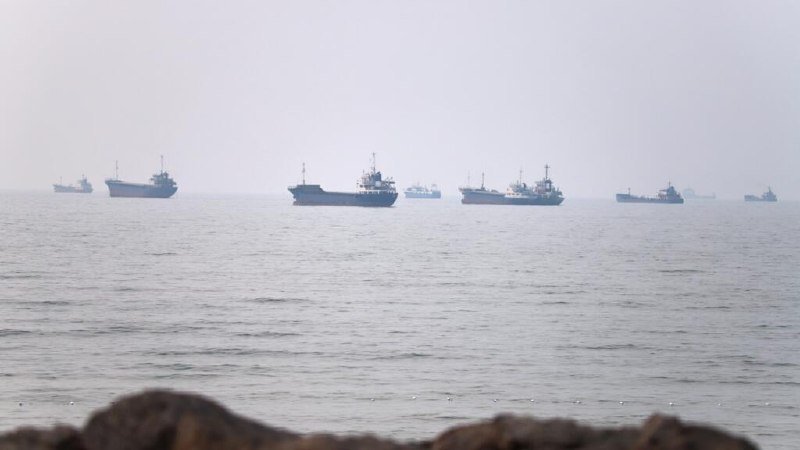
A B-52 Stratofortress has arrived in the Gulf, and the White House says the bomber is there as a signal. President Donald Trump told reporters on Tuesday that fresh strikes on Iran remain on the table even as he insists a deal to end the war is "very close," a posture that places the world's largest contingency of carrier aviation and long-range bombers on a hair trigger while negotiators argue over the wording of a memorandum of understanding due to be signed in Europe. The whiplash is now the operating tempo of US policy in the Gulf.
The arithmetic behind the muscle is straightforward and uncomfortable. The New York Times reported that the depletion of global oil reserves is putting additional pressure on Trump to reach an agreement, a constraint the administration has not publicly acknowledged but the markets have already priced in. Within five minutes of Trump dismissing the announced points of the deal as a "hoax," the US stock market lost roughly $460 billion in capitalisation, according to MS NOW's tally of intraday moves. A B-52 over the Strait of Hormuz and a sell order on Wall Street are, at this point in the war, the same signal read in two different languages.
The deal that keeps almost arriving
Trump has used the phrase "we're very close" on the Iran war at least eight times since the start of hostilities on 28 February, according to an MS NOW analysis of his speeches, interviews and social media posts. The pattern is now familiar enough to be charted: ultimatum, threat of strikes, walk-back, retweet of an Iranian statement, declaration of imminent deal, hostile reaction from the Israeli war cabinet, fresh ultimatum. NPR, covering the latest cancellation of planned strikes, called it "the latest salvo in a series of whiplash proclamations."
The current iteration began with an exchange of public courtesies between Trump and Iranian Foreign Minister Abbas Araghchi, whose comments Trump retweeted before walking them back. Araghchi told Iranian television that "the best time to end a war is before it produces more victims," a formulation that Iranian negotiators have used before to signal readiness. The same Araghchi has separately dismissed Trump's claim that US pressure forced Tehran to the table. "If we were to yield to force, we would have done so much earlier," he said, in remarks circulated by Iranian-aligned channels.
The substance of the emerging deal, as described in fragments by US and regional sources, involves the release of billions of dollars in Iranian funds currently frozen in third-country accounts, most prominently in the United Arab Emirates. According to a Reuters exclusive relayed through regional outlets, the UAE has agreed to unlock billions of dollars for Iran in a tactical shift following weeks of Iranian attacks on Emirati infrastructure. A separate report in Middle East Eye claims the UAE paid Iran billions of dollars directly to halt strikes, and that officials from the Islamic Revolutionary Guard Corps stayed at the UAE national security adviser's guest house last week to cut a de-escalation arrangement. Trump's pushback, as reported by Axios, focused on Iranian state-media claims that Tehran would receive the funds immediately on signing, before any verification of compliance. That sequencing dispute, more than the headline number, is what is keeping the memorandum unsigned.
What the bombers say that the diplomats cannot
A B-52 is a 70-year-old airframe that has been continuously updated and remains the US Air Force's premier long-range conventional and nuclear delivery platform. Sending one to the Gulf in the middle of a declared negotiation is a textbook coercive signal: the capability is real, the intent is ambiguous, and the audience is at least three. The first audience is Tehran, which must price the cost of walking away. The second is the Israeli war cabinet, which has grown openly skeptical of Trump's diplomacy and which, according to Israeli defence accounts, absorbed an Iranian missile strike on Ramat David Airbase this week, with a warehouse hit and possible damage to the IAF's 157th Squadron electronic warfare unit. The third is the Gulf states themselves, several of which have spent the past three months trying to stay out of the line of fire while quietly absorbing the economic costs of a war fought over their airspace.
The Economist captured the strategic reversal in a single line: "Iran's fear of war has disappeared." Over the past week, the magazine noted, both the US and Israel bombed Iran; in response, Iran shot down an American helicopter, launched ballistic missiles at Israeli airbases, and continued to strike at US partners across the Gulf. None of these actions produced the kind of decisive effect that ends a war. All of them produced the kind of punishment that makes the next negotiation start from a lower baseline for Washington.
The oil reserve that nobody is talking about publicly
The New York Times's reporting on depleted global oil reserves reframes the entire war calculus. A US-Israeli campaign against Iran that began as a strike on nuclear and missile infrastructure has, through the arithmetic of escalation, become a war over the price and availability of energy. Iran's retaliatory playbook has leaned on threats to Gulf shipping, on direct strikes at Saudi, Emirati and (until recently) Iraqi infrastructure, and on the implicit threat of closure of the Strait of Hormuz, through which roughly a fifth of the world's traded oil passes. Each successful strike on a Gulf state tightens the noose on Washington's negotiating position, because each one increases the value Tehran can extract for stopping.
This is why a B-52 over the Gulf and a $460 billion market rout within five minutes of a Trump Truth Social post are not contradictory signals. They are the same signal: the war is now expensive enough that the cost of ending it is rising faster than the cost of continuing it, and the administration is buying time with bomber rotations and rhetorical deadlines while the actual terms are negotiated in third-party capitals.
Stakes
Three dates now matter. First, the signing in Europe of the memorandum of understanding, which US and Iranian sources both say is imminent and which Iranian state media continues to describe in more generous terms than the White House will publicly accept. Second, any new Israeli strike on Iranian nuclear or missile sites, which would collapse the negotiation overnight and force the B-52s into a mission profile that would dwarf the cost of everything that has come before. Third, the next round of Iranian retaliation against Gulf infrastructure, which would force the UAE and Saudi Arabia to choose between continued quiet payments to Tehran and open participation in the war.
Trump's statement on Tuesday that fresh strikes remain an option should be read alongside his retweet of Araghchi and his dismissal of the deal points as a "hoax." None of these statements are inconsistent with each other. All of them are consistent with a president who is conducting the negotiation in public, using the threat of force as a continuing offer and the promise of a deal as a continuing demand, while the underlying terms slowly congeal in rooms the cameras cannot see. The B-52 is in the Gulf because the deal is not yet signed. The deal is not yet signed because the bombers are in the Gulf.
Follow the event.
These dated source records provide context. They do not retrospectively verify this archive article.
Separate what the nuclear watchdog reported from what it could not determine after the June 2025 strikes.