Gulf fault lines widen as UAE breaks with Iran and diplomacy stalls
A public UAE condemnation of Iranian strikes on three Arab neighbours has collapsed the fiction of a unified Gulf front, even as Tehran signals that the diplomatic channel with Washington is now on life support.
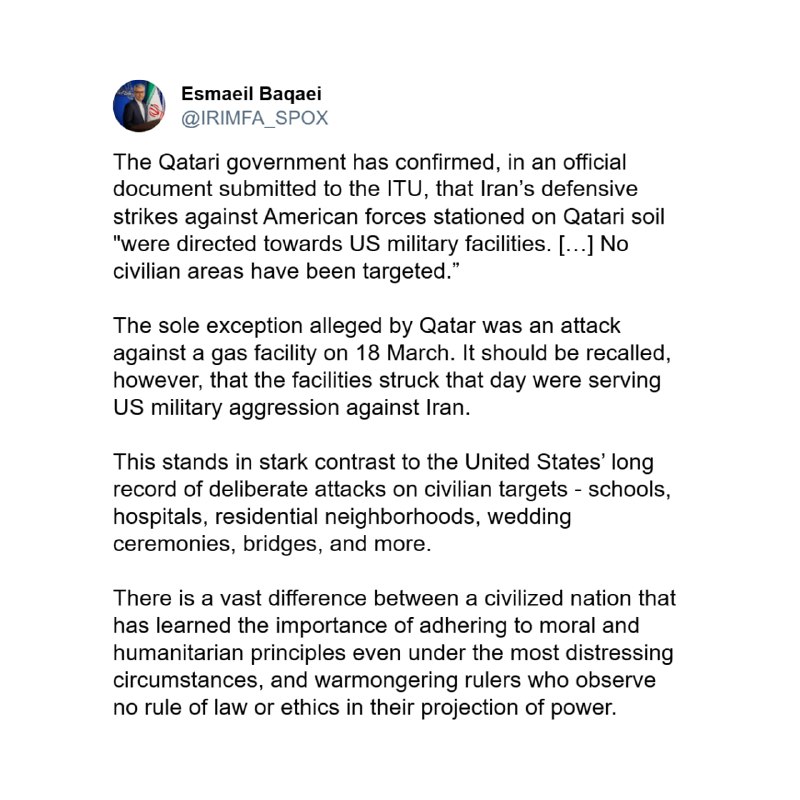
The diplomatic floor under Gulf security fell out in public on the morning of 10 June 2026. The United Arab Emirates' foreign ministry summoned the vocabulary reserved for state-to-state rupture — "terrorist attacks" — and aimed it at Tehran, accusing Iran of striking Bahrain, Kuwait and Jordan, three Arab states that have, in different ways, tried to keep channels of communication with the Islamic Republic open. The UAE statement, carried at 09:33 UTC by the BRICS-aligned Telegram channel BRICS News, was not a routine note of concern. It was a refusal, on the record, of the regional consensus Tehran has spent two decades trying to assemble.
The condemnation lands at the worst possible moment for Iran's negotiating position. Hours earlier, at 09:15 UTC, Iran's foreign ministry had conceded that diplomacy with the United States had been "damaged" by recent strikes — a phrase chosen, in all probability, by officials who know the English-language transcript will be read in Washington, in Riyadh and in Tel Aviv. The sequencing tells a story: by mid-morning in the Gulf, Iran was simultaneously losing the argument in three Arab capitals and conceding that its principal external negotiation was fraying. The arithmetic of leverage has tilted.
What the UAE actually said
The text relayed by BRICS News attributes to the UAE foreign ministry a categorical condemnation of "terrorist attacks" by Iran against Bahrain, Kuwait and Jordan. Two features stand out. The first is the choice of Bahrain as a named target of UAE concern. Manama normalised relations with Tehran in 2023 after years of cold distance, and has positioned itself, alongside Oman and Qatar, as a mediator-in-the-Gulf. Public UAE solidarity with Bahrain against an Iranian attack is therefore not a courtesy call; it is a UAE decision to override Bahrain's mediating role and side with the harder line favoured by Riyadh and Abu Dhabi.
The second is the inclusion of Jordan. Amman is not a Gulf state and does not share a border with Iran, but it is a frontline recipient of US military assistance, a holder of a free-trade agreement with Washington, and host to a significant Israeli diplomatic presence. An Iranian strike on Jordan, if confirmed, would amount to a deliberate widening of the confrontation across the Arab world — a strategic error of a kind the UAE statement is designed to make impossible to walk back.
Neither the BRICS News relay nor the surrounding reporting specifies the timing, the targets struck, or the casualty figures inside Bahrain, Kuwait and Jordan. The sources do not specify. Until independent verification from Manama, Kuwait City and Amman, the UAE's framing should be read as an authoritative Arab-state characterisation of the events, not yet as a confirmed fact set.
The diplomatic channel with Washington
The second piece of the picture is the one that worries the negotiating rooms. According to Iran's foreign ministry, as relayed by Insider Paper at 09:15 UTC on 10 June 2026, recent strikes have "damaged" diplomacy with the United States. The language is deliberate. Iranian officials do not say diplomacy has ended; they say it has been damaged, which is the vocabulary of a negotiating party reserving the right to come back to the table after the political cost of the latest move is paid.
The third thread is the most consequential. On 9 June 2026, Polymarket-flagged reporting — itself a summary of US official assessments — described a proposed arrangement in which a deal with Iran could halt its nuclear programme for fifteen years, against an Iranian offer that, on the same reporting, would only suspend enrichment for five. The gap between the two terms is the entire war. Fifteen years is a duration that spans more than one US administration and more than one Iranian presidential cycle. Five years is the kind of interim understanding that a future Iranian government can repudiate in a single speech. The fact that the longer proposal is the American one and the shorter one is the Iranian one inverts the conventional wisdom of the last decade, in which Tehran was the party demanding a longer horizon in exchange for smaller concessions.
Why the Gulf is no longer a bloc
For most of the past two decades, the conventional reading of the Gulf treated it as a single, Saudi-led strategic bloc, with the UAE as the enforcer and Qatar, Oman and Kuwait as the swing states. Bahrain was an Iranian interlocutor only by necessity. The UAE statement of 10 June 2026 collapses that reading. The interesting read is not that Abu Dhabi and Tehran are now at daggers drawn — that has been the trend line since at least 2019 — but that Abu Dhabi has chosen to do its naming and shaming of Iran in company with Bahrain, Kuwait and Jordan, the very states that have resisted the Saudi-Emirati line on Iran and on a number of other questions. A condemnation phrased as solidarity with three meditators is a political operation. It puts Bahrain in a position in which any future attempt to re-engage Tehran will read as a deviation from a UAE-led Arab position rather than as the routine shuttle diplomacy Manama had previously claimed for itself.
The structural read is straightforward. The Gulf is now two coalitions, not one: a hardline coalition built around Riyadh, Abu Dhabi, Manama and (selectively) Amman; and a softer coalition built around Doha, Muscat and, until this week, Manama. The UAE's statement has, in effect, told Doha and Muscat that they will be holding the line on Iran alone.
What it means for the nuclear track
The fifteen-year-versus-five-year split is the variable that makes everything else read differently. If the US side is in fact prepared to offer a fifteen-year horizon — Polymarket-flagged reporting says US officials "believe" a deal of that scope could halt Iran's nuclear programme for that duration — the strategic logic is that Washington is now willing to trade duration for reach: fifteen years during which Iran would, on the reported US terms, be unable to produce a weapon, in exchange for a smaller set of permanent concessions than the long-held US position demanded. The Iranian five-year offer, on the same reporting, would preserve the right to resume enrichment in a short window, which is precisely the structure Tehran has run in 2003, in 2015, and in every interim arrangement in between.
What the UAE statement does is move the political baseline of the negotiations. A negotiating Iranian government now has to answer, in three Arab capitals and in Washington, for a posture that has, in the words of its own foreign ministry, "damaged" the channel. The two pieces of news sit together for a reason: an Iranian government that wants to keep the channel alive cannot, in the same week, accept strikes that the UAE, Bahrain, Kuwait and Jordan have publicly called terrorism.
Stakes and a remaining unknown
The immediate stakes are narrow and brutal. If Iran's strikes on Bahrain, Kuwait and Jordan are confirmed, three Arab governments will have to decide whether to treat the incident as a basis for collective security action — within the Gulf Cooperation Council, within the Arab League, or in coordination with Washington and London. If the strikes are not confirmed, or are scaled back in the official accounts from Manama, Kuwait City and Amman, the UAE statement will still be on the record and the political cost of the naming will still have to be paid, because governments do not issue statements calling attacks "terrorism" they cannot defend in a week's time.
The wider stakes are easier to read. A unified Arab position against Iran strengthens the hand of any US administration that wants to argue, in domestic political terms, that a diplomatic deal must be on American and Arab terms, not on the Iranian terms summarised in the Polymarket-flagged reporting. A divided Arab position would have done the opposite. The 10 June statement is therefore a piece of negotiation, made in Arabic, aimed at Washington. It also raises the cost, for Tehran, of the five-year counter-offer that the reporting attributes to Iranian negotiators — because the price of the shorter offer is no longer a technical argument about isotope ratios and breakout time, but a political question about whether Iran's neighbours will accept it.
What remains genuinely uncertain is the underlying fact set. The UAE statement, as carried by BRICS News, treats Iranian "terrorist attacks" on Bahrain, Kuwait and Jordan as established. The Iranian foreign ministry, as carried by Insider Paper, treats the strikes as having "damaged" diplomacy, in language that does not deny the strikes but also does not confirm their scope. The Polymarket-flagged reporting on the nuclear track rests on US official assessments and a described Iranian counter-offer; it does not specify the venue of the talks, the level of the officials, or the text of either side's terms. Each of the three pieces of news, on its own, would warrant caution. Read together, the picture is clear enough to act on and contested enough to refuse to over-claim. The Monexus read is that the public UAE condemnation is the most consequential Gulf diplomatic signal of 2026 so far, and that Iran's own acknowledgement of "damaged" diplomacy confirms that the Iranian side reads the same picture the same way.
The Monexus read on this cluster: the wire cycle on 10 June 2026 has been dominated by the kinetic story, with a tendency to under-weight the diplomatic track. This piece leads with the diplomatic signal — the UAE statement, the Iranian concession of damage, and the fifteen-versus-five-year gap — and treats the strikes as the political context that explains why the diplomats are, for the first time in this cycle, agreeing in public.
Wire provenance
This editorial synthesis draws on the following public wire/social posts:
- https://t.me/bricsnews/1
- https://t.me/insiderpaper/1
- https://x.com/polymarket/status/123
Follow the event.
These dated source records provide context. They do not retrospectively verify this archive article.
Separate what the nuclear watchdog reported from what it could not determine after the June 2025 strikes.